


Regency Adjustable Reading Desk
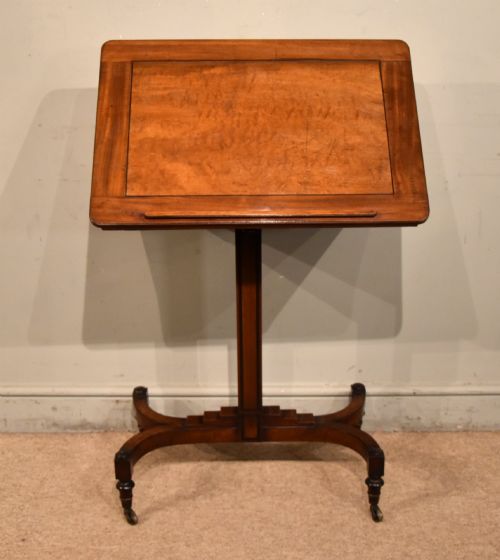
A regency adjustable reading desk offers practical ingenuity for the library, combining timber work surfaces with ratcheted mechanisms for comfort.
Regency Adjustable Reading Desk
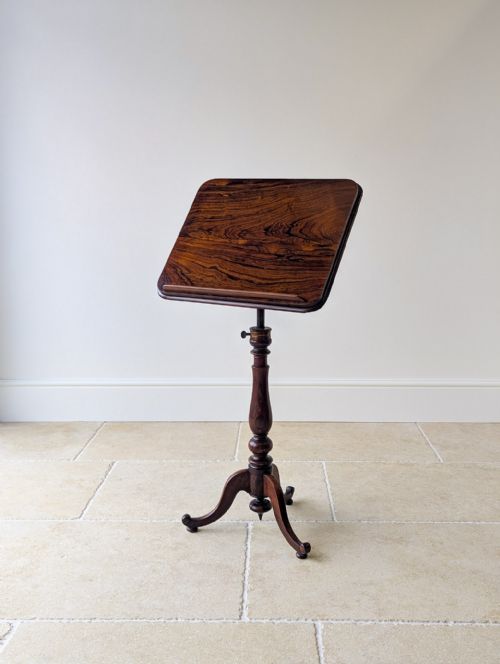
A regency adjustable reading desk appears in various configurations designed for study, drafting, and musical performance across the nineteenth century. These items manifest primarily as reading stands, occasional tables, and writing tables incorporating rising book supports or sloped surfaces.
The prevalent forms include freestanding tripod music stands, campaign table-top reading stands, and larger architectural riser desks. Timbers span mahogany and rosewood, frequently accented with brass hardware and leather inserts suited to writing.
Origins trace through the Regency, William IV, late Georgian, and George III periods, reflecting a sustained demand for functional furniture that adapts to the reader or writer.
Materials and construction
Makers utilised dense cabinet timbers, predominantly mahogany and rosewood, alongside exotic woods such as goncalo alves for high-status pieces. These were selected for structural stability and finished with polished surfaces.
Mechanical adjustments relied on brass ratchets, steel mechanisms, and cantilever frameworks that allowed surfaces to tilt and extend. Inlay work in boxwood and leather writing panels completed the functional assemblies.
Mahogany and rosewood dominate the surviving inventory, accompanied by brass fittings and leather writing surfaces.
Evaluating craftsmanship
Quality rests in the precision of the adjustable mechanism and the smoothness of its operation. A superior piece conceals complex iron or brass ratchets that hold securely at various angles without slipping.
The selection of timber grain, particularly matched mahogany or figured rosewood, distinguishes standard workshop production from finer cabinet-making. Secondary woods and the crispness of brass detailing further separate standard utility tables from exceptional examples.
Gillows of Lancaster
The Regency Adjustable Reading Desk Glossary
- Ratcheted support
- A notched metal bracket that allows a reading surface or bookrest to be adjusted to multiple incremental angles. This mechanism forms the core operational feature of the desk.
- Goncalo alves
- A dense exotic hardwood exhibiting striking dark figuring, utilised in select nineteenth-century cabinet work. It provides a durable and decorative alternative to standard timbers.
- Campaign piece
- Furniture designed for portability, often featuring folding legs or compact dimensions for travel. These items retain robust brass corners and recessed handles.
- Architect's desk
- A specialised form featuring a rising central section for drafting and reading large plans. They often incorporate pull-out slides and storage compartments for drawing implements.
Regency Adjustable Reading Desk: Frequently Asked Questions
How do I adjust the reading slope?
Most examples rely on a rear brass or iron ratchet arm that engages with teeth fixed beneath the reading ledge. Lifting the board past the final notch releases the mechanism to lower it.
Care should be taken to support the weight of the bookrest with one hand while operating the internal catch to prevent sudden drops.
Were these used for writing or reading?
Many of these pieces serve dual functions, combining a flat writing surface with a secondary rising stand or incorporating a ratcheted panel directly into a writing table top. Some are dedicated music stands or architectural desks designed specifically for standing work.
Leather inserts often indicate a primary writing purpose, whereas hinged ledges point towards holding folios, sheet music, or large books.
How do I distinguish Regency from William IV models?
Regency pieces generally display classical restraint, reeded edges, and slender sabre or pillar legs derived from archaeological motifs. William IV examples tend to be heavier, featuring bolder rosewood grains and robust carved scrollwork.
Proportions shift towards greater solidity in the later decades, though both periods share similar mechanical capabilities for adjusting heights and angles.
Where should I place a reading table in a room?
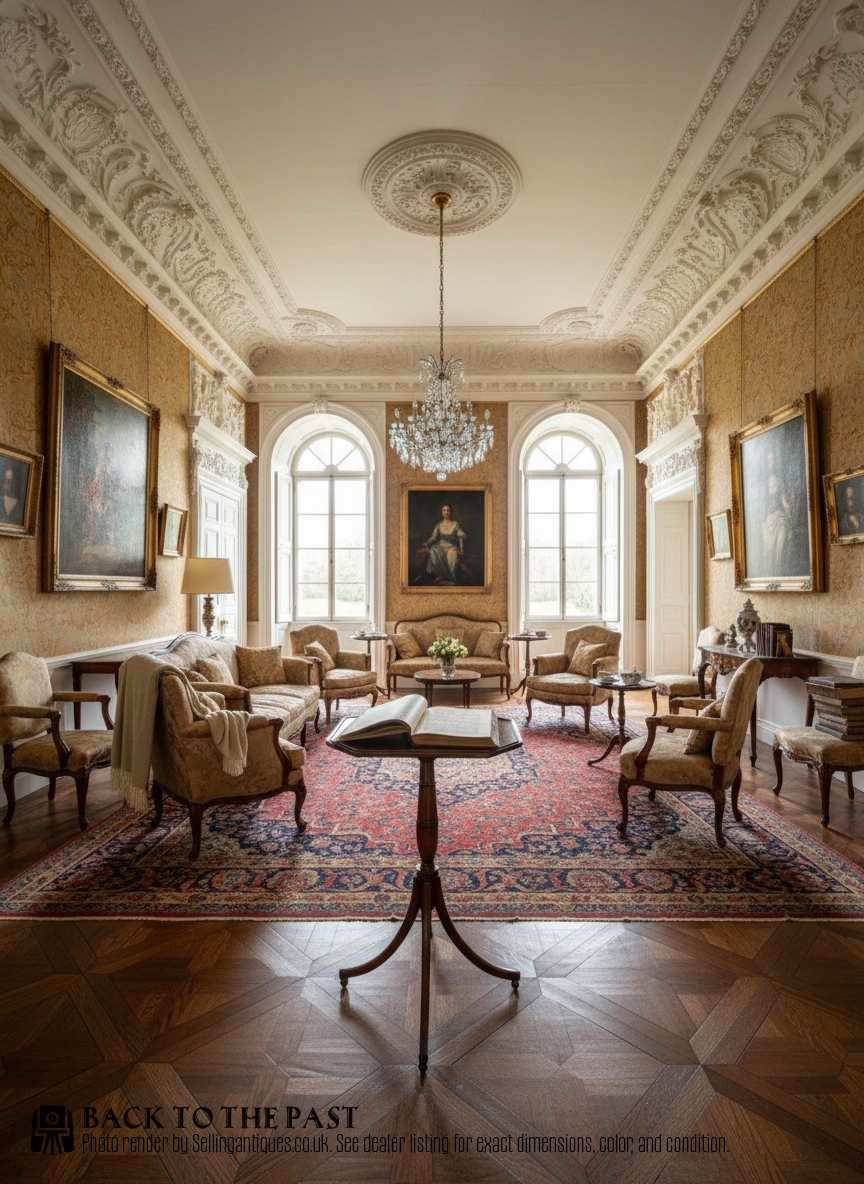
These tables suit placement beside armchairs, near windows for natural light, or freestanding in the centre of a study. Double-sided versions allow access from multiple positions in a library.
Because the adjusting mechanisms often project slightly beneath the top, pairing them with appropriate seating ensures comfortable legroom.