






Reddish Brown Drawers
These reddish brown drawers bring warm timber tones and practical storage to a room through centuries of cabinet-making craft.
Reddish Brown Drawers
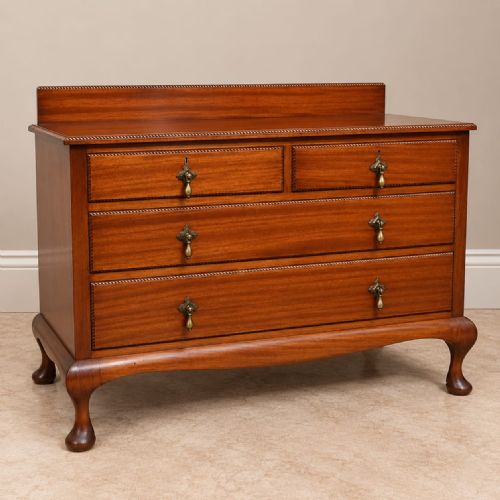
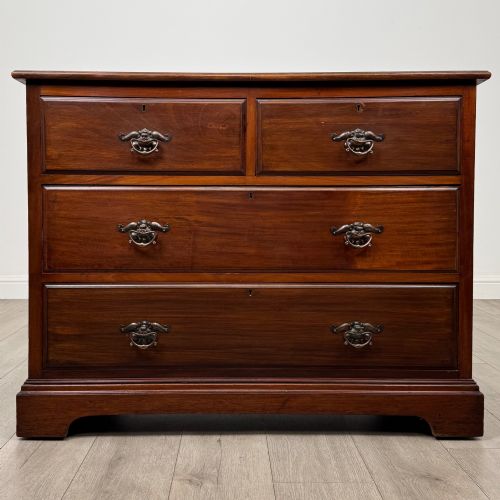
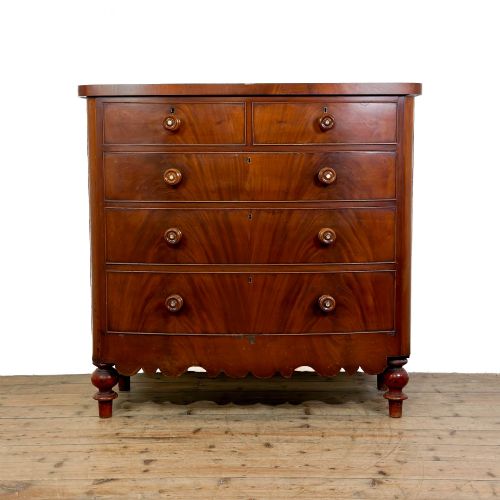
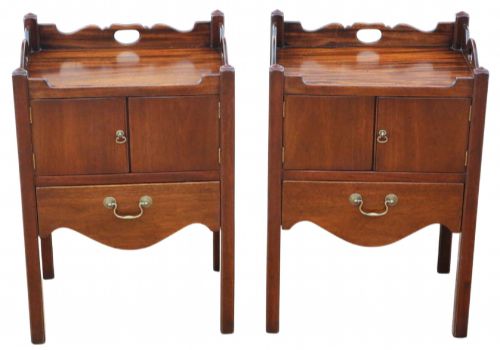
Reddish brown drawers cover a diverse group of case furniture designed primarily for storage, ranging from compact bedside tables to tall chests and large dressers. When exploring reddish brown drawers, you encounter pieces spanning the eighteenth, nineteenth, and early twentieth centuries.
The selection on this page relies heavily on mahogany, alongside walnut, deal, fruitwood, and pine, reflecting the rich natural hues of these timbers. Forms include classic bow-front chests, kneehole writing desks, collectors' cabinets, and low linen presses originating from British, French, Italian, and Japanese traditions.
How they were made
Cabinet-makers constructed these pieces predominantly using solid timbers and veneers such as mahogany, walnut, and pine, often enhancing the natural grain with polished or stained finishes. Secondary woods like deal and cedar frequently form the internal drawer linings.
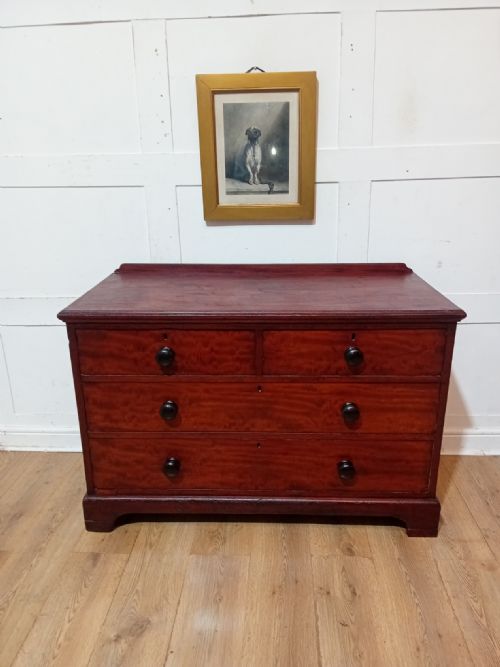
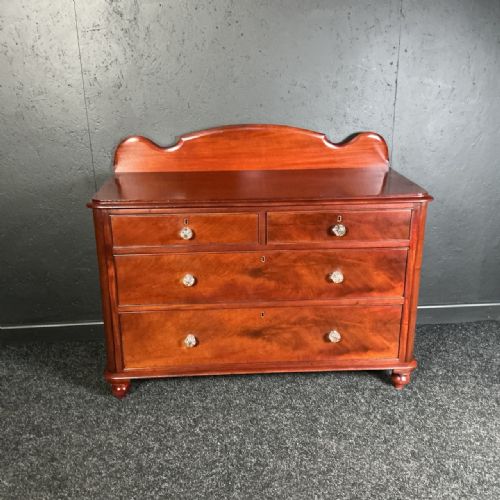
Structural details include brass handles, original turned knobs, and occasionally inlaid decorations or mother of pearl accents that complement the deep reddish brown coloration of the primary wood.
Reddish Brown Drawers Retail Price Guide 2026
Typical asking prices for reddish brown drawers among the pieces listed under this phrase on Sellingantiques today, from the lower quarter to the upper quarter. They describe what is for sale here now, not the wider market.
What varies in quality
Quality in these pieces rests upon the selection of timber and the precision of the joinery, distinguishing finely figured mahogany surfaces from simpler stained deal constructions. Superior examples display thoughtful proportions, balanced drawer arrangements, and original brass hardware or turned feet.
The refinement of details, such as smooth drawer action and delicate inlay work, separates standard utility furniture from finer Georgian and Victorian pieces designed for formal domestic interiors.
Brady
The Reddish Brown Drawers Glossary
- Bow-front
- A cabinet front that curves outward in a convex shape. This style gained popularity during the Georgian and Regency periods to soften the room presence of large chests.
- Brushing slide
- A pull-out shelf integrated into the upper section of a chest or desk. It provided a clean surface for folding clothes or writing without opening the main drawers.
- Deal
- A soft timber derived from pine or fir trees. Makers frequently utilised deal for secondary furniture parts like drawer sides and carcases.
- Lowboy
- A small table with one or more rows of drawers supported on four legs. Eighteenth-century cabinet-makers often built these versatile pieces in cherrywood or mahogany.
- Linen press
- A tall piece of furniture featuring upper cupboard doors for storing folded textiles above a base of lower drawers. Lower variants also appear in nineteenth-century workshops.
Reddish Brown Drawers: Frequently Asked Questions
What is a brush slide used for?
A brushing slide pulls out from the upper section of a chest to provide a temporary flat surface. Owners historically utilised this ledge for folding garments or sorting papers.
Today, the presence of a slide helps identify better quality Georgian and Regency case pieces.
How do I date a mahogany chest?
Dating relies on examining the construction methods of the drawers, the timber choice, and the overall proportions of the piece. Georgian examples often feature hand-cut dovetails and oak or pine linings.
Later Victorian and Edwardian chests display machine-sawn elements and distinct brass or wooden hardware styles.
Where were these cabinets made?
The pieces originate from various workshops across Britain, continental Europe, and beyond. British cabinet-makers produced the majority of the mahogany and pine chests.
Other items reflect international traditions, including Italian commodes, French writing desks, and Japanese tansu cabinets.
How do I care for antique wood?
Maintain antique timber by keeping pieces away from direct heat sources and sudden temperature shifts. Regular dusting with a dry cloth protects the polished surface without building up residue.
Applying occasional natural wax helps nourish dry wood and preserves the rich reddish brown colour.