

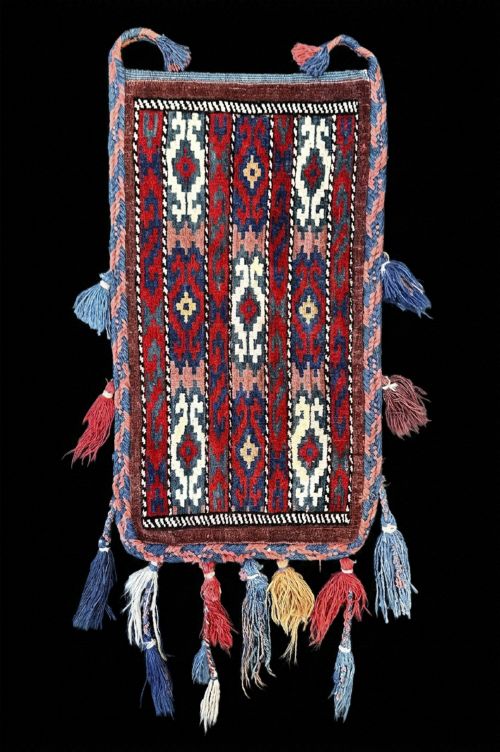
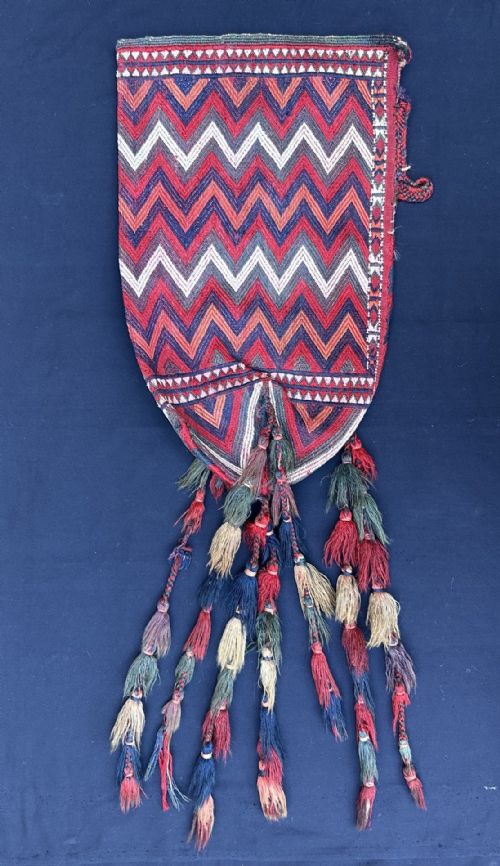


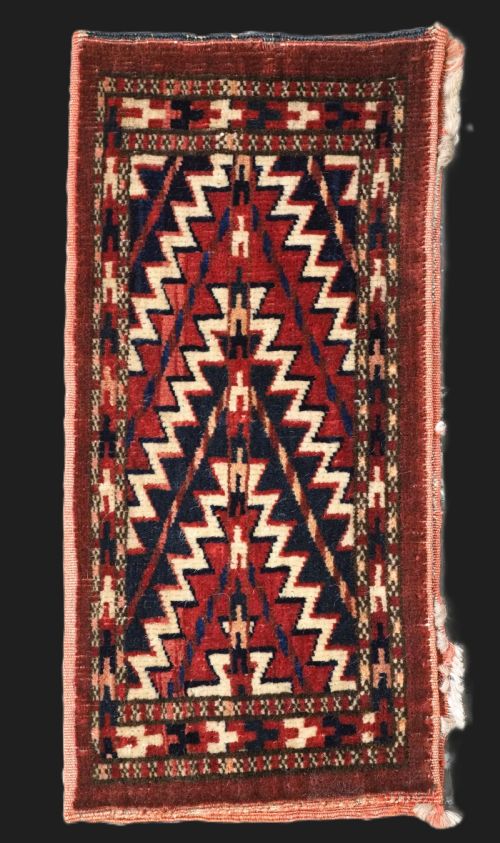


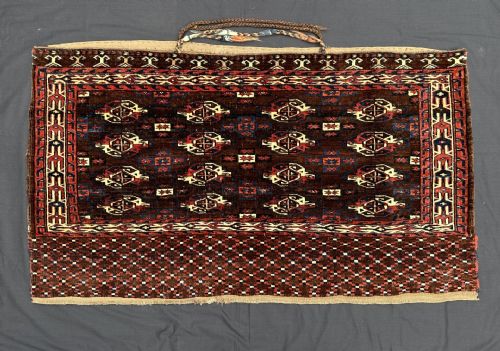


Red Yomut Bag
A red yomut bag brings the nomadic craft of the Trans-Caspian steppes straight to your wall or floor.
Red Yomut Bag
A red yomut bag represents the textile art of Turkmen tribal weavers from Central Asia, produced across the nineteenth century and into the early twentieth century. These pieces encompass specific functional forms such as spindle-bags, torbas, kap, uk bash, and chuval created by nomadic groups.
The pieces on this page lean heavily towards smaller utilitarian objects and bag faces, including spindle bags and storage bags. Each item reflects the distinctive tribal and nomadic heritage of the Yomut people originating from the Trans-Caspian steppes.
How they were made
These tribal weavings rely on hand-spun wool and cotton combined with natural dyes to achieve their characteristic rich red palettes. Weavers constructed the pieces using structured pile knots alongside plain weave and banded flatweave techniques.
The combination of durable wool foundations and traditional dyeing methods ensures the survival of these nomadic textiles across decades of use. Artisans incorporated specific tribal motifs, such as the kepse gul and aishk gul, directly into the structure of the weave.
Red Yomut Bag Retail Price Guide 2026
Typical asking prices for red yomut bag among the pieces listed under this phrase on Sellingantiques today, from the lower quarter to the upper quarter. They describe what is for sale here now, not the wider market.
Object types include torbas, chuvals, kap, uk bash, and specialised spindle bags with plain weave backs.
What varies in quality
Quality in a red yomut bag rests on the precision of the weave and the clarity of traditional gul designs such as the kepse or aishk patterns. Tighter knotting and finer wool preparation elevate certain examples above standard utilitarian items.
The depth and variation achieved through natural dyes distinguish superior pieces from simpler productions. Preservation of the original plain weave backs or complete bag structures also separates standard fragments from fully intact specimens.
The Red Yomut Bag Glossary
- Torba
- A small storage bag produced by Turkmen tribes, typically wider than it is tall and designed for tent storage. These pieces often feature prominent gul patterns and tribal motifs.
- Chuval
- A large tent storage bag used by nomadic groups for household goods and bedding. They display intricate field designs structured around repeating guls.
- Igsalyk
- A specific Yomut term for a spindle bag used to hold spinning tools and materials. These often feature a distinctive narrow shape with a plain weave back.
- Gul
- A repeating medallion or principal motif used in Turkmen tribal rug design. Each pattern identifies the specific tribe or sub-group responsible for the weaving.
- Kap
- A general Turkmen term for a bag or container. These small utilitarian pieces served practical storage functions within nomadic tents.
Red Yomut Bag: Frequently Asked Questions
What is a red yomut bag used for?
These nomadic weavings served practical storage functions inside traditional Turkmen tents, holding personal items, spinning tools, or household goods.
Today, collectors primarily display them as textile art or wall hangings to showcase their tribal designs and natural dyes.
How do I identify a yomut piece?
Yomut weavings are distinguished by their specific tribal motifs, such as the kepse or aishk gul, set against characteristic red wool grounds.
They originate from the Trans-Caspian steppes and often take specific functional forms like spindle bags, torbas, and chuvals.
Are these bags made with natural dyes?
The pieces from this tradition rely on traditional natural dye methods applied to hand-spun wool and cotton foundations.
These materials produce the deep, enduring red tones characteristic of nineteenth-century Turkmen tribal textiles.
How should I hang a bag face?
Bag faces and smaller textile fragments work well mounted on walls to protect the wool structure and display the detailed tribal patterns clearly.
Ensure the mounting method distributes the weight evenly across the upper edge of the plain weave or wool foundation.