


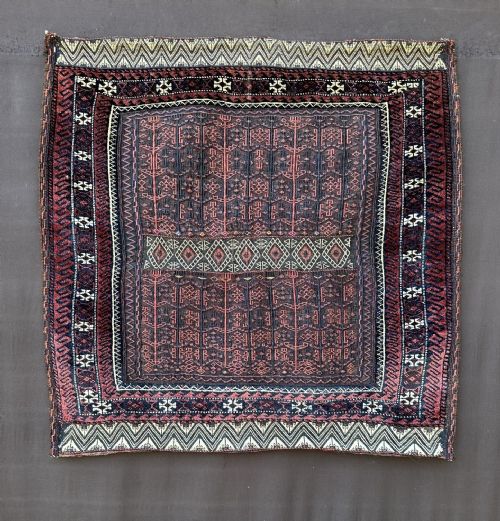
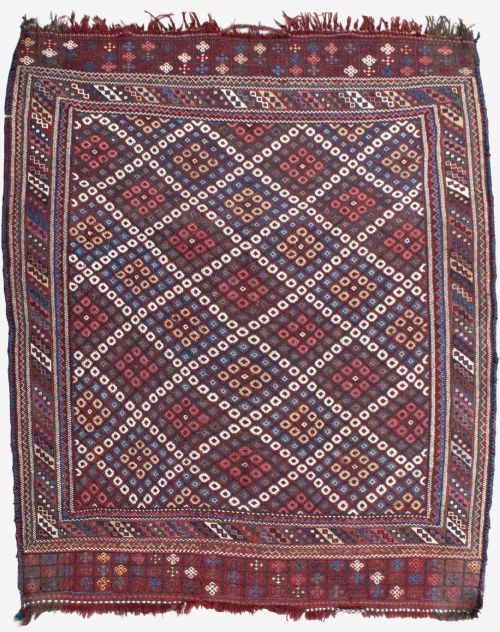


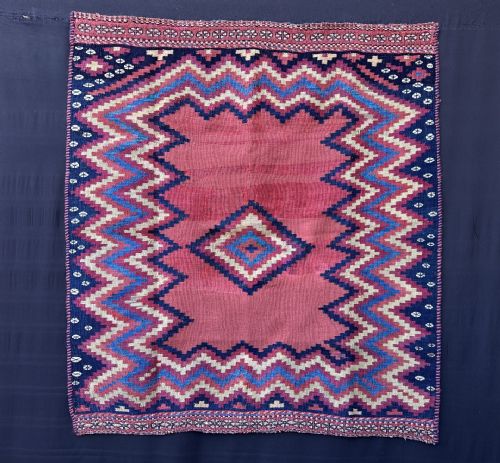


Red Wool Sofreh
These red wool sofreh are woven flatweaves used for dining or bread, crafted by tribal makers across Persia and Afghanistan.
Red Wool Sofreh
A red wool sofreh is a traditional tribal flatweave associated with communal meals and bread preparation. These textiles served practical domestic purposes among nomadic groups before entering the collector market.
The examples on this page span several decades from the late nineteenth century through the early twentieth century. Pieces originate from regions including South Persia, Western Persia, Central Persia, and the borderlands of Afghanistan.
Tribal groups such as the Afshar, Baluch, Timuri, and Luri-Bakhtiari produced these flatweaves. Forms range from dedicated bread and dining cloths to pieces functioning as area rugs or wall hangings.
Materials and construction
Weavers utilised natural dyes to achieve the characteristic red tones seen across these textiles. Wool provides the primary structural and decorative surface, paired with cotton foundations in specific regional examples.
Flatweave construction methods govern the creation of a sofreh, avoiding the pile found in standard rugs. This technique produces durable, flat textiles designed for heavy domestic utility.
Red Wool Sofreh Retail Price Guide 2026
Typical asking prices for red wool sofreh among the pieces listed under this phrase on Sellingantiques today, from the lower quarter to the upper quarter. They describe what is for sale here now, not the wider market.
Some sofreh double as dining companions and bread wrappers, catching stray crumbs during nomadic feasts.
Assessing quality in flatweaves
Quality in a red wool sofreh rests upon the precision of the flatweave technique and the handling of natural dyes. Finer examples display tighter structures and more complex geometric organisation within the tribal design vocabulary.
Condition and the preservation of the original edges contribute significantly to the standing of an individual piece. The clarity of regional attribution, tied to specific tribal groups such as the Afshar or Baluch, further defines the character of the weave.
The Red Wool Sofreh Glossary
- Sofreh
- A spread or cloth used for eating meals or kneading and storing bread in nomadic households. These flatweaves reflect the daily domestic rituals of tribal communities.
- Flatweave
- A textile produced without knotted pile by interweaving warp and weft threads directly. This method yields a thinner, durable fabric without a raised surface.
- Natural Dyes
- Colourants derived from plant, insect, or mineral sources prior to the widespread adoption of synthetic alternatives. They impart rich, varied hues that age gracefully over decades.
- Nomad
- A member of a community that moves with seasonal pastures rather than settling permanently. Tribal weavers from these backgrounds created textiles suited to portable domestic life.
- Warp
- The vertical foundation threads stretched lengthwise on a loom before weaving begins. Wefts are passed across these stationary threads to build the textile structure.
Red Wool Sofreh: Frequently Asked Questions
What is a red wool sofreh?
A red wool sofreh is a traditional flatweave textile made by nomadic and tribal groups in Persia and Afghanistan.
These cloths were used primarily for preparing bread or serving communal meals on the ground.
How were these textiles used?
Nomadic families laid them out on the ground as a clean surface for eating meals together or rolling dough.
Their sturdy flatweave construction allowed them to be folded easily and carried during seasonal migrations.
Where do these pieces originate?
The listings show origins spanning various regions of Persia, including Kerman, Khorassan, and the Chahar Mahal.
Other examples come from the borderlands and tribal territories of Afghanistan.
How do I care for a sofreh?
These flatweaves require gentle treatment appropriate for antique textiles, avoiding harsh mechanical cleaning.
Periodic light vacuuming with a screen attachment helps protect the wool and natural dye fibres from dust.