






Red Wax Seals
Red wax seals comprise historic personal signets and desk accessories from the Georgian, Victorian, and Edwardian eras that secure correspondence with tactile authority.
Red Wax Seals
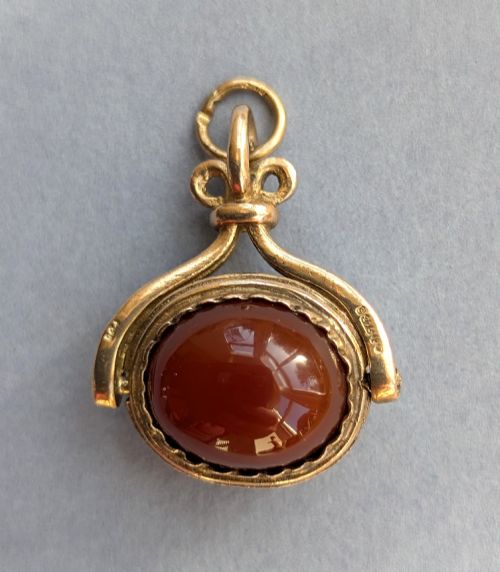
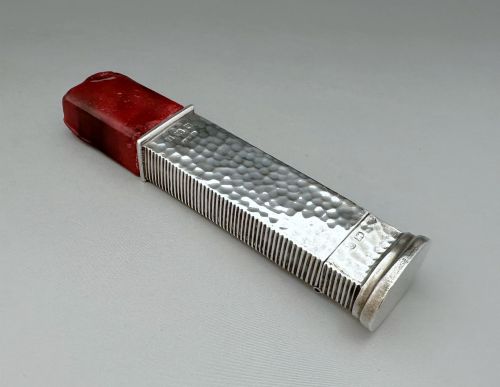
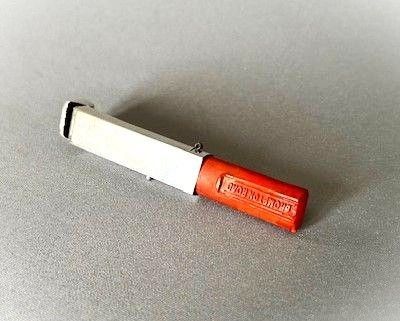
Red wax seals encompass a varied group of historical objects designed for impressing warm wax, including fob seals, pendants, desk seals, and combined vesta cases. The pieces catalogued under red wax seals range from simple gold-cased pendants to elaborate Middle Eastern desk seals and silver wax holders.
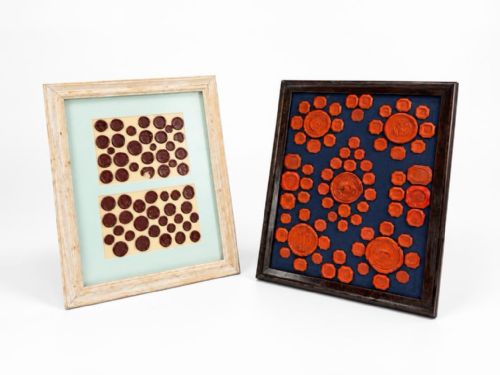
Most examples encountered here date from the 18th, 19th, and early 20th centuries, reflecting the periods when physical correspondence required secure authentication. Collectors typically find swivel fobs, stationary seals, and occasional documents bearing original impressions among these items.
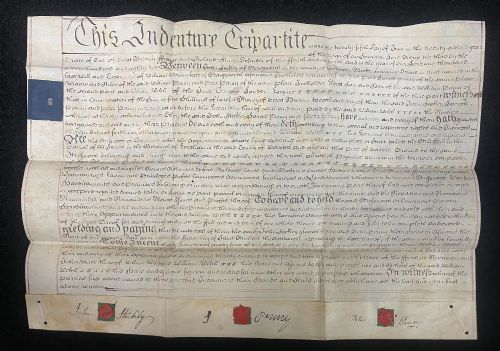
The assortment also includes related paper ephemera such as vellum indentures, manuscripts, and aquatints that provide context for the physical act of sealing. These items bridge the gap between functional writing equipment and collectible personal adornment.
Materials and Construction
Metalwork forms the structural core of these pieces, utilising 9ct gold, sterling silver, gilt metal, and gold-cased brass to shape the bodies, mounts, and swivel frames. Goldsmiths and silversmiths cast or hammered these metals into intricate fob seals and combination vesta cases.
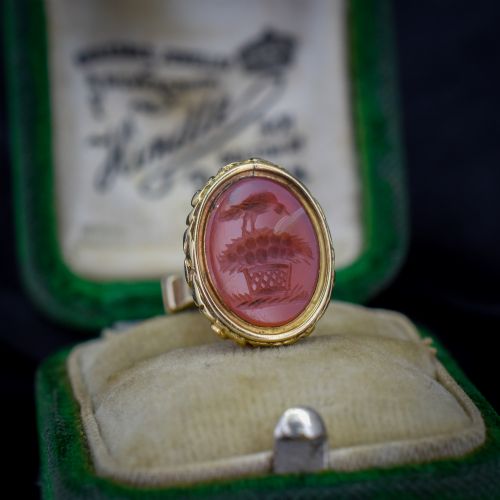
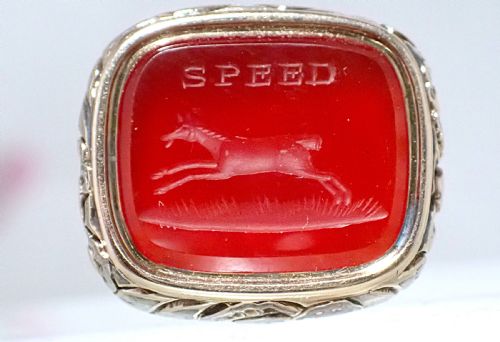
Hardstones provide the carving surface for the intaglio matrices, with carnelian serving as the predominant material for both swivel and stationary seals. Artisans carved heraldic crests, Roman emperors, animals, and mottos directly into the stone.
Associated paper goods and writing components incorporate vellum, ink, and actual sealing wax to complete the historical process of dispatching letters. These organic and mineral elements survive together to document historical correspondence habits.
Red Wax Seals Retail Price Guide 2026
Typical asking prices for red wax seals among the pieces listed under this phrase on Sellingantiques today, from the lower quarter to the upper quarter. They describe what is for sale here now, not the wider market.
Listings feature 9ct gold, sterling silver, gilt metal, carnelian, and sealing wax across Georgian, Victorian, and Edwardian periods.
Distinctions in Quality
Quality rests upon the crispness and depth of the intaglio carving set into the carnelian or metal matrix. Sharply detailed figures, legible mottos like "SPEED", and precise heraldic engraving separate superior seals from simpler productions.
The choice of housing metal dictates the tier of the piece, moving from untested gilt metal up to solid 9ct gold and heavy sterling silver mounts. Elaborate casting, substantial weight, and functional swivel mechanisms further elevate the standing of a seal.
Completeness alters the character of an object, particularly in combination items like silver vesta and sealing wax combos created by makers such as Sampson Mordan. Preserved original components retain greater historical integrity than altered or mismatched assemblies.
Sampson Mordan
The Red Wax Seals Glossary
- Intaglio
- A design carved into the surface of a stone or metal so that an impression in wax produces a raised relief. This technique ensures that the resulting seal displays a legible positive image.
- Fob seal
- A small pendant designed to hang from a pocket watch chain, featuring a carved matrix at the base. Victorians and Gregorians used these daily for sealing letters.
- Carnelian
- A brownish-red variety of quartz chosen for seals because wax does not stick firmly to its polished surface. It provides a durable medium for detailed carving.
- Vesta case
- A pocket-sized box used for holding matches, occasionally combined with a compartment for sealing wax. Edwardian examples often integrated both functions into one silver housing.
- Swivel fob
- A seal mount that rotates on a central axis to display multiple faces or stones. This allows a single pendant to bear different crests or initials.
Red Wax Seals: Frequently Asked Questions
How do you use a wax seal?
To use a wax seal, you melt sealing wax onto the fold of a document or envelope until a small pool forms. You then press the carved intaglio matrix firmly into the warm wax and lift it straight up.
This leaves a raised impression that shows the crest, initial, or design carved into the stone.
What periods do these seals come from?
The pieces originate primarily from the Georgian, Victorian, and Edwardian periods spanning the 18th, 19th, and early 20th centuries. Each era brought distinct shifts in metalworking styles and decorative motifs.
Earlier pieces often favour neoclassical designs, while later Edwardian examples include practical combination items.
What stones are used in these seals?
Carnelian is the primary hardstone found in these pieces, valued for its smooth texture and rich reddish-orange colour. Wax releases cleanly from its polished surface without sticking.
Some examples also utilise gold, silver, and gilt metal frames to hold the carved stone securely.