

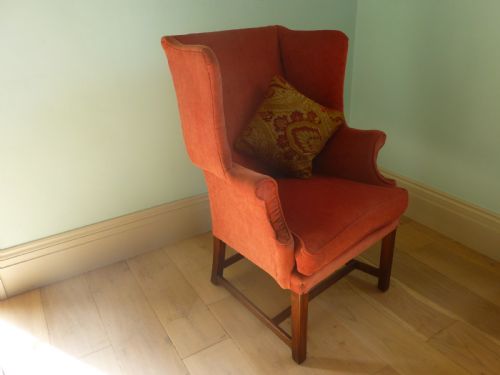


Red Upholstered Wingback
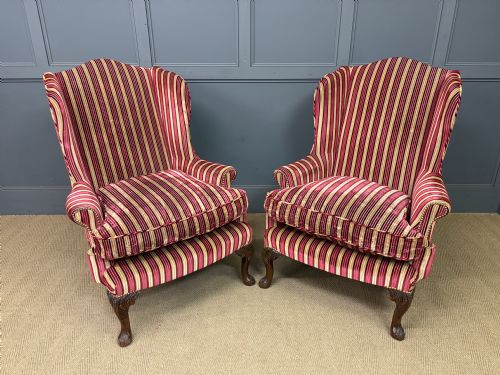
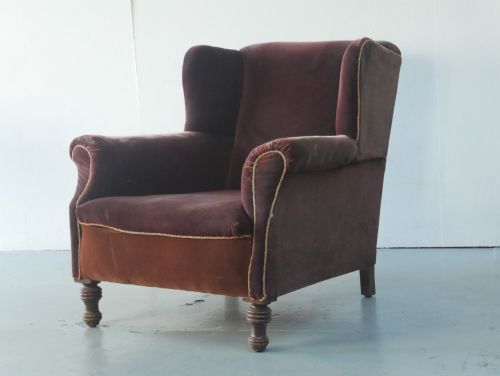
These red upholstered wingback chairs and settees offer enveloping warmth and draught-excluding comfort for any fireside.
Red Upholstered Wingback
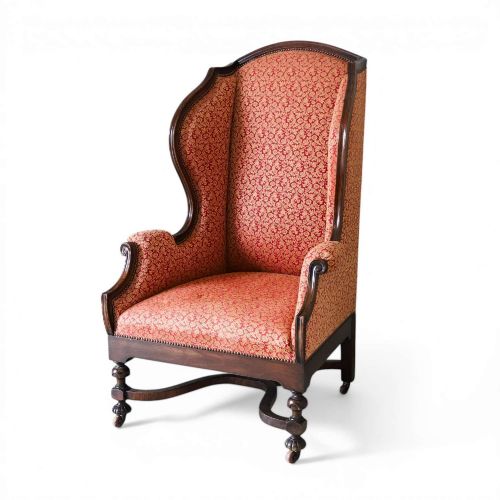
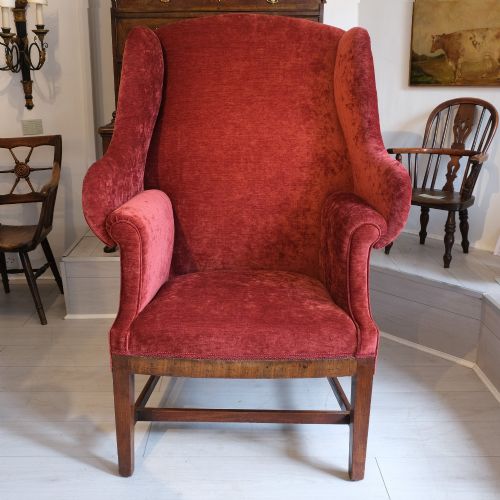
A red upholstered wingback brings deep upholstery and characteristic side panels designed to trap heat and block cold drafts around the head and shoulders. You encounter these seating pieces in forms ranging from compact fireside armchairs to larger settees.
The selection spans centuries of British and continental design, stretching from the Georgian eighteenth century through the Victorian era into Edwardian and later twentieth-century iterations. Armchairs dominate the offerings, supported by occasional two-seater settees.
Stylistic revivals appear frequently alongside pieces from their original periods, including Carolean, Queen Anne, and Louis-style interpretations that adapt earlier silhouettes for later drawing rooms.
Materials and construction
Frames rely upon sturdy timbers such as mahogany, walnut, oak, and general hardwood, often hidden beneath layers of heavy textile upholstery. Makers employed exposed carved wood chiefly on legs, stretchers, and frames where stylistic flourishes demanded visibility.
Textiles provide the primary visual impact, utilising rich red damask fabric, velvet, chenille twill, and patterned weaves stretched tight over padded inner frames. Brass upholstery tacks frequently secure the fabric edges along the timber framework.
Red Upholstered Wingback Retail Price Guide 2026
Typical asking prices for red upholstered wingback among the pieces listed under this phrase on Sellingantiques today, from the lower quarter to the upper quarter. They describe what is for sale here now, not the wider market.
American Stars and Stripes fabric meets traditional British wingback frames in an unexpected transatlantic union.
Distinctions in craftsmanship
Quality rests in the proportion of the wings, the rake of the back, and the integrity of the underlying timber frame rather than surface decoration alone. Superior examples display balanced symmetry in the scrollwork of the arms and deep, resilient stuffing that retains its sculptural silhouette.
The choice and execution of the textile upholstery dictate much of the visual distinction, with dense, high-grade damask or velvet distinguishing finer formal drawing-room pieces from simpler utility seating.
HOWARD AND SONS
The Red Upholstered Wingback Glossary
- Wingback
- An armchair featuring protective side panels attached to the upholstered arms and rising to shield the head. This traditional shape originated to protect sitters from drafts.
- Damask
- A reversible figured fabric traditionally woven on a jacquard loom with patterns flat against the ground. It appears frequently in rich red tones on formal seating.
- Chenille
- A fuzzy yarn resembling a caterpillar, utilised to create textured, tactile upholstery fabrics. It yields a soft surface pile.
- Bergere
- An enclosed upholstered armchair with wooden framing around the back and sides. French interpretations often feature giltwood or polished mahogany.
- Stretcher
- A horizontal timber connecting the legs of a chair or settee to provide structural rigidity. These reinforce the underframe against lateral stress.
Red Upholstered Wingback: Frequently Asked Questions
What is a wingback chair?
A wingback chair is an upholstered armchair featuring protective side panels designed to trap heat around the head and block cold drafts. The sheltering wings connect the arms to the high backrest.
Historically placed near fireplaces, these seats provided warmth and comfort in draughty rooms. Today they serve as statement reading chairs in studies and living rooms.
How do I date a wing chair?
Dating relies on observing the timber framing beneath the upholstery, the contour of the legs, and the style of the armrests. Earlier eighteenth-century examples often feature pad or cabriole feet, while nineteenth-century pieces display heavier Victorian proportions or revival details.
Materials such as mahogany or walnut also offer clues, alongside construction techniques revealed beneath the upholstery base.
Are these chairs comfortable for daily use?
These seating pieces provide deep, supportive seating designed for relaxation, reading, and long periods of sitting. The high back and sheltering arms offer robust support for the head and shoulders.
Modern comfort depends on the condition of the internal stuffing and springing system. Many antiques retain supportive padding suitable for everyday use.
Where should I place a red wingback?
A red wingback makes a striking focal point beside a fireplace, in a library corner, or anchoring a drawing room seating arrangement. The bold red upholstery draws the eye and anchors neutral colour schemes.
Ensure adequate surrounding space so the prominent wing profile and arm contours remain visible from all angles.