



Red Upholstered Carver Chair
A red upholstered carver chair brings substantial timber frames and rich textile colour to a dining table or study.
Red Upholstered Carver Chair
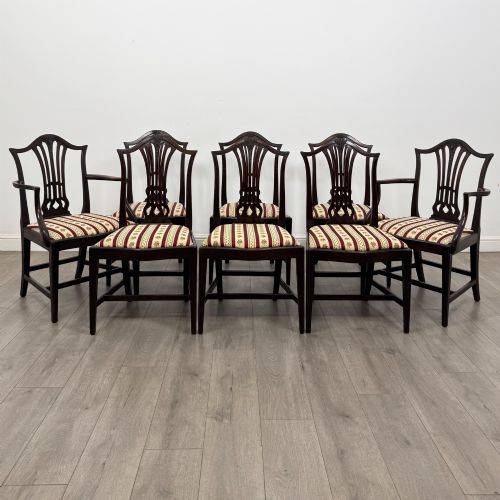
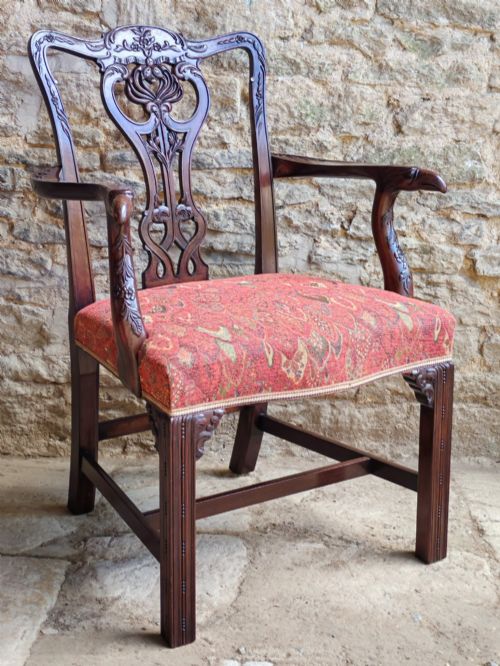
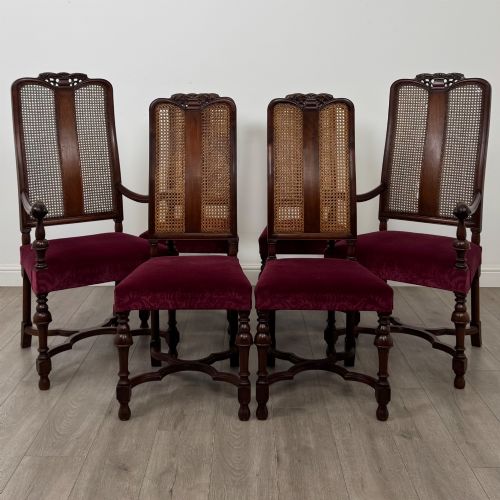
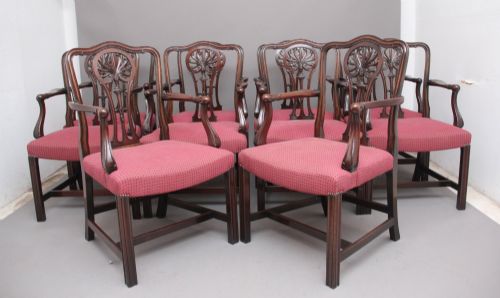
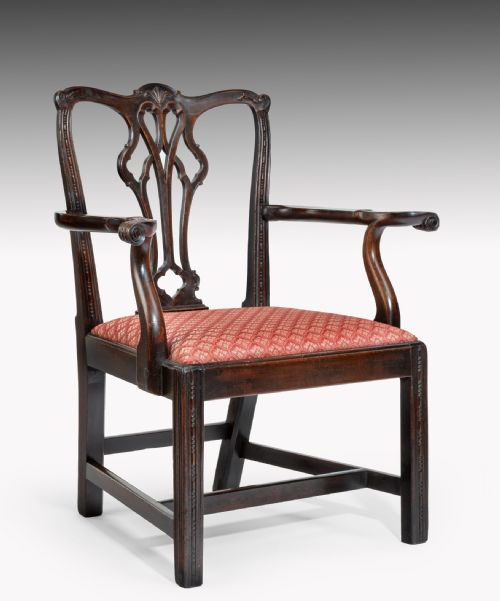
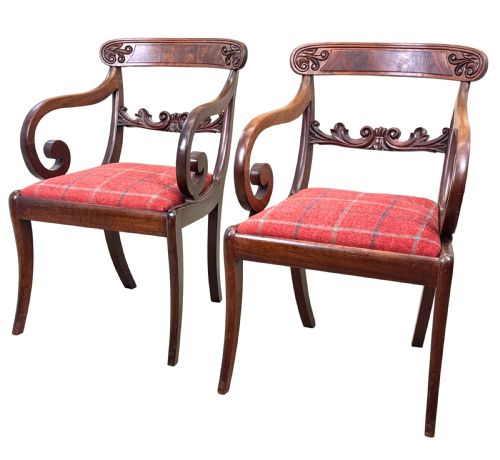
A red upholstered carver chair is typically a robust armchair designed for dining or desk use, often found paired with side chairs or standing alone as an elbow chair. The pieces collected under this search phrase span from the eighteenth century through the Edwardian period and into the nineteen-thirties, drawing on revival styles like Chippendale, Hepplewhite, and Jacobean alongside original Georgian and Victorian pieces.
Most examples meet you in dark hardwoods such as mahogany, oak, and walnut, fitted with armrests and upholstered seats or backs in various red fabrics, velvet, or leather. You encounter single library armchairs, matched pairs, and larger dining sets that include carvers alongside standard chairs.
Makers and workshops across Britain and Europe produced these seats for formal dining rooms, libraries, and parlours. The survivals range from restrained nineteenth-century interpretations to decorative twentieth-century revivals.
How they were made
Makers constructed the primary frames of these chairs using dense hardwoods like mahogany, oak, and walnut, often shaping the timber with hand tools to form curved backrests, cabriole legs, or barley twist supports. Joinery relied on mortise and tenon techniques to ensure the arms and frames withstood daily weight.
Upholstery involved securing horsehair or similar stuffing over webbing or sprung foundations, finished with textiles such as wool, velvet, leather, or tapestry. Brass tacks frequently secured the fabric edges to the wooden seat rails.
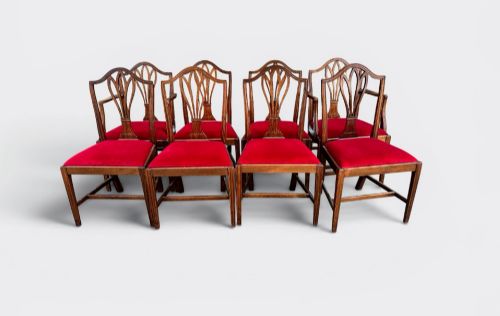
The selection includes individual library chairs alongside complete dining sets containing both armchairs and side chairs.
What varies in quality
The distinction between ordinary and exceptional chairs rests in the depth of hand-carving on the woodwork, the precision of the joinery, and the integrity of the timber. Superior pieces display crisp relief work on the splats and knees, whereas lesser examples rely on flat or cast details.
The grade of the timber and the retention of original framing elements also dictate worth, as does the historical accuracy of any reupholstery. Chairs retaining their original structural bracing and dense hardwood grain command greater attention than heavily altered equivalents.
Howard and Sons·Alfred Allen of Birmingham
The Red Upholstered Carver Chair Glossary
- Carver chair
- An armchair, traditionally placed at the head of a dining table or used at a desk, featuring integrated armrests.
- Elbow chair
- An alternative term for an armchair, often used interchangeably with carver in historical inventories.
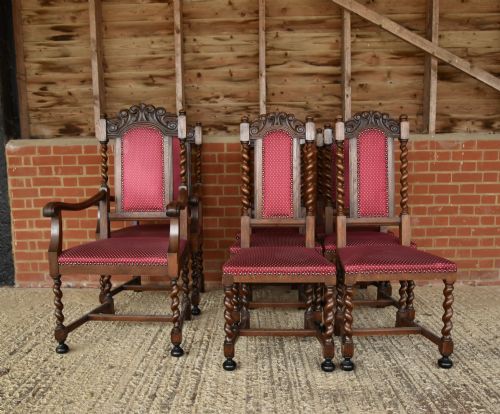
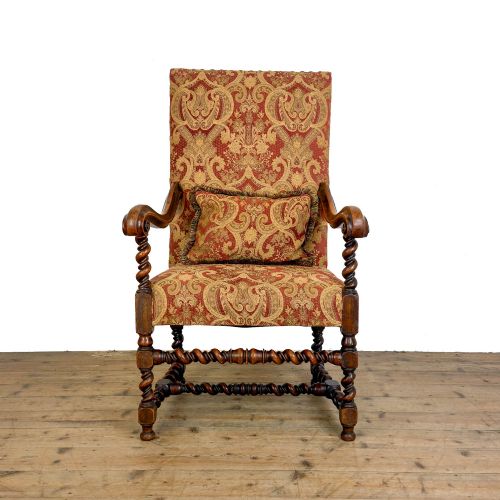
- Barley twist
- A woodworking technique where the timber is turned into a spiral column, popular in seventeenth-century and revival furniture.
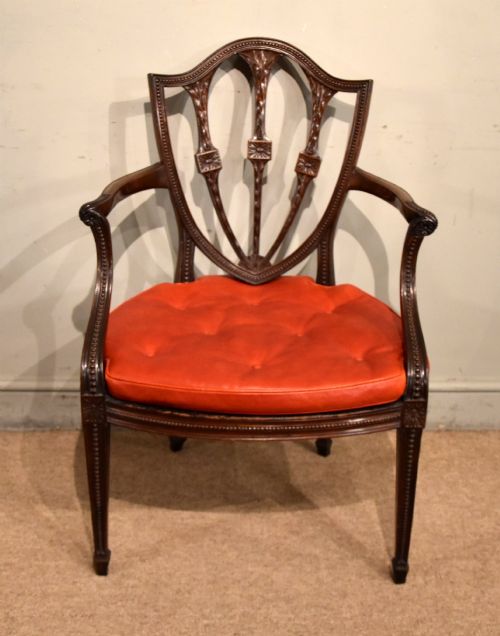
- Shield back
- A chair back shaped like a heraldic shield, characteristic of late eighteenth-century designs associated with Hepplewhite.
- Fauteuil
- An open-armed French armchair with upholstered back and seat, typically featuring exposed wooden framework.
Red Upholstered Carver Chair: Frequently Asked Questions
What is a carver chair?
A carver chair is an armchair traditionally designed with supportive armrests for the head of a dining table. These chairs provide a wider seat and more substantial framing than standard dining chairs.
They function equally well as standalone desk chairs or library seating due to their supportive arm structure.
How do I date a mahogany armchair?
Dating relies on observing the timber grain, construction methods, and stylistic cues such as leg shapes and back splats. Earlier pieces from the eighteenth century show hand-cut joinery and dense, aged mahogany.
Revival pieces from the nineteenth and twentieth centuries often mimic these earlier styles but employ machine-sawn elements and different secondary woods.
Can these chairs be used daily?
Most antique hardwood armchairs are structurally robust enough for regular seating if the frame and joints remain tight. Periodic checks of the underframe ensure the mortise and tenon joints stay secure.
Modern users often pair them with dining tables or study desks, benefiting from their solid construction.
What distinguishes a Chippendale style chair?
Chippendale style chairs feature characteristic pierced carved splats, often with ribbon or interlaced motifs, paired with straight or cabriole legs. The proportions are balanced and the top rails frequently curve outward.
Original eighteenth-century examples share these traits with early twentieth-century revival pieces made in the same manner.