

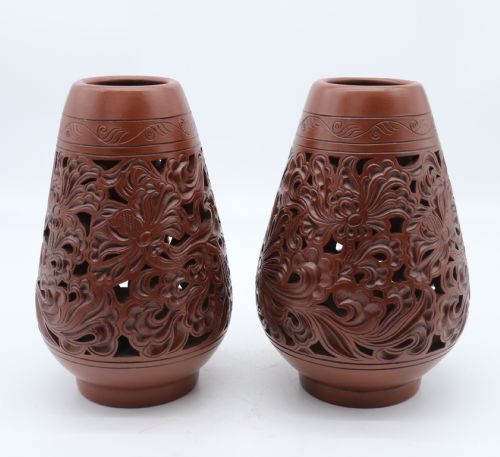
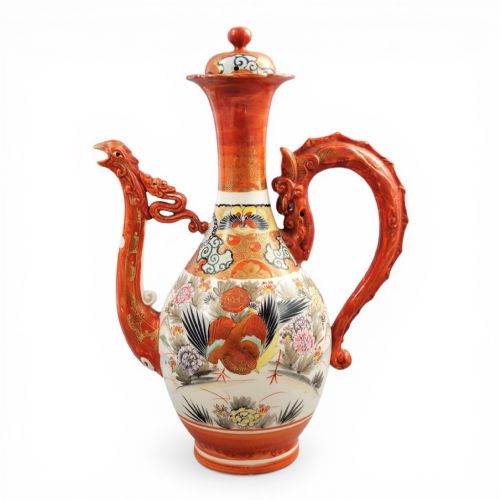
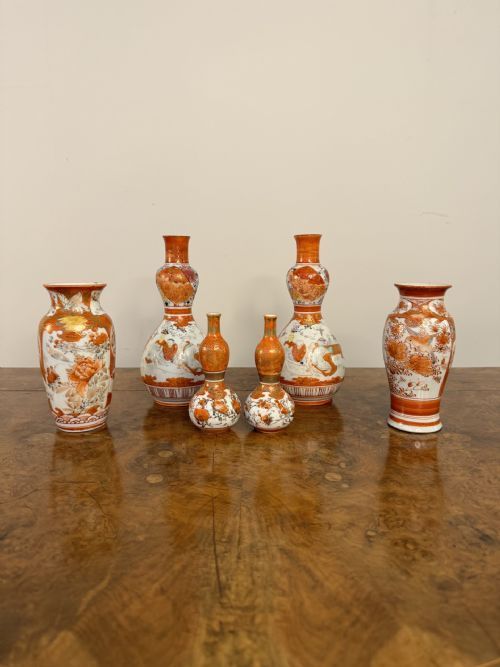


Red Terracotta Vase
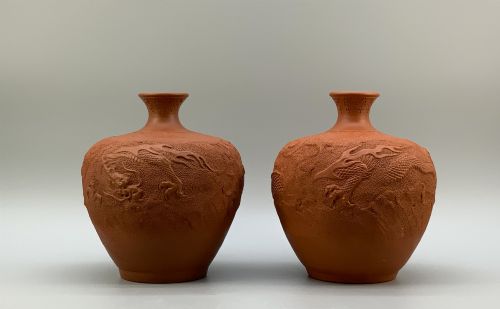
These red terracotta vase examples bring earthy warmth and tactile depth to a room, ranging from Japanese Tokoname clay to Chinese Yixing pottery.
Red Terracotta Vase
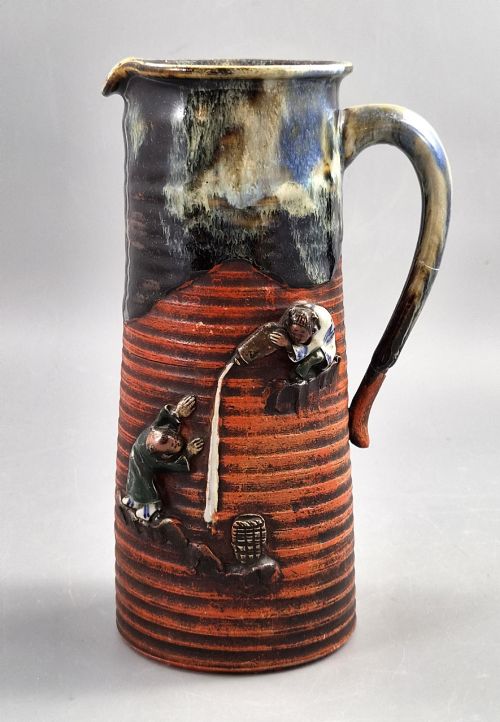
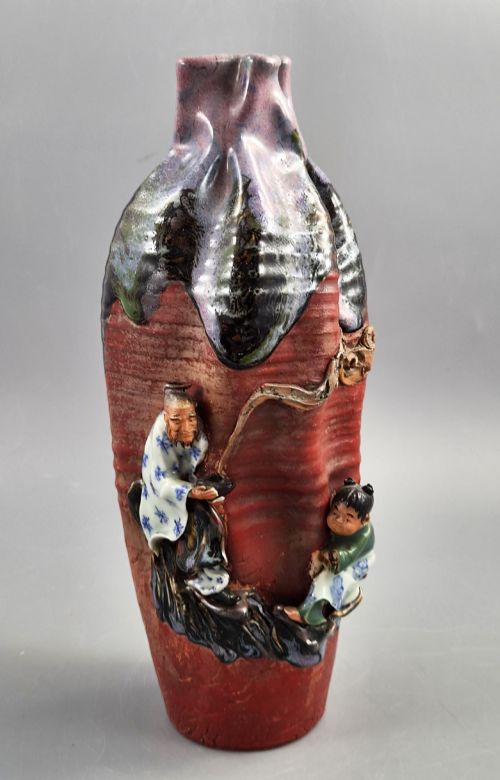
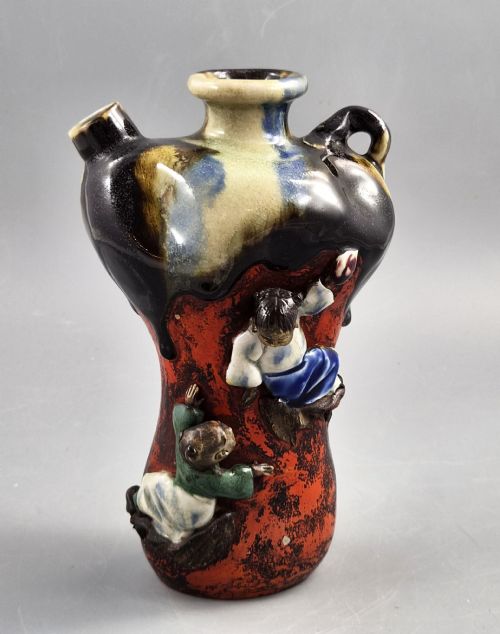
A red terracotta vase search uncovers a diverse gathering of earthenware, pottery, and porcelain vessels originating from Japanese, Chinese, and European workshops. The selection leans heavily toward Japanese production, notably Sumida Gawa and Kutani wares created during the Meiji and Taishō periods.
Buyers frequently encounter baluster shapes, pitchers, and lidded urns alongside items adapted into table lamps. These objects combine utilitarian forms with intricate sculptural additions, such as applied figures and dragon motifs.
While some pieces adhere strictly to traditional eastern aesthetics, others reflect Victorian Chinoiserie tastes or European Maiolica interpretations. The chronological span covers the nineteenth century through the early decades of the twentieth century.
How they were made
Potters shaped these vessels using earthenware, terracotta, and porcelain bodies, often employing hand-building and wheel-throwing techniques. Many examples incorporate textured glazes, enamel decoration, and applied sculptural elements that stand in high relief from the main body.
Finishing touches include gold leaf accents, lacquer over-paint, and reticulated pierced work. Makers also utilised specialised firing methods to achieve flambe effects and contrasting matte and gloss surface textures.
Red Terracotta Vase Retail Price Guide 2026
Typical asking prices for red terracotta vase among the pieces listed under this phrase on Sellingantiques today, from the lower quarter to the upper quarter. They describe what is for sale here now, not the wider market.
Listings feature nineteen-century Japanese Kutani porcelain alongside early twentieth-century Sumida Gawa pottery and Chinese Yixing pieces.
What varies in quality
The standard of a red terracotta vase depends upon the crispness of the modelling and the control shown in applied decorative elements. Pieces that retain clear maker signatures and deliberate, balanced composition stand apart from mass-produced output.
Glaze application and the harmony between painted details and raw clay textures dictate the overall visual success of the object. Finer items display meticulous hand-finishing where every applied figure or carved panel contributes to the unified design.
Ban-ni·Kōko·Inoue Ryosai·Tschacbasov
The Red Terracotta Vase Glossary
- Tokoname
- A Japanese centre for pottery production known for unglazed red clay wares. Pieces from this region often feature natural kiln effects and textured surfaces.
- Sumida Gawa
- A style of Japanese pottery characterised by heavily textured, melting glazes and applied figurative elements. Artisans usually left portions of the reddish clay body exposed.
- Kutani
- A style of Japanese porcelain noted for vibrant enamel painting and gilding. These works frequently depict figurative scenes and natural motifs.
- Yixing
- Chinese stoneware produced in Jiangsu province, typically left unglazed. The clay body ranges from red to brown and supports intricate reticulated carving.
- Maiolica
- European tin-glazed earthenware decorated with opaque colourful pigments. It often mimics eastern forms through a western lens.
Red Terracotta Vase: Frequently Asked Questions
What is Sumida Gawa pottery?
Sumida Gawa pottery originates from Tokyo workshops active during the late nineteenth and early twentieth centuries. These vessels are easily identified by their heavy, dripping glazes and three-dimensional figures applied directly to the exterior.
Artisans utilised local clays, leaving sections unglazed to contrast with the colourful enamel and textured surfaces. Each piece offers a distinct narrative scene drawn from folklore or daily life.
Are these vases waterproof?
Many antique earthenware and terracotta vessels are porous by nature due to the low firing temperatures used during their creation. Using a small glass or ceramic liner inside protects the interior from moisture.
Porous bodies can absorb water over time, which may damage the historic clay or exterior glazes. Treating them primarily as decorative objects preserves their structural integrity.
How should I clean my antique vase?
Dusting with a soft, dry artist brush or microfibre cloth is the safest method for routine maintenance. Avoid chemical cleaners, harsh detergents, and excessive water immersion.
Historic glazes, applied figures, and delicate gold leaf can lift or flake if exposed to moisture. Gentle handling ensures the surface decoration remains intact for years to come.