

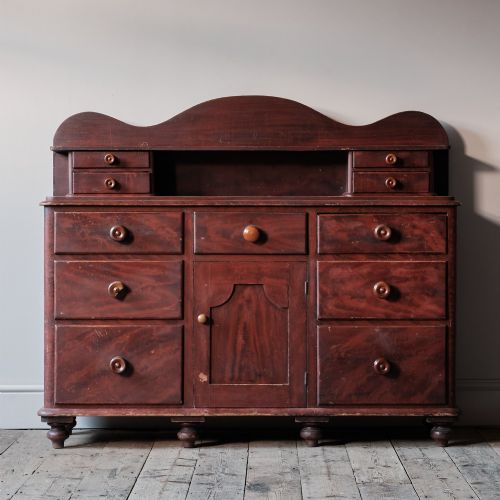
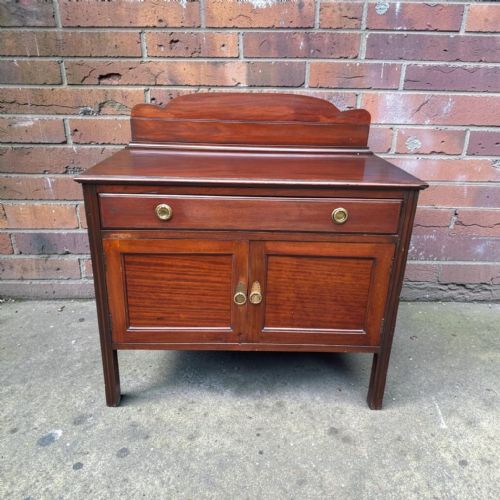
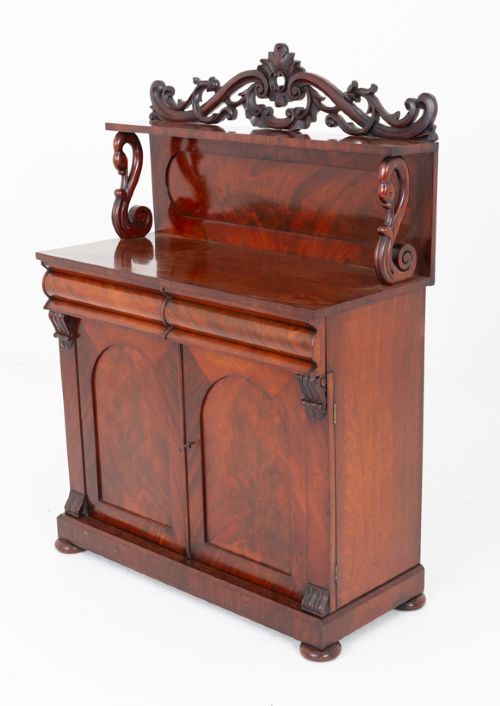


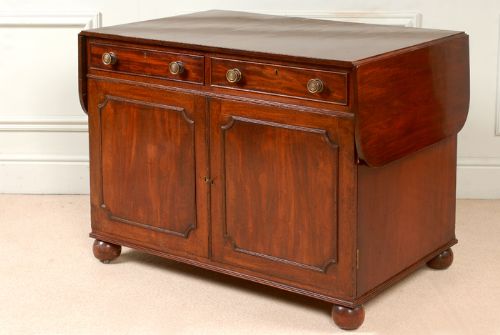


Red Storage Credenza
These red storage credenza pieces bring bold lacquer, rich mahogany, and practical storage together to anchor a room.
Red Storage Credenza
When searching for a red storage credenza, collectors encounter sideboards, cabinets, and chiffoniers originating from the nineteenth and twentieth centuries. These furnishings provide substantial surface areas and internal compartments designed for domestic storage.
The pieces on offer span diverse aesthetic traditions, running from British Victorian and Regency mahogany cabinetry to Chinese lacquered works and Chinoiserie side cabinets. Most examples rely on rich timber carcases or striking red lacquered surfaces to command attention.
Buyers most frequently meet nineteenth-century mahogany side cabinets alongside twentieth-century lacquered Chinese items. These forms combine functional compartmentalisation with decorative presence, suiting varied interior schemes.
Materials and construction
Cabinetmakers constructed these carcases primarily using solid mahogany, flame mahogany veneer, and lacquered wood. Brass details frequently appear on handles, mounts, and grilles.
Lacquered pieces utilise multiple coats applied to wood bases, often finished with Chinoiserie detailing. Nineteenth-century examples employ traditional joinery techniques, cabinet planning, and sometimes marble tops.
Giltwood elements occasionally accent the timber structures, whilst interior shelves and drawers utilise secondary timbers appropriate to the period.
Red Storage Credenza Retail Price Guide 2026
Typical asking prices for red storage credenza among the pieces listed under this phrase on Sellingantiques today, from the lower quarter to the upper quarter. They describe what is for sale here now, not the wider market.
Bright red lacquer cabinets bring a spirited splash of colour that refuses to let any room take itself too seriously.
Judging quality
The standard of a red storage credenza rests upon the depth of the lacquer finish, the selection of timber veneers, and the crispness of any applied carving or giltwood decoration. Flame mahogany surfaces display intentional grain matching that elevates the visual weight of the timber.
Structural integrity reveals itself in the smooth operation of doors and drawers, alongside the stability of the carcase. Pieces retaining original brass hardware and well-preserved surface patination command greater regard from collectors.
The Red Storage Credenza Glossary
- Chiffonier
- A low sideboard or cabinet featuring shelves or enclosed storage below. This form became popular during the nineteenth century for domestic parlours.
- Chinoiserie
- European decorative style reflecting Chinese artistic motifs. Artisans applied these designs to lacquered cabinets and woodwork.
- Flame mahogany veneer
- Thin slices of mahogany selected for a fiery, undulating grain pattern. Craftsmen laid these veneers over stable timber carcases.
- Breakfront
- A cabinet or sideboard whose central section projects forward from the flanking outer sections. This architectural arrangement creates varied shadow and depth.
- Gonçalo-Alvez
- A dense exotic hardwood sometimes utilised in Regency cabinetmaking. The timber displays rich contrasting streaks and high durability.
Red Storage Credenza: Frequently Asked Questions
What is a red storage credenza?
A red storage credenza groups various sideboards, cabinets, and chiffoniers defined by red lacquer finishes or rich red-toned mahogany timbers. These items provide enclosed shelving and display surfaces.
They originate from diverse historical periods, ranging from Georgian and Regency eras through to twentieth-century Chinoiserie works.
How were these cabinets used?
Historically, these pieces served dining rooms and parlours for storing tableware, linens, and documents. Their top surfaces acted as serving spaces or display areas for silver and ceramics.
Today, they function similarly in modern interiors, offering concealed storage whilst serving as focal points in living spaces or hallways.
How do I identify a Victorian piece?
Victorian examples typically utilise solid mahogany or mahogany veneers with substantial timber construction. They often manifest as chiffoniers with mirrored backs or robust three-door sideboards.
Details such as heavy turned feet and traditional nineteenth-century joinery help distinguish pieces from this period.
What distinguishes lacquered cabinets?
Lacquered cabinets feature layered resin finishes that provide glossy, durable surfaces often coloured in striking red tones. Many incorporate Chinoiserie motifs depicting figures, landscapes, or floral designs in gold paint.
These pieces derive from Chinese export traditions or twentieth-century interpretations of Asian decorative arts.