








Red Serapi Rug
A red serapi rug delivers bold geometric patterns and rich terracotta fields, bringing traditional Persian artistry directly to your floor.
Red Serapi Rug
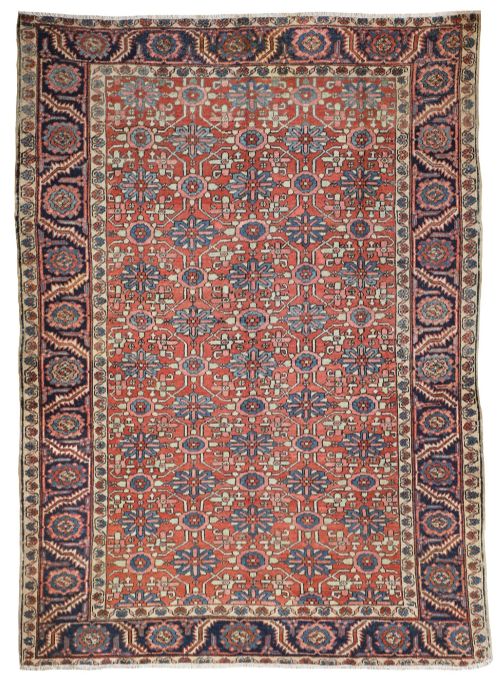
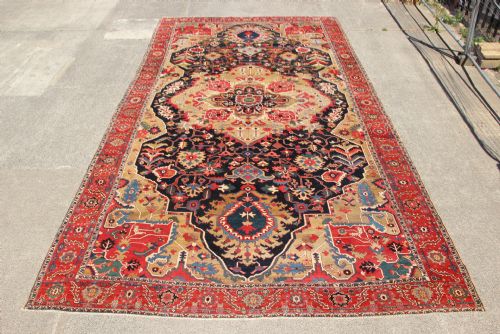
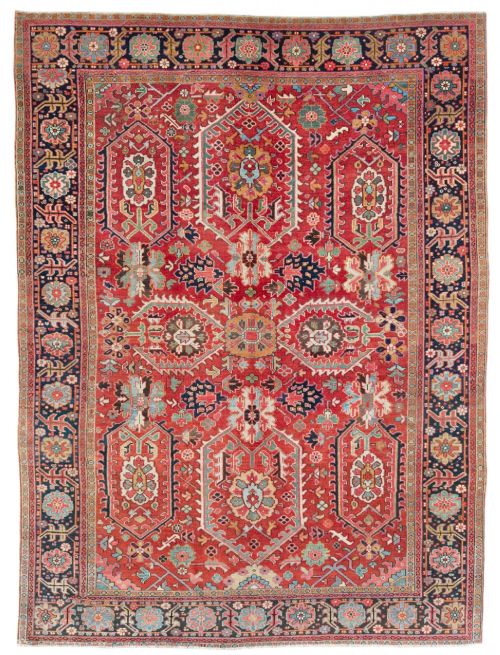
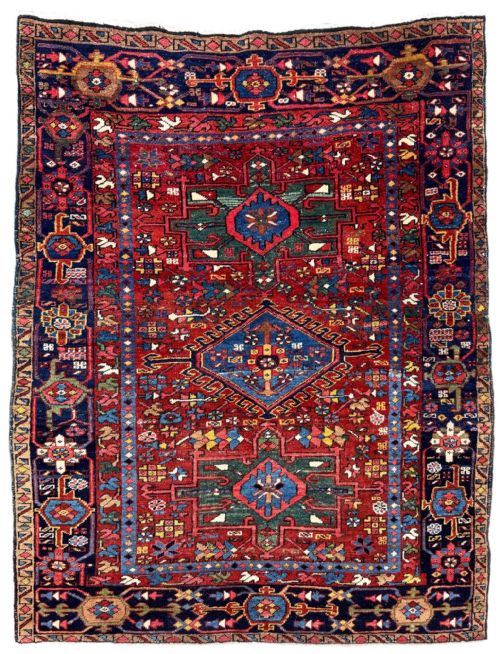
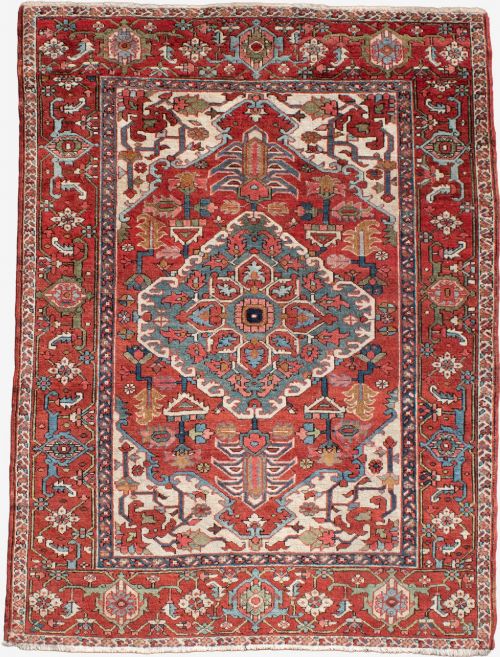
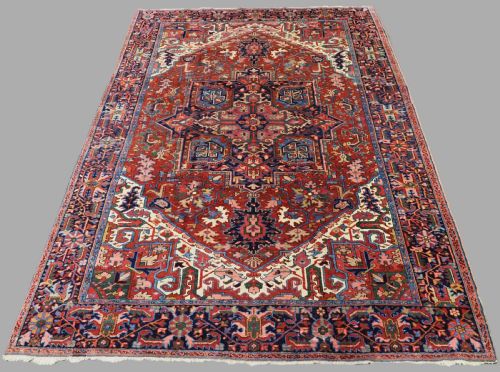
A red serapi rug represents a distinctive subset of Northwest Persian carpet weaving, often associated with the Heriz region. These pieces typically display large-scale geometric medallions set against prominent red or terracotta grounds, offering a striking visual presence in any interior. The selection focuses heavily on antique formats dating from the late nineteenth century through the early decades of the twentieth century.
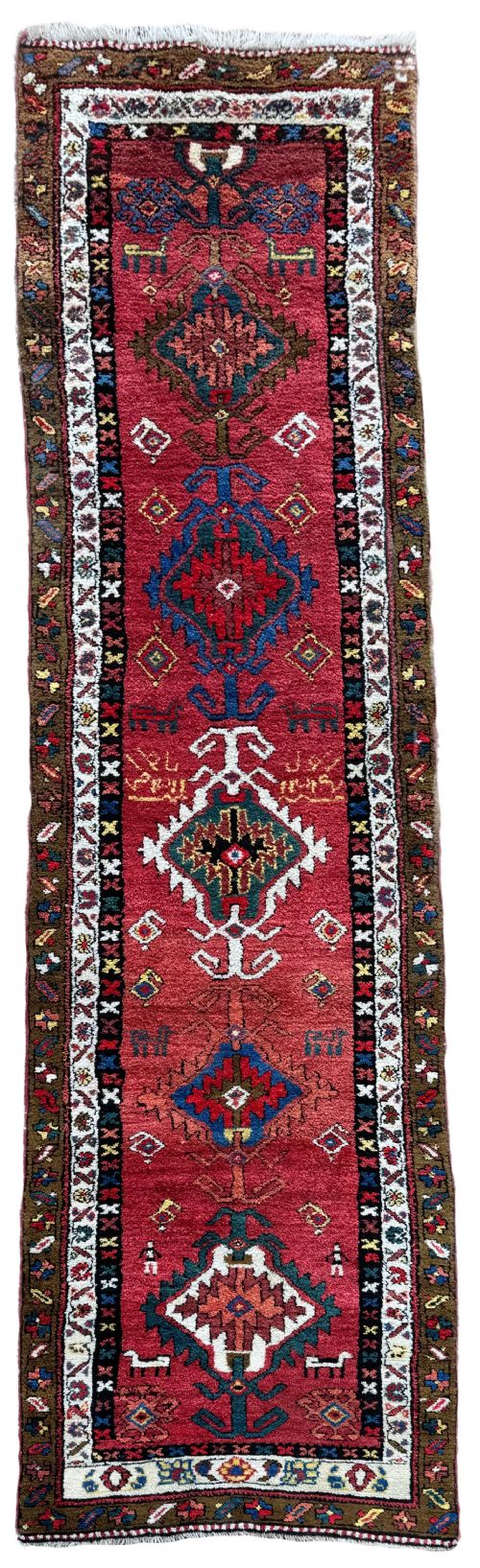
Buyers encounter various scales ranging from compact area rugs and square formats to expansive carpets and elongated hallway runners. The traditional compositions merge curvilinear floral motifs with bold rectilinear framing, demonstrating the characteristic stylistic overlap between Heriz and Serapi weaving traditions. Each specimen reflects the aesthetic preferences of Northwest Persian village and town workshops from eras spanning the 1870s to the 1930s.
Materials and construction
Traditional red serapi rug examples utilise durable wool pile knotted onto cotton foundations. The natural wool fibres take dyes with notable depth, particularly the characteristic madder-root reds that define the colour palette of these carpets.
Weavers employed sturdy symmetrical knots on vertical looms, creating dense structures designed to withstand heavy use in domestic settings. The cotton warps and wefts provide structural stability, allowing large carpets and narrow runners to maintain their geometric proportions over generations.
The listed pieces span production dates from the 1870s through the 1930s, utilising durable wool and cotton construction.
Factors of quality and distinction
The sophistication of the central medallion drawing and the clarity of the surrounding geometric motifs determine the visual hierarchy among these carpets. Finer examples exhibit balanced proportions where the secondary borders frame the primary field without crowding the corner spandrels.
Colour saturation and the harmonious ageing of vegetable dyes separate standard room-size carpets from exceptional works. Even wear across the wool pile and integrity along the original selvedges indicate careful historic maintenance.
The Red Serapi Rug Glossary
- Serapi
- A trade designation for older carpets from the Heriz district of Northwest Persia, known for spacious designs and bold geometric drawing. These pieces date primarily from the nineteenth and early twentieth centuries.
- Heriz
- A major carpet-producing town and surrounding region in Northwest Persia. The rugs woven here share durable cotton foundations and sturdy wool piles with Serapi carpets.
- Spandrel
- The triangular corner areas situated between the central medallion field and the outer borders. They complete the geometric framework of traditional Persian carpet design.
- Runner
- An elongated narrow carpet format designed for hallways, staircases, and corridors. These pieces maintain the same robust wool construction as larger room-size rugs.
Red Serapi Rug: Frequently Asked Questions
What defines a red serapi rug?
A red serapi rug is a style of antique Persian carpet originating from the Heriz region, characterised by a bold geometric central medallion and a terracotta or red field.
These woven works date mainly from the late nineteenth and early twentieth centuries, combining village weaving traditions with grand architectural proportions.
How do I care for an antique rug?
Vacuum these wool and cotton textiles gently with a suction-only attachment, avoiding traditional rotating brush heads. Professional washing by specialists familiar with antique vegetable dyes preserves the integrity of the fibres.
Rotate the carpet periodically to ensure even exposure to foot traffic and natural light, protecting the balanced coloration of the wool.
Where should I place a runner?
Elongated runner formats suit high-traffic transitional spaces such as hallways, entryways, and wide corridors. Their sturdy wool construction absorbs movement while adding warmth and traditional pattern to otherwise narrow areas.
Ensure an appropriate underlay is used beneath the cotton foundation to prevent slipping and reduce friction against hard floors.
How do I distinguish Heriz from Serapi?
Serapi carpets generally feature a more open, spacious design with bolder geometric drafting and slightly earlier nineteenth-century origins. Heriz pieces often display denser, more intricate secondary fillings within the medallion and field.
Both types share the same Northwest Persian material origins using wool pile on cotton warps.