







Red Saddle Bag
A red saddle bag brings the tactile geometry of nomadic weaving directly into a room.
Red Saddle Bag
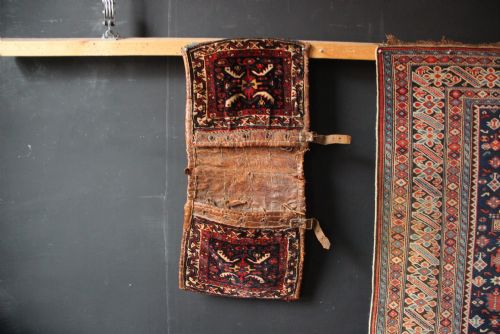
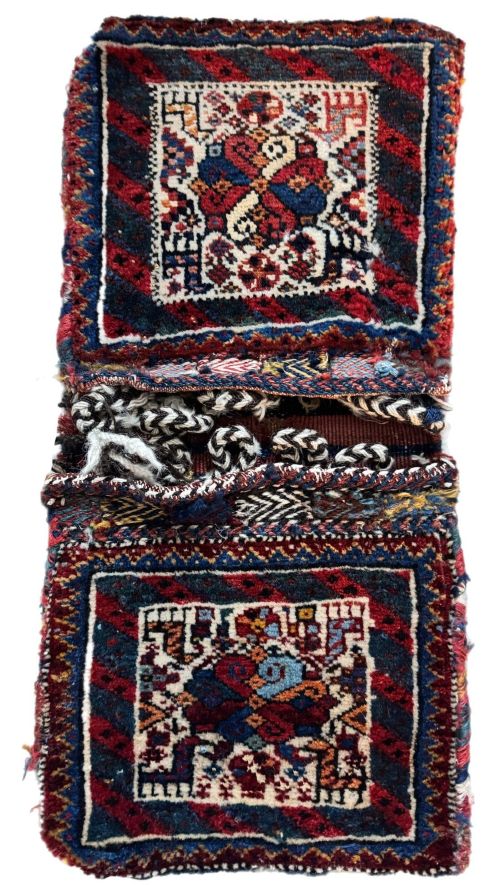
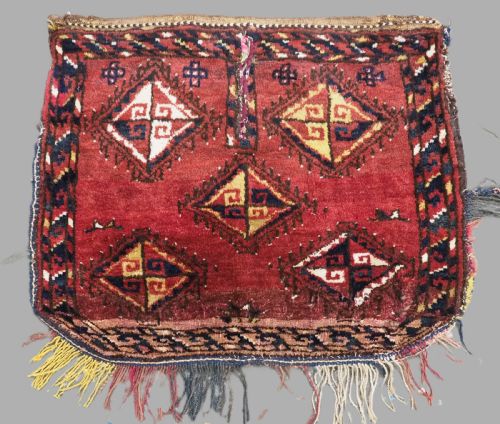
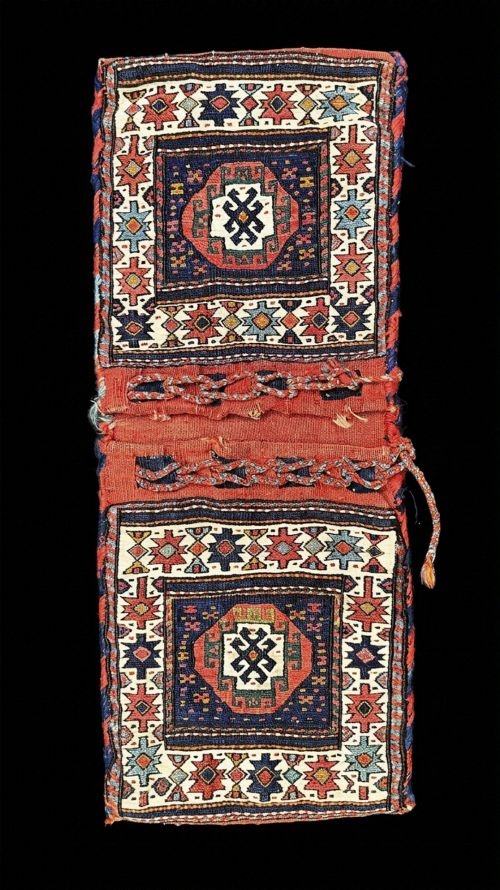
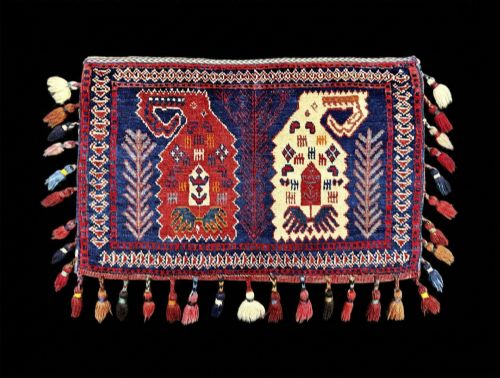
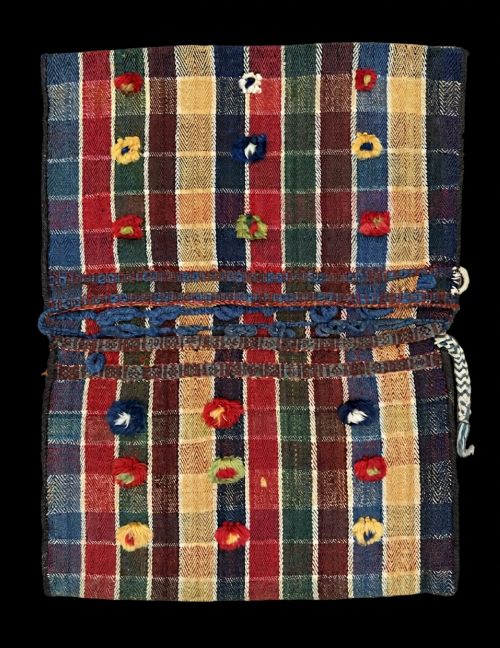
When you search for a red saddle bag, you are looking at functional tribal textiles woven by nomadic and village groups across Persia, the Caucasus, and Anatolia. These pieces served practical roles for transport on animals, constructed either as paired khorjin or as single bag faces.
The selections encountered here span from the mid nineteenth century into the early twentieth century. Common tribal attributions include Qashqai, Shahsavan, Afshar, Luri, and Baluch weavers working within distinct regional traditions.
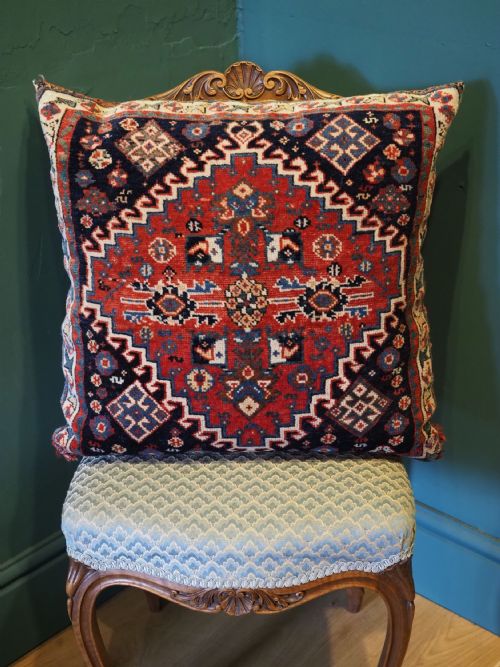
Most examples survive as individual bag faces or complete double pouches, often adapted over time into wall hangings, cushions, or small floor rugs. Their formats range from square cushion sizes to longer rectangular panels.
How they were made
Makers utilised hand-spun wool for the pile and foundation, combining natural dyes derived from local plants and minerals to achieve deep madder reds alongside contrasting indigo and ivory tones. Metal components occasionally appear in associated closures or reinforcement strips.
Weaving techniques vary between pile knots and flatwoven soumak or plain weave structures, often pairing a durable flatweave back with a plush knotted face. This dual construction provided both structural strength for carrying loads and a decorative display surface.
Red Saddle Bag Retail Price Guide 2026
Typical asking prices for red saddle bag among the pieces listed under this phrase on Sellingantiques today, from the lower quarter to the upper quarter. They describe what is for sale here now, not the wider market.
Many surviving saddle bags still retain traces of coarse goat hair woven into the edges to deter stubborn pack animals from chewing the wool.
What varies in quality
The standard of a red saddle bag rests upon the handle of the wool and the saturation of the natural dyes. Luminous, high-lanolin wool absorbs colour evenly and patinates gracefully with age.
Design crispness and structural integrity also distinguish individual pieces. Tightly packed knotting, precise geometric execution, and the survival of original plain weave backs or complete side closures elevate an example's integrity.
The Red Saddle Bag Glossary
- Khorjin
- The traditional Persian term for a double saddlebag used by nomads for carrying belongings. These objects were woven as a matched pair joined by a central web.
- Soumak
- A wrap-around flatweaving technique that creates a durable surface with raised pattern details. This method does not involve traditional knotting.
- Gul
- A medallion or repeating octagonal motif frequently found in tribal weaving traditions. These stylized forms often denote specific tribal lineages.
- Boteh
- A stylised floral motif resembling a almond or bent shrub shape. This pattern appears frequently in Afshar and Persian nomadic designs.
- Plain weave
- A simple alternating warp and weft construction used for the backings of bags. It provides lightweight strength without pile.
Red Saddle Bag: Frequently Asked Questions
What is a red saddle bag?
A red saddle bag is a functional textile woven by nomadic groups for transport on animals, defined by a dominant madder red palette and tribal geometric patterns.
Over time, many of these utilitarian items were separated into individual bag faces or preserved as complete pouches for domestic decoration.
How were these bags used?
Nomadic families slung these paired pouches across pack animals to transport household goods during seasonal migrations. The robust construction protected contents from dust and rough travel.
When stationary inside tents, the bags served as storage containers for bedding, utensils, and personal possessions.
How do I live with a saddle bag?
These textiles adapt easily to modern interiors as small wall hangings, table runners, or mounted display panels. Many examples are also padded and utilised as decorative floor cushions.
Keep them away from direct, strong sunlight to protect the natural madder dyes from fading over extended periods.
How do I tell tribal types apart?
Tribal attributions rely on specific combinations of palette, wool quality, and structural technique. Shahsavan pieces often feature crisp soumak work, while Afshar pieces frequently display boteh motifs.
Examining the selvedges, end finishes, and secondary weft colours helps narrow down the specific region of origin within Persia or the Caucasus.