


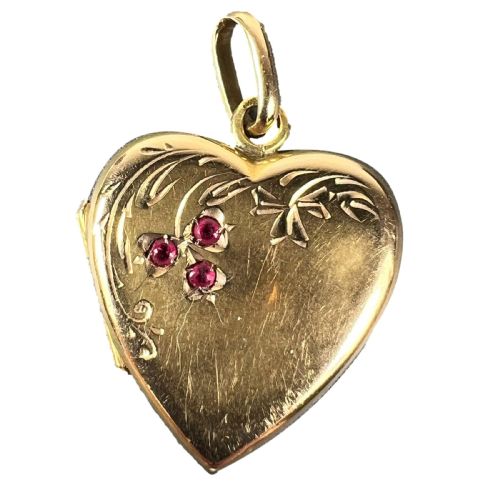


Red Ruby Pendant
A red ruby pendant catches the light with deep crimson brilliance, offering timeless elegance across eras from Victorian goldwork to mid-century cluster settings.
Red Ruby Pendant
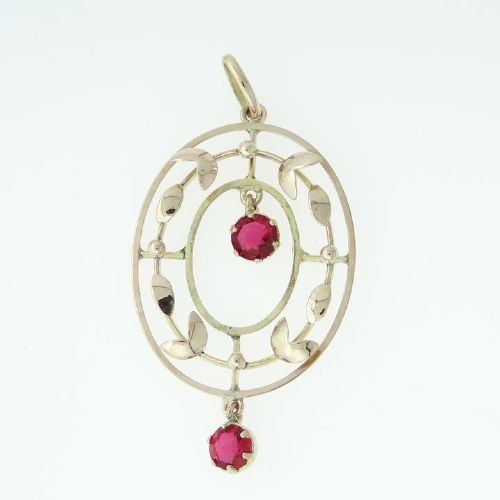
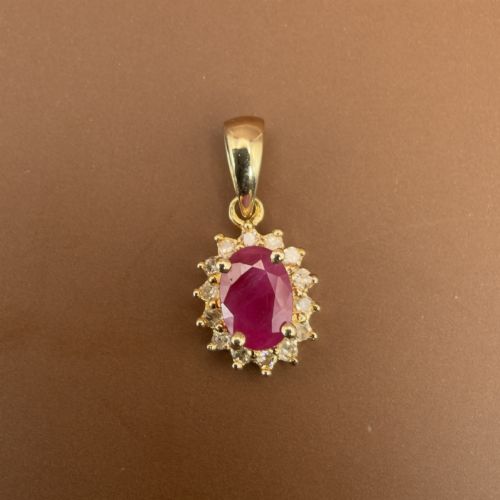
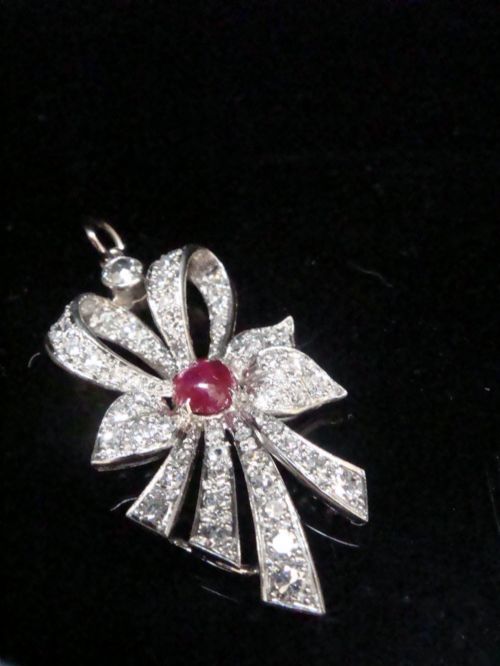
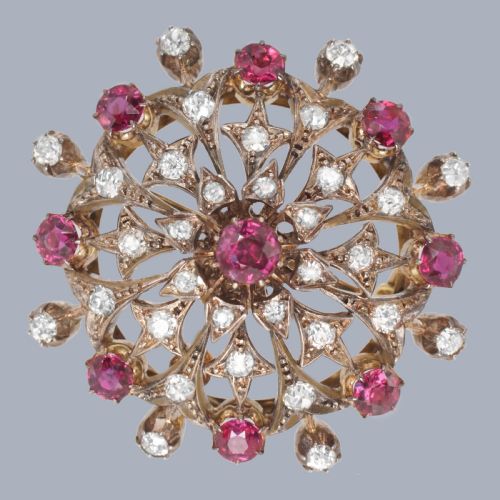
A red ruby pendant brings together rich crimson gemstones and precious metals, appearing here in diverse forms ranging from antique cluster necklaces to convertible brooch pendants. When seeking a red ruby pendant, buyers encounter pieces spanning the Victorian, Edwardian, and mid-century periods, each displaying distinct regional and chronological traits.
Materials and construction
Goldsmiths utilised yellow gold, rose gold, and platinum to mount rubies alongside supporting diamonds, sapphires, or citrines. Settings incorporate claw and cluster arrangements, often paired with fine chains or integrated into convertible brooch-pendant frameworks.
Decorative glass pieces employ moulded crystal, cut glass, and ruby-tinted glass suspended from gilded metal work. These lighting fixtures demonstrate period techniques in colour infusion and metal shaping concurrent with jewellery manufacture.
Listings feature items spanning the Victorian era through the 1950s, incorporating gold, silver, platinum, crystal, and glass.
Judging quality and craftsmanship
The standard of a piece rests upon the depth of the gemstone's colour saturation, the clarity of any accompanying diamonds, and the precision of the metal setting. Finer examples display harmonious proportions, secure stone mounting, and well-preserved hallmarks or certification.
Period context and structural integrity further distinguish pieces, where hand-finished goldwork or intricate platinum piercing elevates the overall execution. Common jewellery demonstrates durability, while superior items exhibit exceptional gemstone carat weight and refined lapidary work.
The Red Ruby Pendant Glossary
- Cluster pendant
- A jewellery piece featuring a central gemstone surrounded by a ring of smaller stones, typically diamonds. This arrangement maximises light reflection and visual impact.
- Brooch pendant
- A versatile ornament fitted with both a pin mechanism and a suspension loop, allowing the owner to wear it pinned to fabric or hung from a chain.
- Platinum
- A dense, ductile precious metal prized for its silvery-white lustre and strength, frequently utilised in Edwardian jewellery to hold gemstones securely with minimal visible metal.
- Cranberry glass
- A type of transparent red glass produced by adding gold chloride to the molten batch, popular during the nineteenth century for lampshades and decorative vessels.
- Open bezel
- A stone setting where the metal encircles the girdle of the gem while leaving the back exposed to permit light passage through the pavilion.
Red Ruby Pendant: Frequently Asked Questions
How do I date a red ruby pendant?
Dating relies upon examining the metal alloys, stone cuts, and manufacturing techniques employed in the setting. Victorian pieces often utilise closed-back foils or rose gold, whereas Edwardian items favour platinum and delicate millegrain detailing.
Mid-century examples display heavier cast gold structures and distinct gemstone proportions. Hallmarks and gemological reports provide additional chronological evidence.
Are the rubies natural or treated?
The inventory encompasses both natural untreated stones and treated varieties, with specific documentation accompanying certified pieces. Natural origin adds significant historical and collector interest.
Examining gemological reports helps confirm whether stones have undergone thermal enhancement or other treatments common in jewellery manufacturing.
Can these pendants be worn daily?
Rubies rank high on the Mohs hardness scale, making them durable enough for regular wear when mounted in secure gold or platinum settings. Antique pieces require thoughtful care to protect delicate goldwork or older claw configurations.
Removing jewellery before strenuous activity or swimming preserves the integrity of the precious metals and secondary stones.
What is the difference between Victorian and Edwardian settings?
Victorian designs frequently feature warm yellow or rose gold, heavier bezel settings, and romantic motifs such as hearts or floral clusters. Edwardian jewellery shifts towards white metals like platinum, showcasing lighter, airier filigree and bow shapes.
Victorian pieces often double as brooches, reflecting the versatile jewellery habits of the nineteenth century.