


Red Ruby Halo Ring
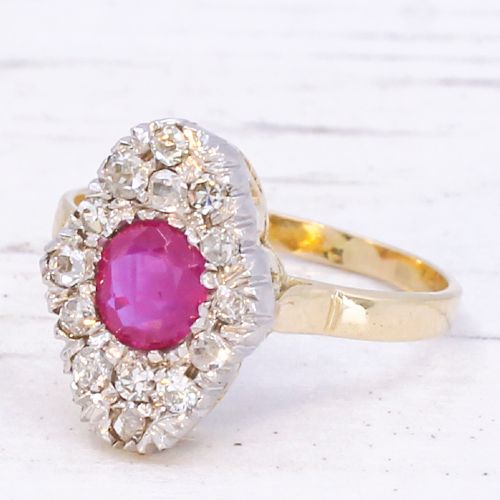
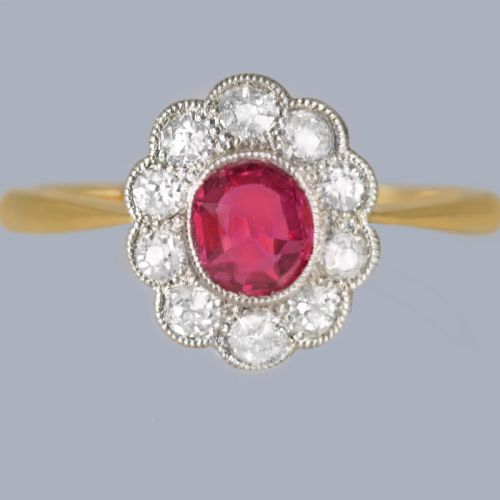
A red ruby halo ring brings together a bright central corundum and a circle of diamonds in gold or platinum.
Red Ruby Halo Ring
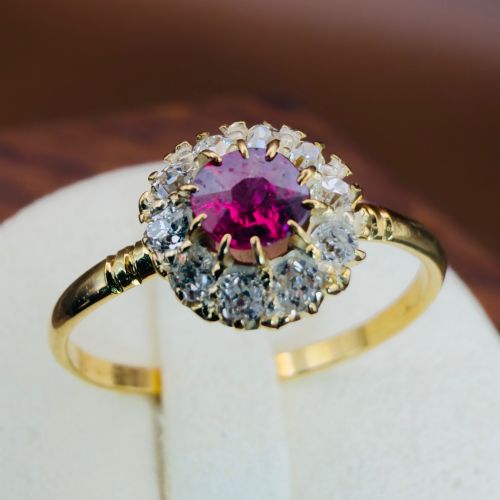
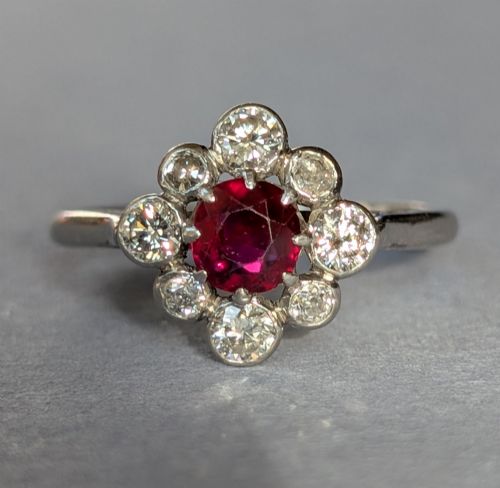
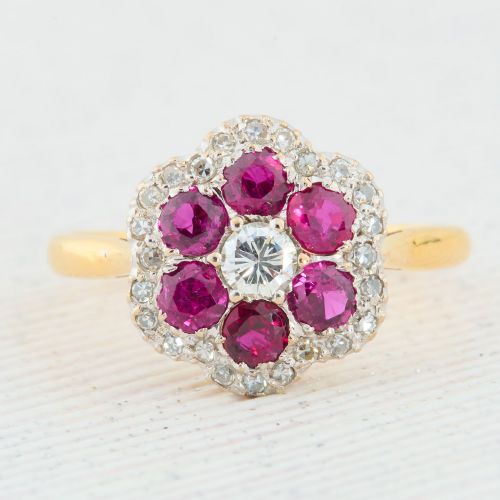
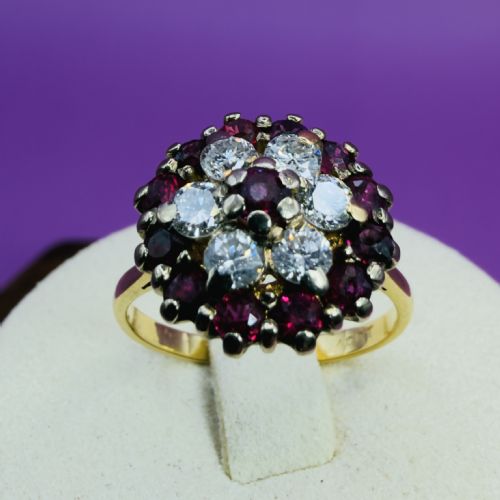
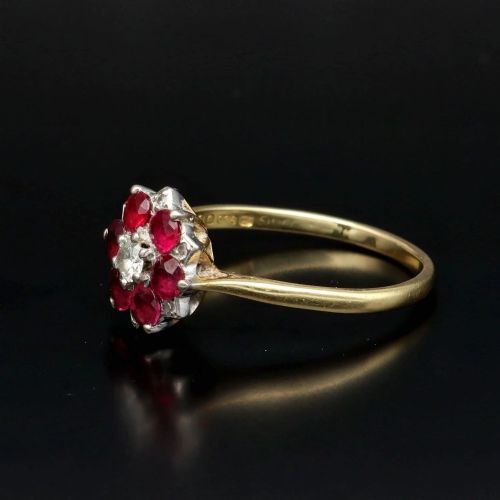
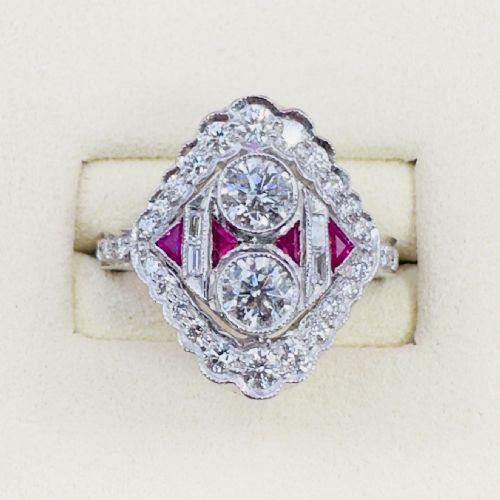
A red ruby halo ring centres on a vibrant red gemstone surrounded by smaller accent stones, typically configured as a cluster or floral arrangement. These jewels emerge from periods spanning the Victorian era through the mid-twentieth century, including distinct Art Deco and Edwardian designs.
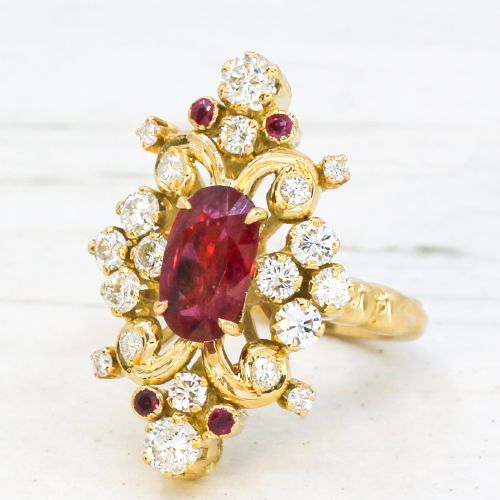
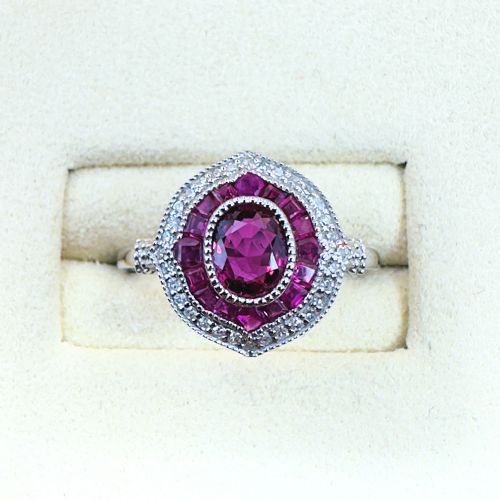
The versions most commonly met on this page combine yellow gold, white gold, or platinum with oval, cushion, or navette cut rubies. Buyers encounter antique and vintage specimens ranging from delicate floral configurations to substantial multi-carat Burmese centre stones.
How they were made
Goldsmiths constructed these mountings primarily in 18ct yellow gold, 18ct white gold, and platinum, frequently pairing gold shanks with platinum settings to enhance the brilliance of the diamonds. Gemstones are secured using claw settings or grain settings that follow the precise contours of the central ruby.
Lapidaries shaped the rubies into cushion, oval, pear, and marquise cuts, accompanied by old cut or brilliant cut diamonds. Many pieces incorporate specialised gemstone reports detailing the geographical origin and thermal treatment status of the rubies.
Several rings proudly display secret floral clusters hidden beneath their sparkling halos.
What varies in quality
The distinction between standard and exceptional pieces rests upon the saturation and origin of the central ruby, with untreated Burmese stones commanding particular regard. Natural fluorescence, clarity, and the absence of heating significantly elevate the standing of a red ruby halo ring.
Artisanal execution dictates the overall harmony of the cluster, observable in the precise matching and proportional scaling of the surrounding diamonds. The integrity of the metalwork, whether substantial 18ct gold or durable platinum, completes the standard of construction.
The Red Ruby Halo Ring Glossary
- Halo cluster ring
- A design featuring a central gemstone encircled by a ring of smaller accent stones, usually diamonds. This arrangement maximises the visual presence of the primary gem.
- Burmese ruby
- A ruby originating from the Mogok region in Burma, historically prized for a distinctive rich crimson colour. These stones often display superior saturation.
- Navette cut
- A pointed, boat-shaped gemstone cut also known as a marquise cut. It creates an elongated silhouette upon the finger.
- Old cut diamond
- A hand-faceted diamond shape typical of antique jewellery, featuring a smaller table and larger culet. These stones exhibit a softer light dispersion than modern brilliants.
Red Ruby Halo Ring: Frequently Asked Questions
How do I date a red ruby halo ring?
Dating relies on stylistic markers such as geometric platinum mountings for Art Deco pieces or buttery yellow gold settings for Victorian examples. Maker marks and shank construction also offer clues to the period of origin.
Examining the diamond cut provides further chronological context, as old cut stones typically indicate nineteenth or early twentieth-century manufacture.
What is an unheated ruby?
An unheated ruby is a natural gemstone that has not undergone thermal enhancement to improve its colour or clarity. Such stones are scarce and valued by collectors for their natural properties.
Gemmological certificates often accompany these specimens to confirm the absence of artificial treatments.
Are these rings suitable for daily wear?
Rubies rank nine on the Mohs hardness scale, making them durable enough for regular wear when set securely in gold or platinum. However, antique settings require gentle care and periodic inspection by a jeweller.
Removing the ring during manual tasks protects both the central ruby and the surrounding diamond halo.
What does Mogok signify?
Mogok refers to the famous valley in Myanmar, formerly Burma, renowned for producing exceptional rubies. Stones originating from this locality are historically significant.
Gemmological reports frequently cite Mogok when identifying the geographic provenance of high-grade rubies.