


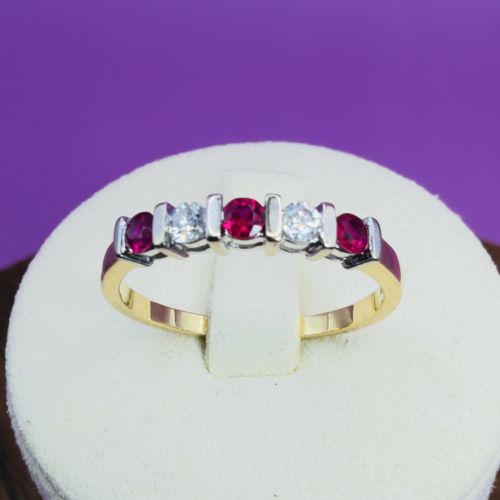
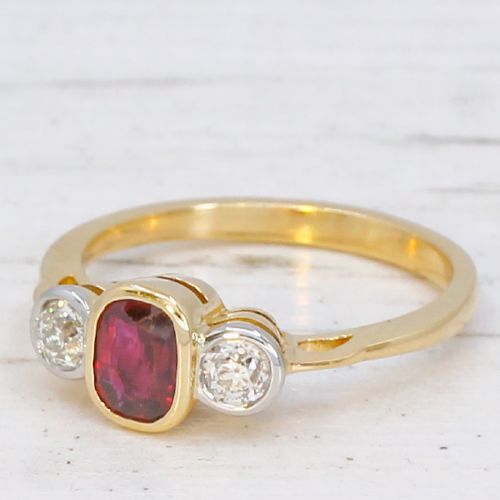
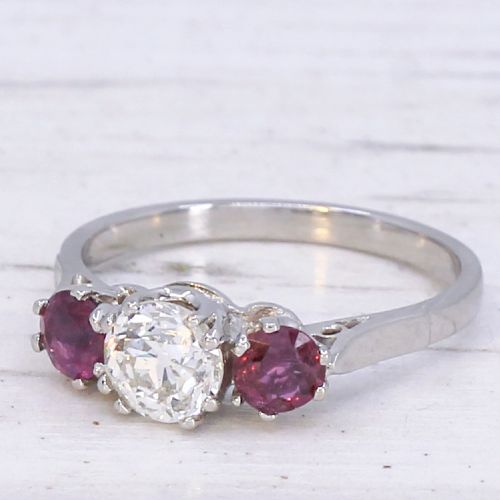
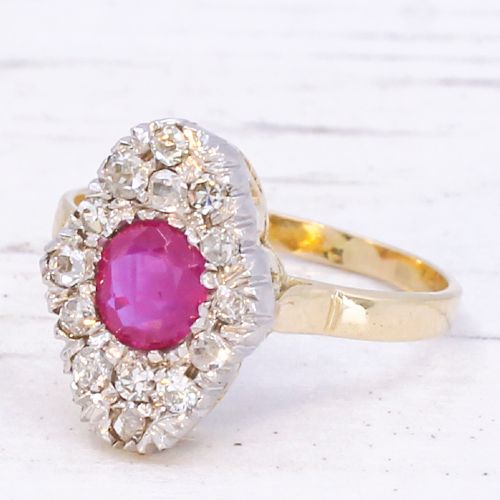
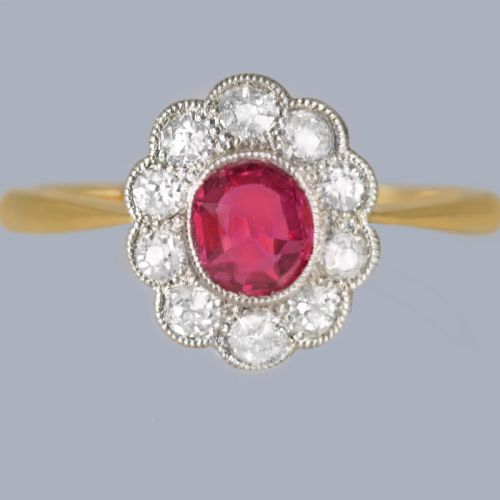

Red Ruby Gold Band
These red ruby gold band rings combine vibrant corundum with precious metal settings spanning the Victorian era to the mid-century.
Red Ruby Gold Band
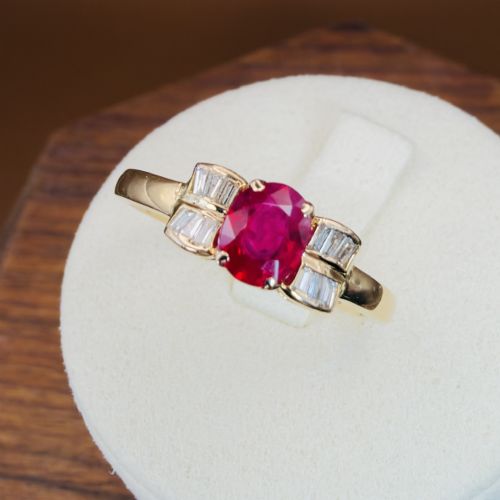
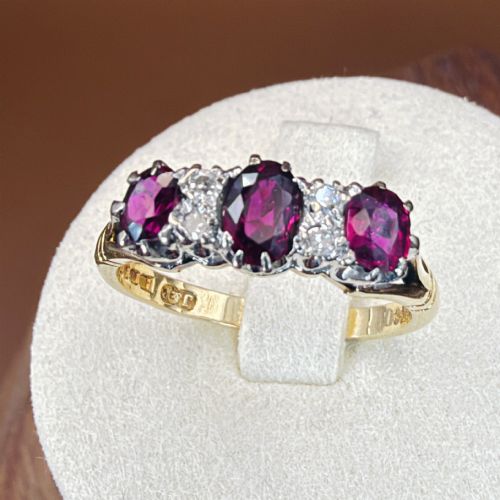
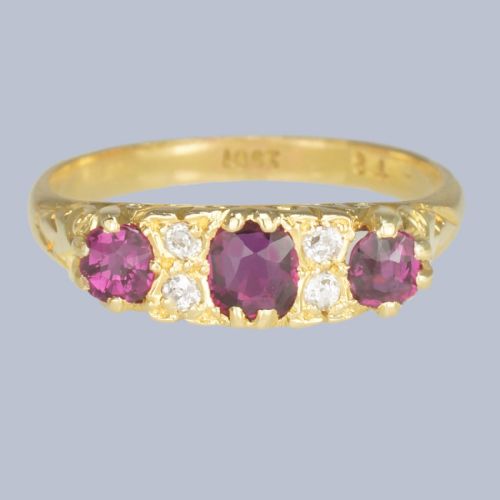
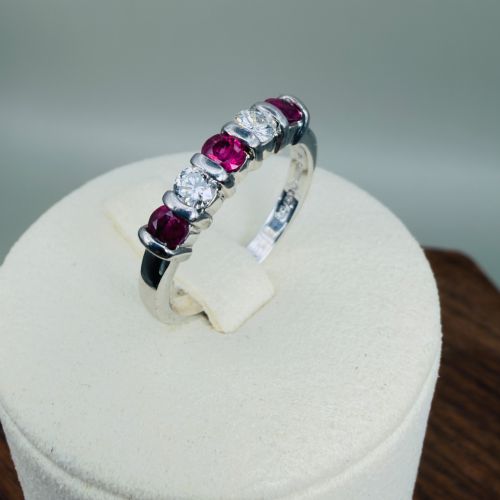
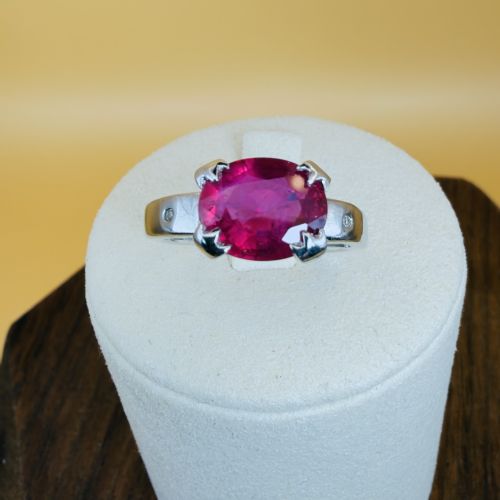
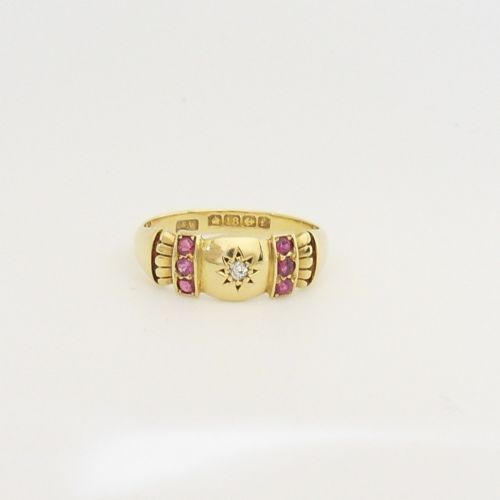
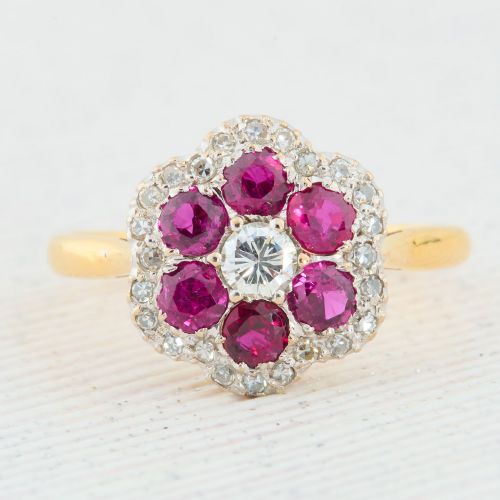
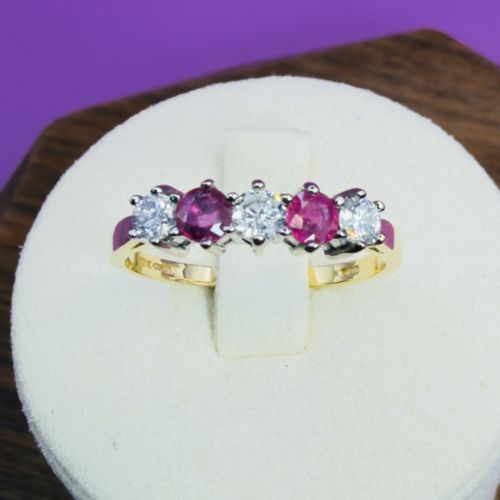
When you search for a red ruby gold band, you encounter rings featuring deep red corundum paired with yellow gold, white gold, and platinum. The selections span from late Victorian starbursts and Edwardian trilogy settings to Art Deco five-stone configurations and mid-century clusters.
Most pieces on this page originate from the late nineteenth century through to the nineteen-sixties. You will frequently find traditional band rings incorporating alternating diamond and ruby layouts alongside bolder cluster designs.
Materials and construction
Goldsmiths utilised eighteen-carat yellow gold and white gold alongside platinum to fabricate secure settings for the rubies and diamonds. Stones were secured using traditional claw, starburst, and gypsy flush mountings that reflect the prevailing style of each decade.
Cut styles vary from early old-cut and baguette diamonds to oval-cut and princess-cut rubies. Metals were often combined, pairing yellow gold shanks with platinum settings to enhance the brilliance of the diamonds.
Some Victorian pieces feature gypsy settings designed to prevent the ring from catching on heavy woollen winter gloves.
Distinctions in quality
The distinction between standard examples and superior pieces rests upon the origin and clarity of the rubies, such as unheated Burmese stones. Heavier gold weight and refined hand-cut diamond work also elevate the substance of a piece.
Original condition settings with crisp hallmarks and intact starburst engravings separate finer antique rings from later modified examples. Gemmological reports often accompany the highest grade natural stones to confirm their provenance.
The Red Ruby Gold Band Glossary
- Trilogy ring
- A ring featuring three primary stones, typically symbolising past, present, and future, often combining rubies and diamonds.
- Starburst setting
- A star-shaped engraving radiating outward from a flush-set centre stone, popular in late Victorian jewellery.
- Gypsy ring
- A style where stones are flush-set directly into a thick, tapering metal band rather than held in raised claws.
- Cluster ring
- A central gemstone surrounded by a geometric arrangement of smaller accent stones, usually diamonds.
- Old cut
- A hand-faceted diamond cut predating modern brilliant standards, characterised by a smaller table and higher crown.
Red Ruby Gold Band: Frequently Asked Questions
How do I care for antique ruby rings?
Clean these pieces gently with warm soapy water and a soft brush, avoiding harsh chemical dips or ultrasonic cleaners that might damage natural stones.
Store rings individually in soft pouches to prevent the diamonds from scratching the softer ruby facets or the gold band.
Are these rubies natural?
Many listings specify natural stones, including unheated Burmese origins, verified through gemmological reports where noted in the description.
Examinations under magnification reveal natural inclusions that distinguish earth-mined corundum from synthetic alternatives.
Can these band rings be resized?
Most eighteen-carat gold bands can be adjusted by a skilled jeweller, though eternity rings and heavily engraved shanks present structural difficulties.
Consult a professional to determine whether resizing will compromise the structural integrity of the surrounding claw or starburst settings.
How do I identify a Victorian ruby ring?
Victorian examples often feature heavy yellow gold bands, distinct starburst motifs, and hand-cut old European diamonds paired with deep red rubies.
Assay office hallmarks and Birmingham or London registry marks often stamped inside the band provide definitive dating clues.