



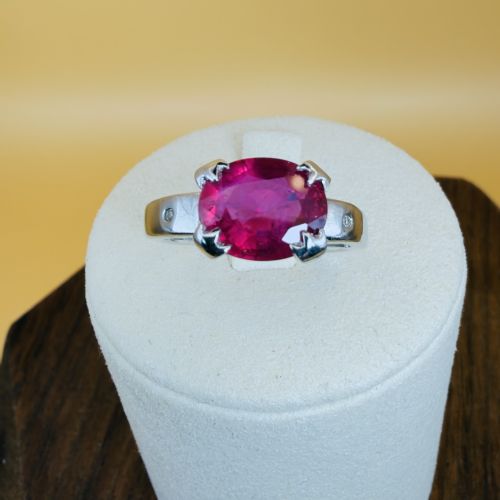
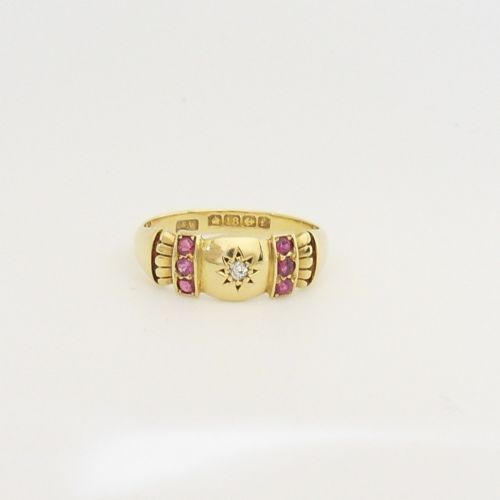
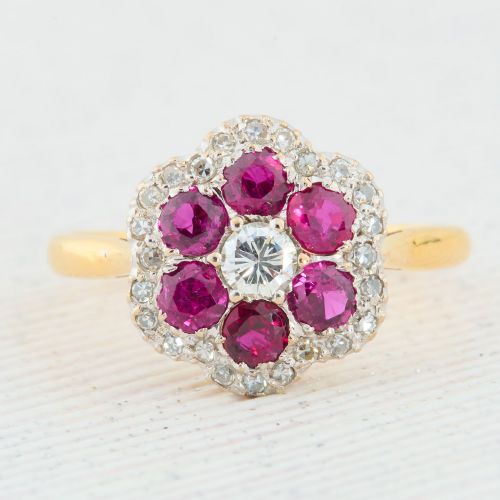
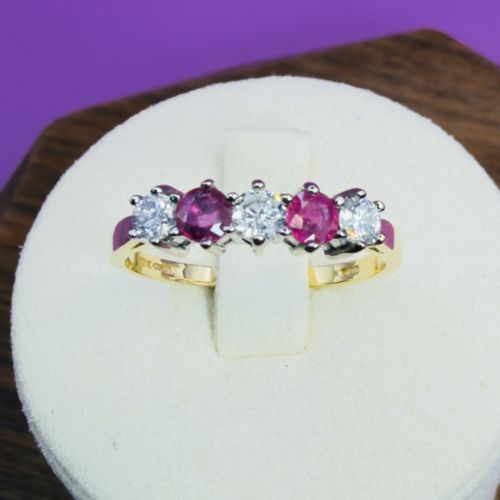
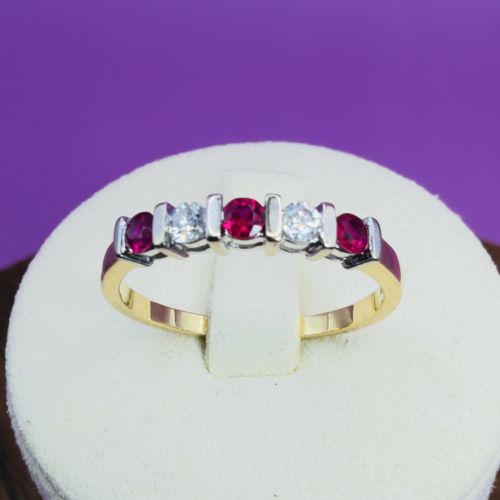
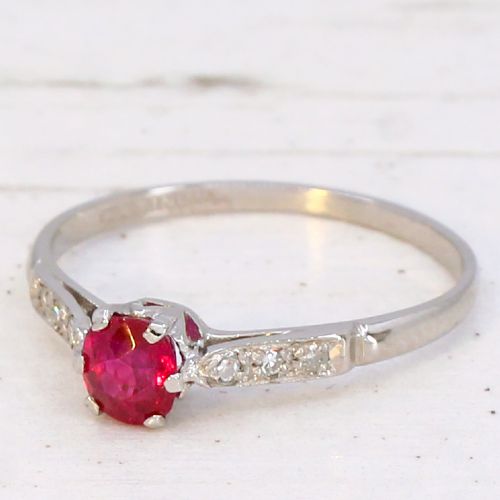
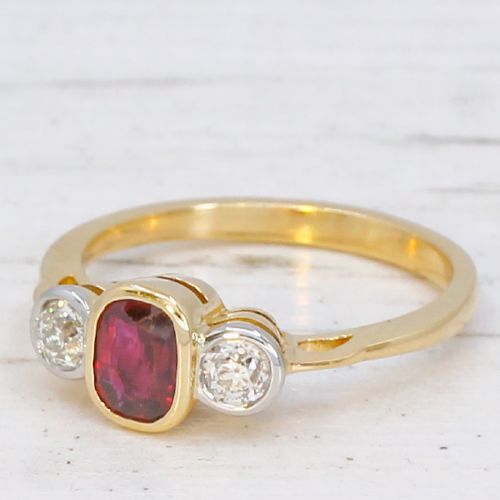
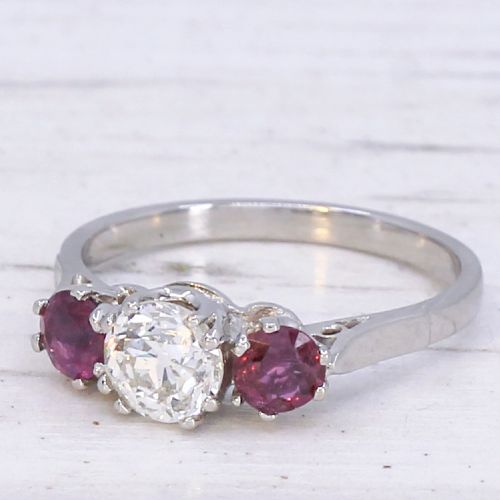
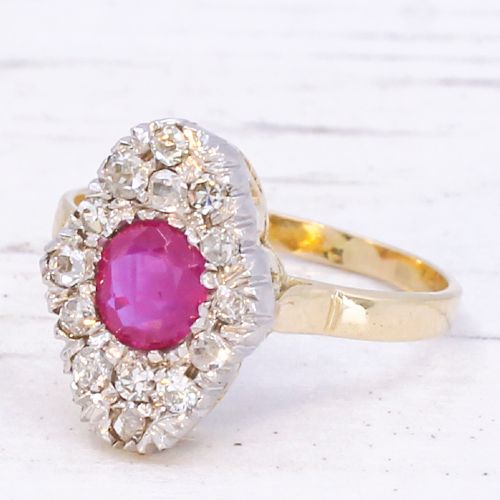
Red Ruby Band Ring
A red ruby band ring brings together rich red corundum and diamonds set in gold or platinum across Victorian, Edwardian, Art Deco and Mid-Century periods.
Red Ruby Band Ring
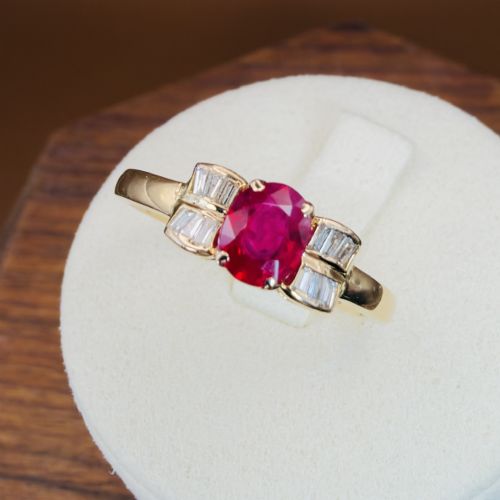
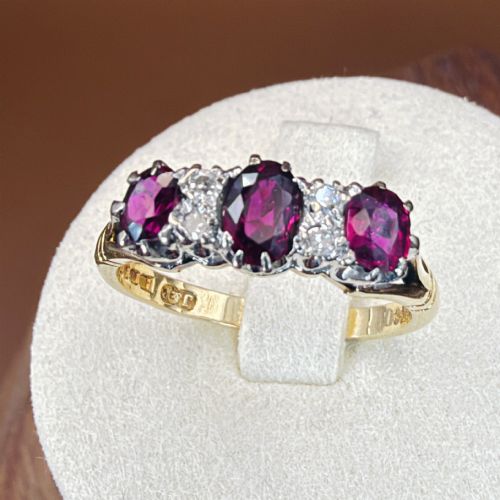
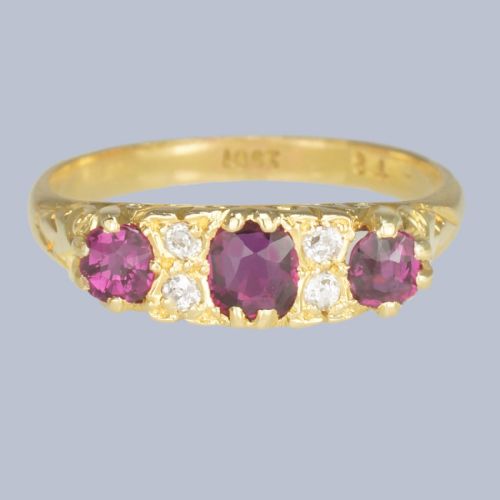
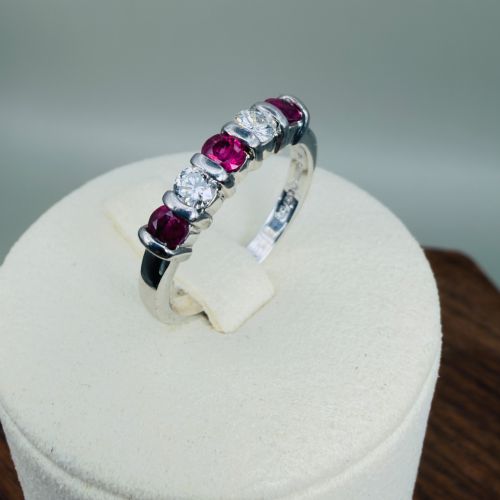
A red ruby band ring combines vibrant red corundum stones with diamonds, structured as multi-stone arrangements, cluster formations or continuous eternity bands. These pieces span from the late nineteenth century through Victorian, Edwardian and Art Deco eras into Mid-Century modern designs.
How they were made
Goldsmiths utilised eighteen-carat yellow gold, eighteen-carat white gold and platinum to construct secure settings for rubies and diamonds. Stones feature old cut, oval cut, baguette cut and princess cut facets depending on the chronological period.
Mountings range from flush gypsy settings to delicate claw mounts and channel settings for eternity bands. Gemstones are frequently paired with supporting diamonds in cluster and multi-stone configurations.
What varies in quality
Quality rests upon the origin, colour saturation and clarity of the ruby, alongside the precision of the setting work in gold or platinum. Unheated Burmese stones and fine natural rubies command distinct attention for their inherent depth of colour.
The crispness of period facet cuts on companion diamonds and the structural integrity of the metal band determine the overall standard of the piece. Hallmark clarity and surviving original mount details further distinguish exceptional examples.
The Red Ruby Band Ring Glossary
- Ruby
- A pink to blood-red coloured gemstone variety of the mineral corundum. Chromium content gives the stone its characteristic red hue.
- Eternity band
- A ring comprising a continuous line of identically cut gemstones set into a precious metal band. This design symbolises unending affection.
- Gypsy ring
- A style where stones are flush-set directly into the thick metal band, sloping gently toward the gems. This form was popular during the Victorian period.
- Old cut
- A diamond facet configuration predating modern brilliant cuts, featuring a smaller table, higher crown and larger culet. These stones catch candlelight effectively.
- Trilogy ring
- A mounting style featuring three principal gemstones arranged in a row to represent past, present and future. Diamonds often flank a central ruby.
Red Ruby Band Ring: Frequently Asked Questions
How do I date a red ruby band ring?
Dating relies upon metal hallmarks, gem cutting styles and overall structural design traits specific to Victorian, Edwardian, Art Deco or Mid-Century periods.
Old cut diamonds and flush gypsy settings typically indicate nineteenth-century or early twentieth-century manufacture, whilst geometric platinum channels point toward the 1930s.
Are these rubies natural?
Many listings feature natural rubies, occasionally accompanied by specific gemmological reports confirming origin and treatment status.
Natural stones display internal crystal characteristics under magnification that distinguish them from synthetic laboratory-grown alternatives.
Can I wear a red ruby band ring daily?
Corundum ranks nine on the Mohs hardness scale, making ruby durable enough for everyday wear when paired with robust gold or platinum settings.
Eternity bands and older claw settings benefit from occasional professional inspection to ensure stones remain firmly secured in the metal.