



Red Painted Sideboard
A red painted sideboard brings vivid colour and striking presence to a room, drawing on centuries of global decorative traditions.
Red Painted Sideboard
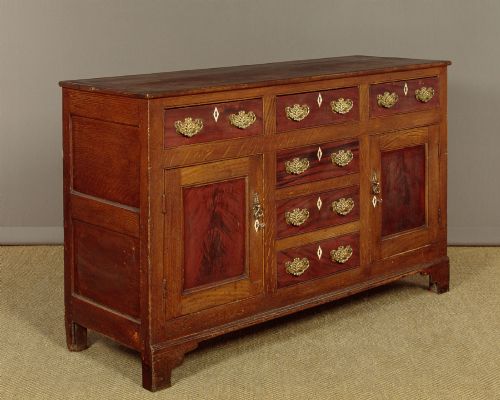
A red painted sideboard encompasses storage pieces defined by their striking red surface finishes, ranging from rustic European country pieces to ornate East Asian lacquerwork. Buyers seeking this type encounter items grouped variously as cabinets, cupboards, dressers, and commodes rather than items sharing a single uniform designation. The selection spans distinct historical periods, most notably the nineteenth century, alongside earlier eighteenth-century examples and twentieth-century interpretations.
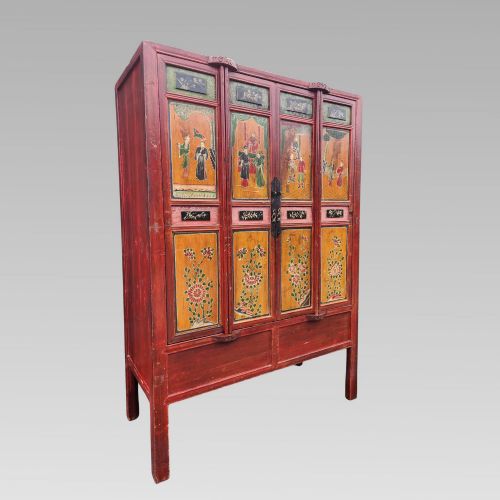
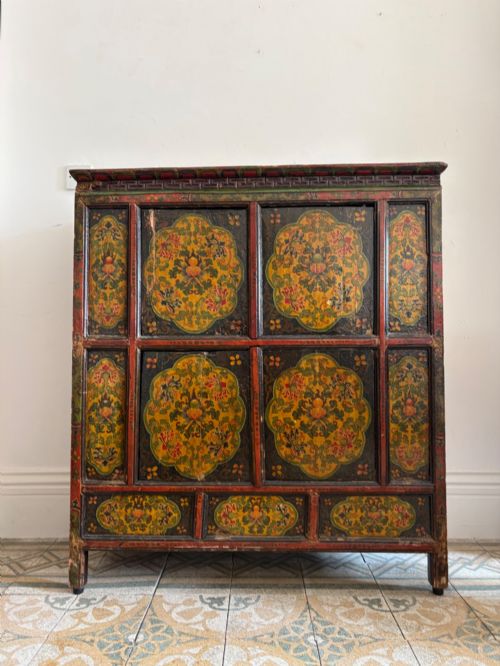
Regional diversity shapes the forms available, including Chinese Qing Dynasty lacquer cabinets, Tibetan hand-painted storage units, Victorian pine kitchen pieces, and Italian Baroque commodes. These items function primarily as storage furniture, utilising surface decoration such as Chinoiserie motifs or floral patterns to command attention within an interior space. The overlapping categories reflect how diverse cabinet forms serve similar practical and decorative roles.
Materials and construction
Makers utilised solid timbers such as pine and various regional woods as the structural foundation for these pieces. Surface finishes relied heavily on traditional applications of paint, lacquer, and mineral pigment to achieve the characteristic red coloration.
Techniques varied widely by region and period, combining simple carpentry in European country pieces with complex multi-layered lacquering traditions seen in Asian export and domestic cabinets. Detail work frequently incorporated decorative painting, floral motifs, and applied elements in brass or bone.
Red Painted Sideboard Retail Price Guide 2026
Typical asking prices for red painted sideboard among the pieces listed under this phrase on Sellingantiques today, from the lower quarter to the upper quarter. They describe what is for sale here now, not the wider market.
The documented forms range from Chinese altar tables and marriage cabinets to Victorian serving tables and Italian commodes.
Judging quality in red painted surfaces
Quality rests in the integrity of the original construction and the preservation of the surface finish over time. Pieces retaining their authentic red lacquer, mineral pigments, or historic paint layers demonstrate superior historical value compared to those with later repainting.
The refinement of the decorative execution, whether hand-painted floral details on Tibetan cabinets or intricate Chinoiserie and lacquer work on Chinese furniture, dictates the upper tier of the range. Structural joinery and the selection of primary timbers further distinguish standard regional utility pieces from high-status examples.
The Red Painted Sideboard Glossary
- Chinoiserie
- European artistic interpretation of Chinese and East Asian decorative styles, popular in furniture decoration. This aesthetic frequently employs red lacquer grounds and gilt motifs.
- Lacquer
- A durable finish applied to wood using natural resin or sap, often built up in multiple layers. It provides a smooth, glossy surface capable of holding rich red pigments.
- Commode
- A low chest of drawers or cabinet originating in France, often standing on legs. In Italian contexts, the term describes decorative storage furniture akin to a sideboard.
- Dresser base
- The lower section of a kitchen or dining room storage unit, typically featuring cupboards and drawers beneath a flat top surface. These utilitarian pieces often receive historic painted finishes.
Red Painted Sideboard: Frequently Asked Questions
How do I care for a red painted sideboard?
Keep the piece away from direct sunlight and excessive moisture to protect the historic paint or lacquer finish from fading and flaking. Dust gently with a dry microfiber cloth rather than using harsh chemical polishes.
Maintain stable room temperatures to prevent the underlying wood from expanding or contracting, which can stress the delicate painted surface. Handle doors and drawers with care to preserve original hinges and joinery.
Where does the red colour come from?
The red surfaces derive from traditional mineral pigments, organic paints, or layered lacquers applied during the construction or decoration of the cabinet. Asian pieces often utilise natural lacquers tinted with cinnabar or other red pigments.
European country pieces typically employ lead-based or oil paints mixed locally to achieve deep red hues. The exact chemical composition varies according to the geographic origin and period of the item.
Are these pieces suitable for modern dining rooms?
These storage units offer practical surface space and internal capacity suited to contemporary dining room storage needs. Their strong visual presence allows them to serve as focal anchor points in modern interior schemes.
When pairing with contemporary furniture, the contrast of historic red paint or lacquer introduces warmth and texture to the room. Ensure the dimensions match your floor plan, noting that historical widths and depths vary significantly.
How can I tell the period of the piece?
Dating relies on examining construction methods, tool marks on the interior timbers, and the natural ageing of the wood and pigments. Nineteenth-century pieces often show distinct saw marks and joinery techniques differing from eighteenth-century or twentieth-century examples.
Stylistic markers, such as Qing Dynasty design influences or Victorian proportions, provide additional chronological clues. Comparing the wear patterns on the painted surface with the underlying timber helps verify the age of the finish.