


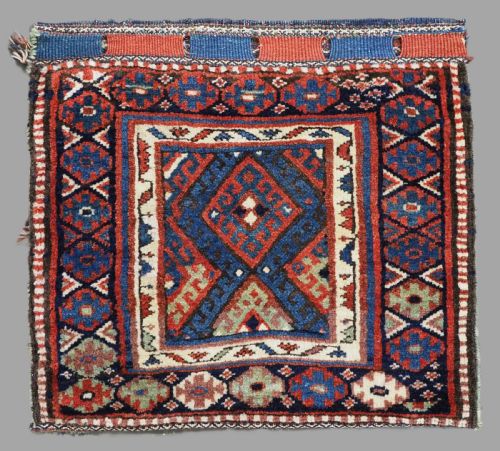


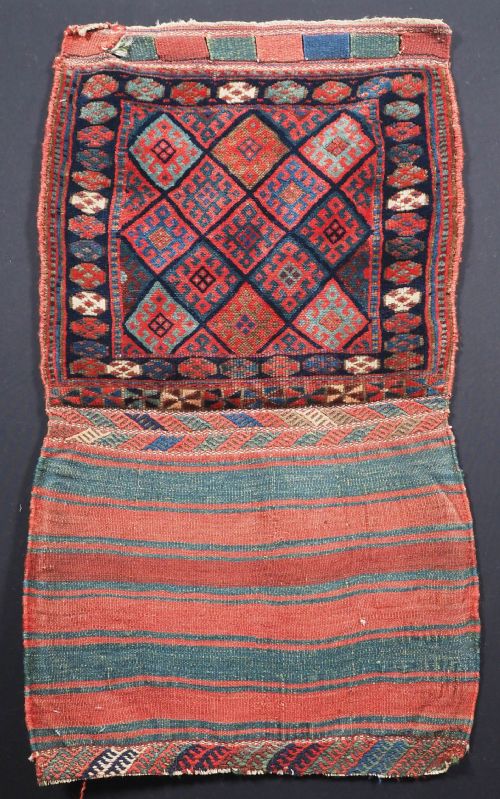


Red Kurdish Bag
A red kurdish bag brings vibrant tribal woolwork into a room, offering tactile warmth and centuries of nomadic tradition.
Red Kurdish Bag
Buyers encountering this category will frequently find Jaf Kurd bags complete with plain weave backs, alongside square saddlebags and smaller personal pouches. The primary forms span utilitarian containers designed for transport on animals or storage within tents.
Origins stretch across Persian and Turkish tribal territories, notably including the Char Mahal Valley and work associated with Bakhtiari and Lor groups. Each piece reflects the functional requirements of pastoral life translated into durable textile art.
Materials and construction methods
These textiles rely heavily on natural animal fibres, utilising hand-spun wool for the dense pile and patterned faces, paired with robust goat hair and cotton for structural integrity and flat-weave backs.
Weavers constructed these containers using traditional tribal and nomadic techniques, combining knotted pile work with sturdy plain weave structures designed to endure heavy daily use in camp environments.
Red Kurdish Bag Retail Price Guide 2026
Typical asking prices for red kurdish bag among the pieces listed under this phrase on Sellingantiques today, from the lower quarter to the upper quarter. They describe what is for sale here now, not the wider market.
Nomadic weavers often hid small personal amulets within the plain weave backs to protect their travelling belongings from misfortune.
Distinguishing quality in tribal bags
Quality rests in the crispness of the weave, the handling of the hand-spun wool, and the condition of any surviving plain weave backing material. Finer examples retain dense knotting and balanced proportions across the face.
The sophistication of the tribal design and the depth of the red dye lots further separate standard utility pieces from more expressive collector examples.
The Red Kurdish Bag Glossary
- Chanteh
- A small traditional tribal bag or carrier, often worn or used for personal items.
- Juval
- A large storage bag made by nomadic weavers for household goods.
- Plain weave
- A simple textile structure where warp and weft threads cross alternately, frequently seen on the backs of these bags.
- Saddlebag
- A paired container joined by a central web, designed to be slung over a pack animal.
- Tasheh
- A specific regional term for a small bag or wheat sack.
Red Kurdish Bag: Frequently Asked Questions
What is a red kurdish bag used for?
These textiles originally served practical nomadic purposes such as transporting grain, personal possessions, or household goods across mountainous regions. Today, collectors utilise them as decorative wall hangings, small floor accents, or tabletop displays.
Their robust construction allows them to endure gentle everyday settings while adding texture and rich colour to domestic interiors.
How do I care for my bag?
Protect the wool and goat hair fibres by keeping the textile out of direct, harsh sunlight to prevent fading. Gentle vacuuming with a low suction attachment, through a mesh screen, helps remove dust without damaging the weave.
Avoid using water or chemical cleaners on antique dyes; instead, consult a specialist textile conservator if deeper cleaning becomes necessary.
How do I date these pieces?
Dating relies on examining the materials, structural wear, and typical tribal design motifs associated with the late nineteenth and early twentieth centuries. Hand-spun wool characteristics and natural dye variations provide strong indicators of age.
Stylistic consistency with documented examples from periods around eighteen-eighty to nineteen-twenty helps establish a reliable timeframe for origin.
Where were these bags made?
Weavers produced these textiles across tribal regions in Persia and Turkey, including specific valleys such as Char Mahal. Different nomadic groups, including Jaf Kurd and Bakhtiari communities, contributed distinct design vocabularies to the tradition.
Geographic attribution depends on observing specific structural traits, knotting styles, and wool preparation methods unique to these areas.