




Red Kazak Area Rug
A red kazak area rug brings bold tribal geometry and saturated wool pile into a room from the nineteenth and early twentieth centuries.
Red Kazak Area Rug
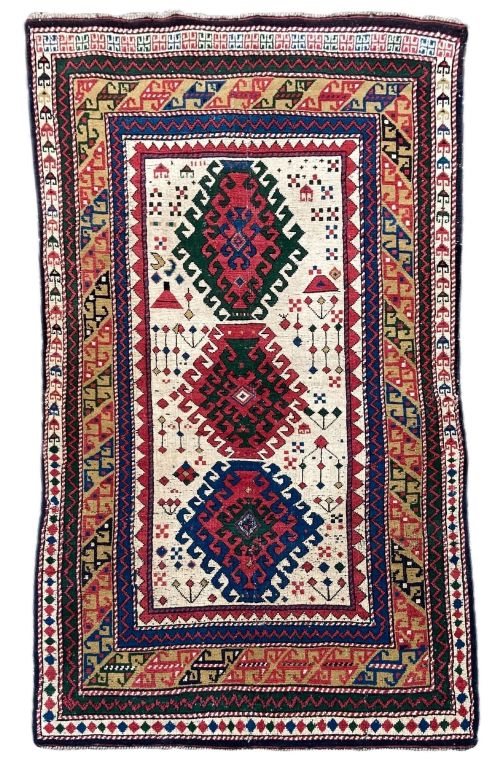
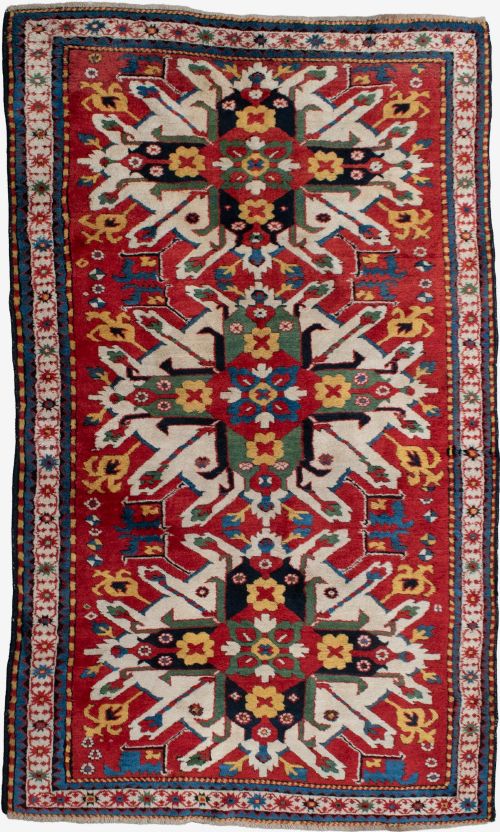
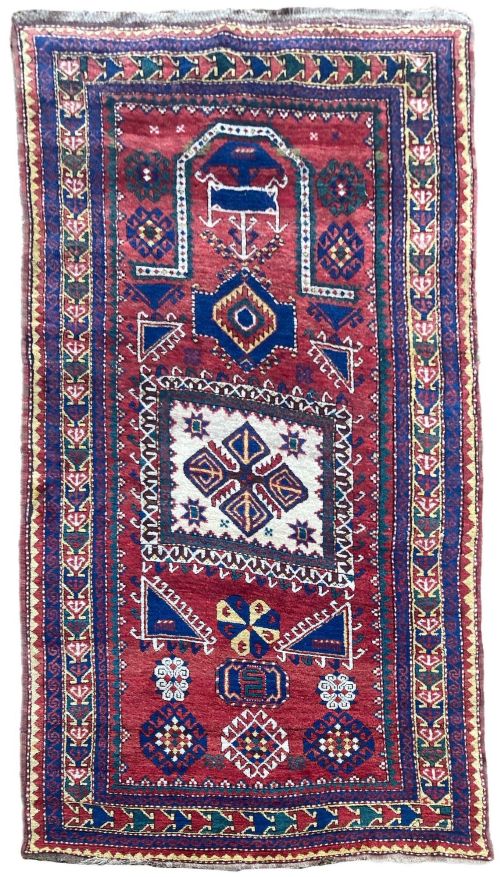
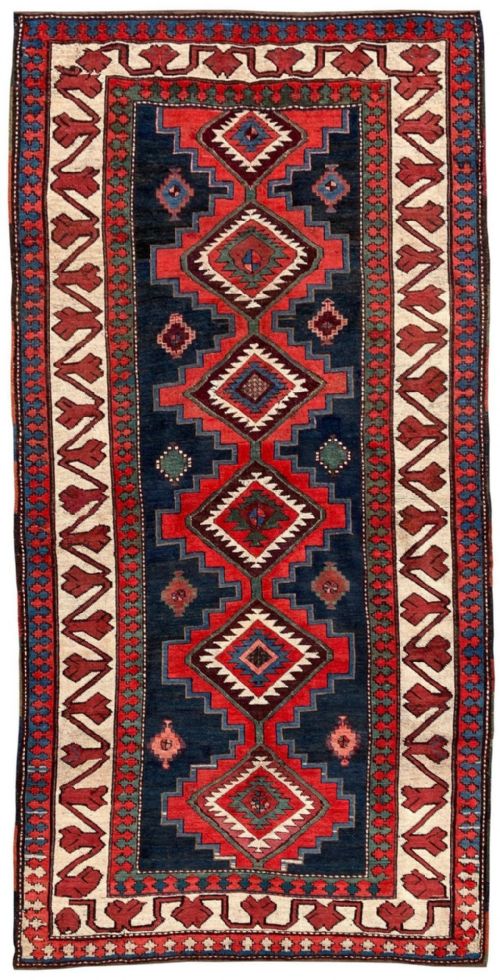
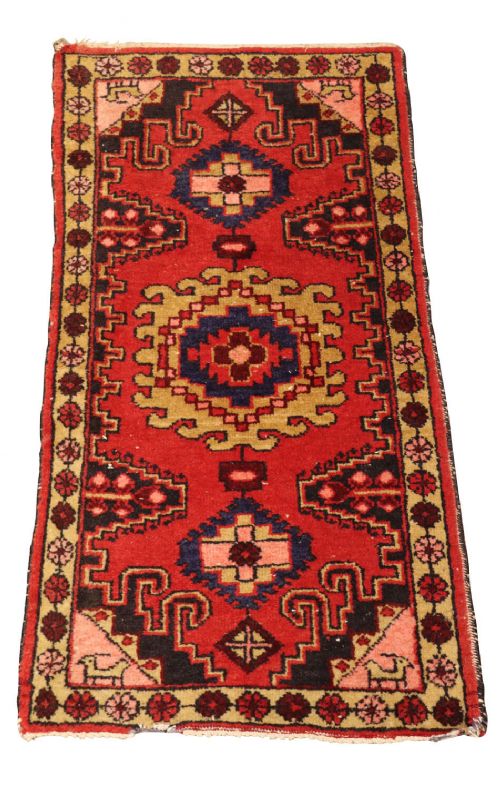
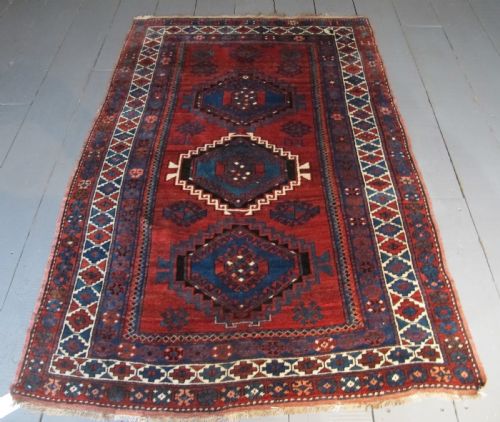
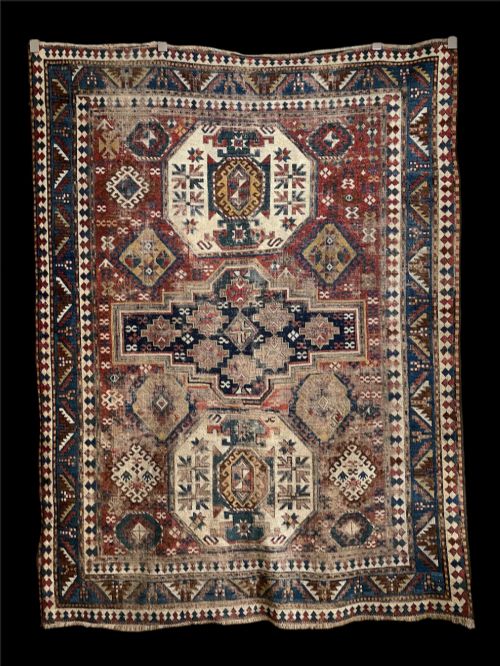
A red kazak area rug is a tribal woven floor covering originating from the Caucasus region during the nineteenth and early twentieth centuries. These pieces display distinct geometric medallions, animal motifs, and prayer designs executed in saturated red grounds alongside contrasting secondary tones. Buyers find various formats including standard rectangular formats, square prayer rugs, and larger carpet sizes.
The regional sub-types seen on this page span specific Caucasian weaving traditions such as Fachralo, Borchalu, Karachov, Moghan, Chelaberd, Sewan, and Bordjalou. Each sub-type carries particular structural traits and specific medallion layouts, from hooked polygons to large central octagons. Pieces date across the 1850s, 1870s, 1880s, 1890s, and into the 1900s and 1930s.
How they were made
These floor coverings utilise wool and hand-spun wool for the pile, foundation warp, and weft threads. Hand-knotting techniques secure the pile firmly to the woolen base, producing a dense and durable textile structure designed for sustained daily use.
Weavers employed natural dyeing methods to achieve the deep red grounds and contrasting blues, greens, and yellows. The inclusion of hand-spun wool creates slight irregularities in texture and tone across the field.
Several nineteenth-century village weavers included small, spirited depictions of animals and people directly within the rug field.
What varies in quality
Quality in these tribal weavings rests upon the crispness of the geometric drawing and the saturation of the wool pile. Finer knots per square inch allow intricate medallion details and hooked motifs to appear sharp rather than blurred.
The integrity of the original wool foundation and the preservation of outer borders separate standard examples from superior ones. Pieces retaining their full original dimensions and early hand-spun yarn character command greater appreciation among collectors.
The Red Kazak Area Rug Glossary
- Prayer Rug
- A rug featuring a mihrab or arch design at one end, traditionally used for individual prayer. These pieces often present compact square or rectangular formats.
- Medallion
- A central ornamental motif set within the field of the rug. Kazak designs frequently employ single, triple, or hooked medallion configurations.
- Warp
- The vertical threads stretched lengthwise on the loom that form the foundational skeleton of the rug. Hand-spun wool warps support the knotted pile.
- Weft
- The horizontal threads passed across the warp threads between rows of knots to bind the structure. Wefts lock the pile securely in place.
- Gul
- A medallion or repeating gabled octagonal motif utilised in tribal carpet design. These shapes often identify specific weaving groups within the Caucasus.
Red Kazak Area Rug: Frequently Asked Questions
How do I date a kazak rug?
Dating relies upon examining the structure, wool quality, and natural dye palette used by the weaver. Earlier nineteenth-century examples tend to feature hand-spun wool and more saturated, complex vegetable dyes.
Later pieces from the early twentieth century often display subtle shifts in knot density and chemical or transitional dye usage. Comparing specific medallion layouts and structural formats helps place the weaving within its correct period.
Where were these rugs made?
These textiles were woven by tribal groups residing in the Caucasus region, encompassing areas associated with specific sub-types like Fachralo, Borchalu, and Karachov. Each village or tribal confederation maintained distinct weaving traditions and local design vocabularies.
Nomadic and village weavers produced these pieces on simple upright looms using locally sourced materials. The resulting carpets reflect the specific cultural heritage of the Caucasian region.
How do I care for an antique rug?
Protect antique wool pile by placing the textile in low-traffic areas away from direct, harsh sunlight to prevent fading. Regular gentle vacuuming without a rotating brush roll removes trapped dust and grit from the foundation.
Use a breathable underlay beneath the piece to prevent slipping and cushion the aged foundation threads. Professional cleaning specifically tailored for antique textiles should be employed when deep washing is required.
What is a prayer rug?
A prayer rug is a portable textile featuring a distinct architectural niche or arch design known as a mihrab. The weaver oriented this arch toward Mecca during personal devotional use.
These pieces often appear in more compact dimensions and square formats compared to large floor carpets. The field beneath the arch frequently includes floral or geometric amulets.