





Red Glass Dishes
These red glass dishes bring rich colour to a table, ranging from deep cranberry bowls to bright ruby centrepieces.
Red Glass Dishes
When searching for red glass dishes, buyers encounter a diverse selection of serving vessels, decorative bowls, and table pieces produced across the nineteenth and early twentieth centuries. These items span Victorian, Edwardian, and Art Deco periods, encompassing both simple domestic tableware and elaborate decorative objects.
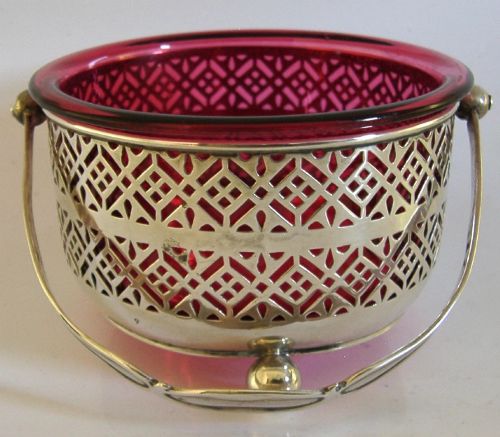
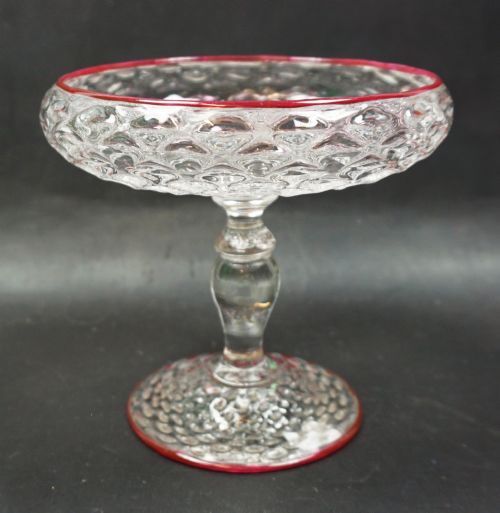
The most common forms on this page include preserve dishes, sugar baskets, and tazzas, often paired with silver plate, sterling silver, or gilt mounts. Victorian and Edwardian examples predominate, frequently utilising cranberry glass or ruby glass as the primary material for the bowl or liner.
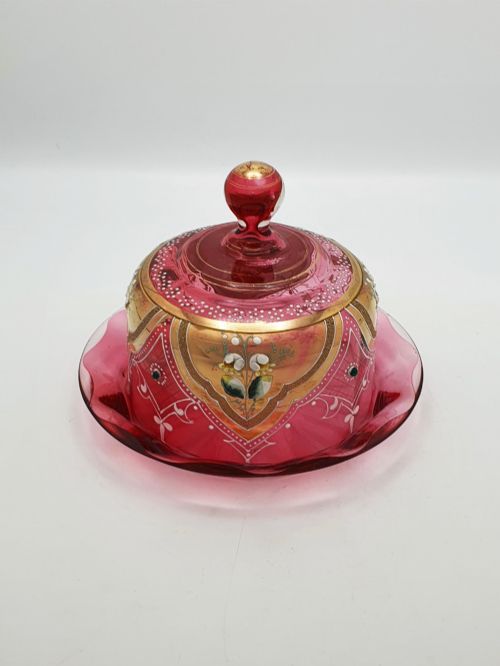
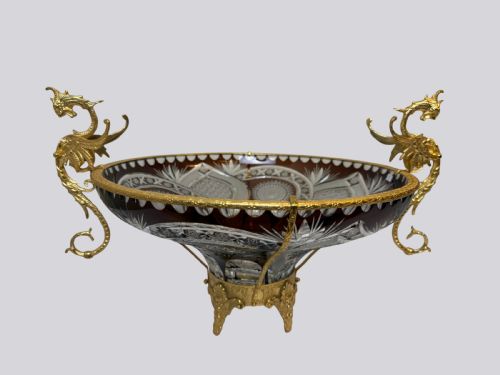
Originating from English, Continental, and Belgian workshops, these dishes served various functions from holding butter and cheese to displaying bonbons or centrepiece fruit. The integration of metal stands, such as silver-plated pierced baskets or silver gilt frames, demonstrates the decorative ambition of these table accessories.
Materials and construction
The manufacture of these pieces relies on high-quality glass production, notably cranberry and ruby glass, shaped through moulding, cutting, and blowing techniques. Honeycomb moulding and cut glass designs appear alongside layered cameo glass, providing distinct textures and optical depths to the red material.
Metalworking forms an integral part of many pieces, utilising sterling silver, silver plate, silver gilt, and gilded pewter to create mounts, swing handles, and supportive baskets. Enamel work and gilding frequently decorate both the glass surfaces and the metal mounts, adding fine detail to the finished objects.
Red Glass Dishes Retail Price Guide 2026
Typical asking prices for red glass dishes among the pieces listed under this phrase on Sellingantiques today, from the lower quarter to the upper quarter. They describe what is for sale here now, not the wider market.
Assessing quality
Quality in these dishes rests upon the depth and uniformity of the red glass coloration, alongside the precision of any cut or moulded patterns. Pieces that display crisp faceting, such as detailed tazzas or fine crystal bowls, show superior craftsmanship compared to simpler moulded examples.
The integration of metal components also distinguishes the range, where heavy silver gilt or pierced silver plating by notable makers elevates an object. The finesse of applied enamel, gilding, and the weight of the metal mounts separate standard domestic wares from finer cabinet pieces.
Val ST Lambert·George Fox·Orivit
The Red Glass Dishes Glossary
- Cranberry glass
- A transparent pinkish-red glass created by adding gold chloride to the molten batch. It became exceptionally popular during the Victorian period for tableware and decorative items.
- Ruby glass
- A deep, rich red glass coloured with copper or gold, producing a darker tone than standard cranberry glass. It is frequently seen in nineteenth-century decorative bowls and tazzas.
- Tazza
- A stemmed, shallow bowl or plate elevated on a foot, used historically for serving fruit, sweetmeats, or nuts. In glass, these often feature intricate cutting or coloured cane decoration.
- Silver gilt
- Silver objects that have been coated with a thin layer of gold on the surface. This technique provides the rich appearance of solid gold while utilising a silver base.
- Cameo glass
- An art glass technique produced by etching or carving through fused layers of different coloured glass. This method creates raised white or contrasting designs against a red glass background.
Red Glass Dishes: Frequently Asked Questions
How are cranberry glass and ruby glass different?
Cranberry glass uses gold chloride to produce a characteristic pinkish-red hue that is typically transparent and bright. Ruby glass achieves a deeper, darker crimson coloration often associated with heavier nineteenth-century decorative items.
Both materials were widely utilised by Victorian and Edwardian glassmakers, but their distinct chemical compositions created contrasting visual depths on the dining table.
What were glass tazzas used for?
A tazza served as an elevated display dish on the dining table or sideboard, typically holding fruit, preserves, or sweetmeats. Their raised pedestals allowed them to create varied heights among table settings.
Many examples combine a red glass bowl with a moulded stem or a metal stand, turning a functional serving dish into a decorative centrepiece.
How can I identify the period of a red glass dish?
Dating often relies on the style of the metal mounts, the framing techniques, and the associated glass manufacturing methods. Victorian pieces frequently feature heavy cranberry bowls with ornate silver-plated or silver gilt baskets.
Later Edwardian and Art Deco items tend to incorporate cleaner lines, specific cut glass patterns like taille Canadienne, or alternative materials such as gilded pewter.
Are these dishes safe for modern food use?
While many of these items were originally made for serving butter, cheese, or preserves, their age and delicate composition require careful handling. Antique glass and silver-gilt mounts are generally better suited for gentle display or light decorative use.
Harsh detergents, modern dishwashers, and acidic foods can damage historic gilding and delicate glass surfaces over time.