


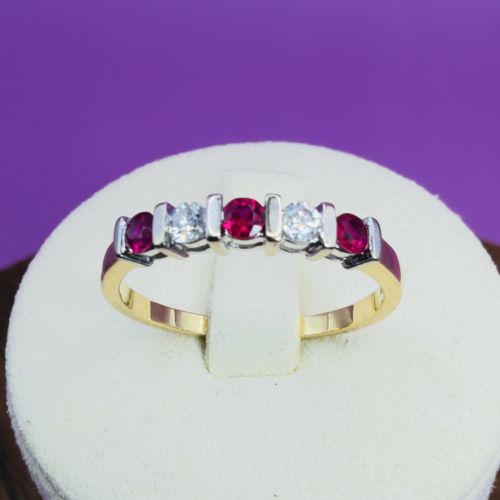
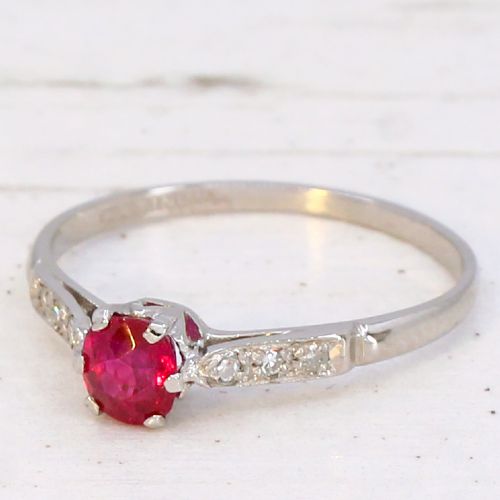
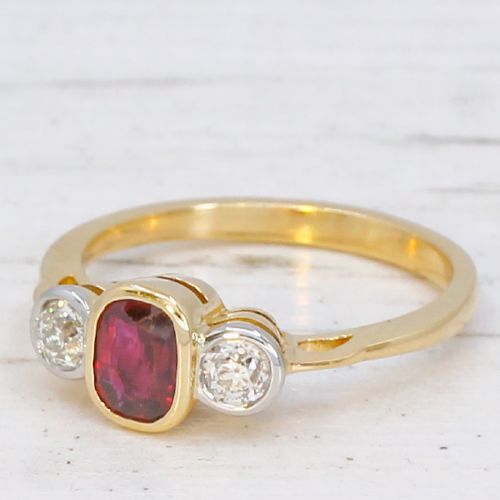
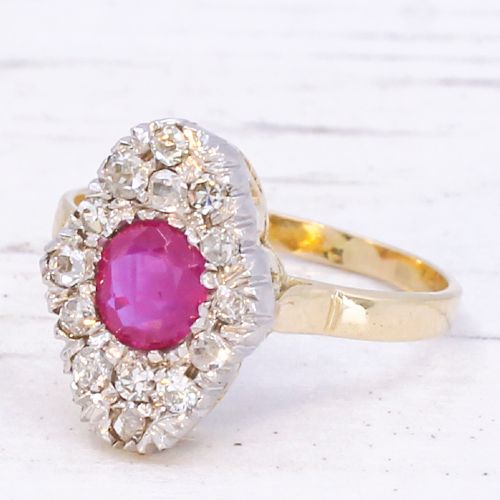
Red Gemstone Band
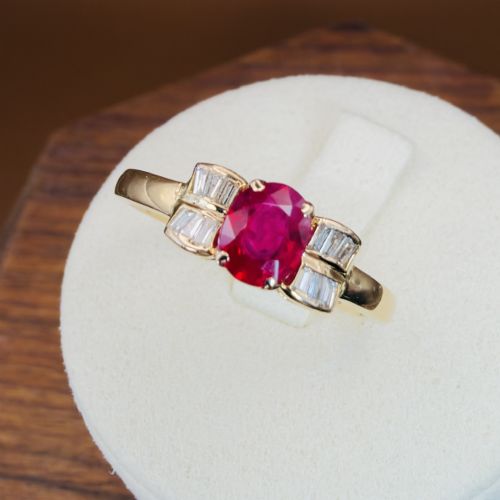
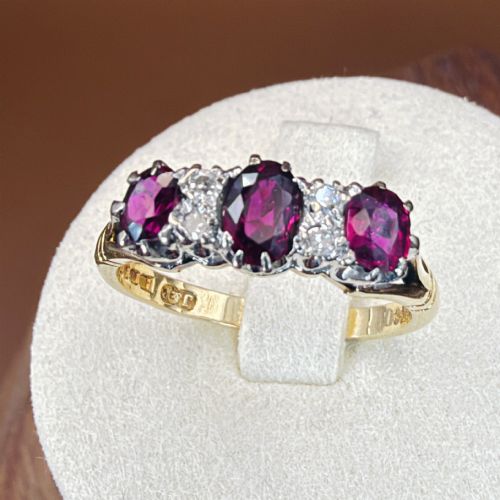
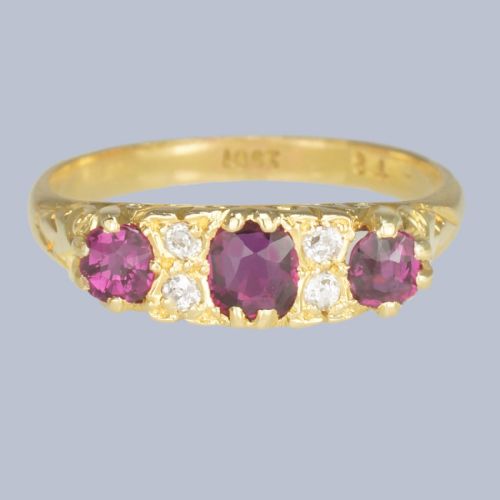
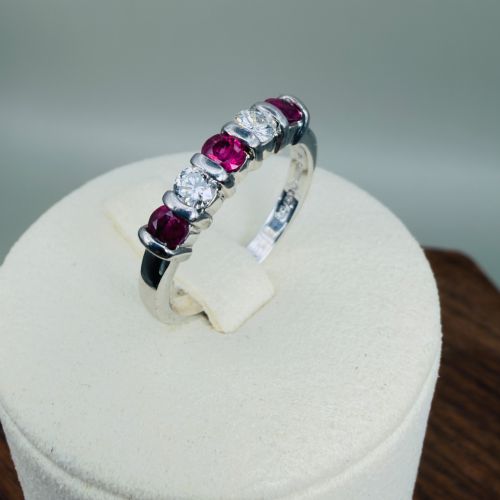
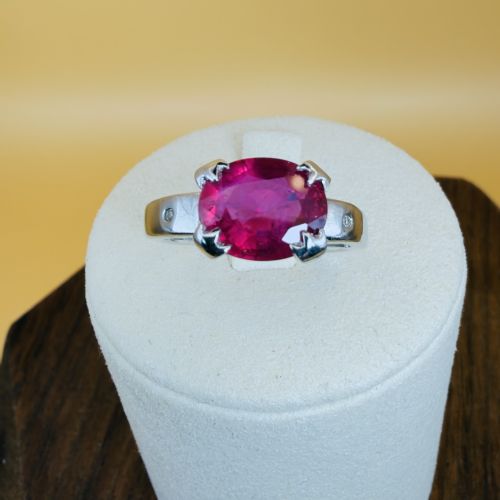
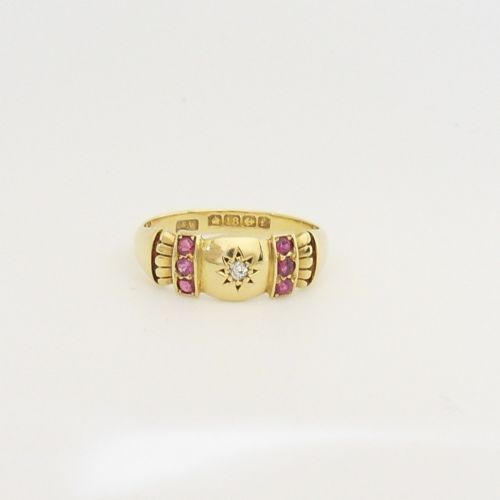
These red gemstone band pieces are rings set with rubies, garnets, and other red stones in gold, platinum, and silver, prized for their colourful gemstone presence.
Red Gemstone Band
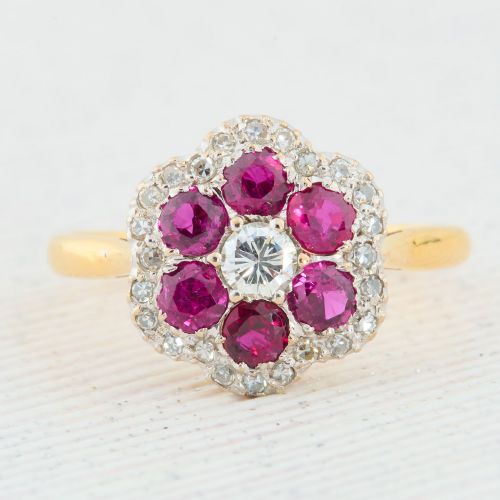
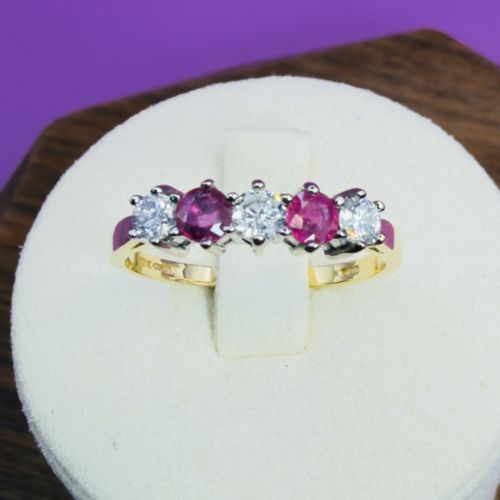
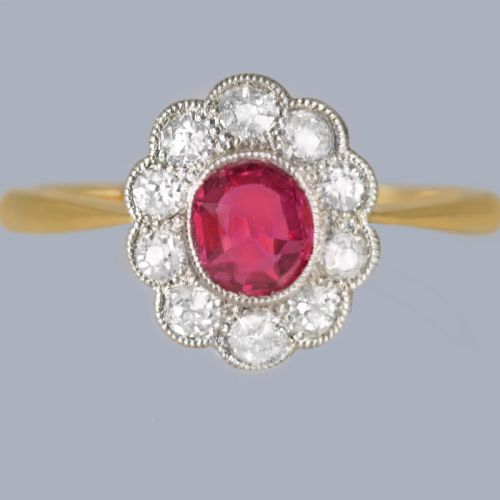
A red gemstone band brings together centuries of ring design, spanning Victorian, Edwardian, and Art Deco periods alongside mid-century examples. The most frequent iteration on this page is the classic five-stone or cluster ring pairing rubies with diamonds in gold mounts.
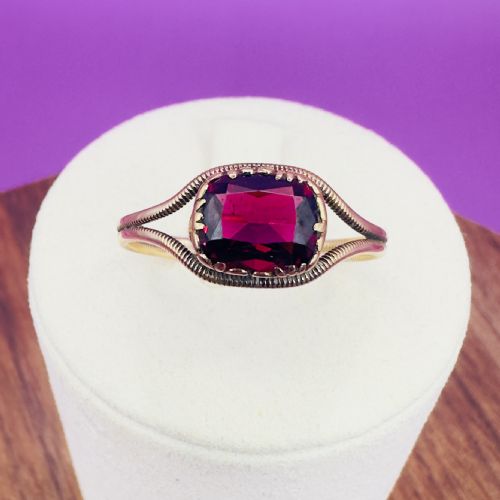
These rings serve primarily as dress pieces or historical tokens, incorporating stones such as rubies, garnets, spinel, and paste set into robust metal bands. The styles range from traditional starbursts and gypsy settings to geometric Art Deco layouts.
Materials and construction methods
Makers shaped these pieces predominantly from 18ct yellow and white gold, alongside platinum, 9ct gold, and silver. Gemstones including oval, old cut, and princess cut rubies or diamonds are secured via claw settings, flush gypsy mounts, or tight cluster arrangements.
Metals were cast and hand-finished to accommodate multi-stone configurations like trilogy, five-stone, and full eternity designs. The integration of platinum with yellow gold occurs frequently in Art Deco pieces to provide a secure, bright white contrast for the stones.
Design periods represented stretch from eighteenth-century Georgian production through Edwardian and Art Deco to mid-century examples.
Distinctions in craftsmanship and materials
Quality separates through the natural origin and clarity of the central red gemstone, particularly unheated Burmese rubies compared to treated stones or paste substitutes. Metal weight, such as heavy gold castings, also distinguishes robust period constructions from lighter modern iterations.
The precision of stone-cut coordination in multi-stone bands dictates the visual harmony of the piece. Hand-cut old mine or old European diamonds paired with well-matched rubies indicate higher manufacturing standardisation and material selection.
The Red Gemstone Band Glossary
- Cluster ring
- A ring featuring a central gemstone surrounded by a group of smaller accent stones, typically diamonds framing a central ruby.
- Old cut diamond
- A precursor to the modern brilliant cut, featuring a smaller table, higher crown, and hand-faceted proportions common in antique jewellery.
- Gypsy ring
- A style where stones are flush-set directly into a thick, tapering metal band rather than held aloft in traditional claws.
- Trilogy ring
- A three-stone arrangement representing past, present, and future, frequently combining rubies and diamonds in older British settings.
Red Gemstone Band: Frequently Asked Questions
What periods do these rings come from?
The pieces span Georgian, Victorian, Edwardian, Art Deco, and mid-century eras, reflecting changing British tastes from the late eighteenth century onwards.
Most items originate from the late nineteenth and early twentieth centuries, capturing distinct stylistic shifts from heavy gold starbursts to geometric platinum settings.
How do I care for a vintage ruby band?
Rubies are durable minerals, but antique settings benefit from gentle cleaning in warm soapy water without harsh chemical dips.
Prongs and flush mounts should be checked periodically by a professional to ensure the central red gemstones and diamonds remain secure.
What metals were used in these bands?
Makers utilised 18ct yellow gold, 18ct white gold, 9ct gold, platinum, and silver depending on the manufacturing decade.
Art Deco items frequently combine yellow gold bands with platinum top settings to highlight the contrast between the metal and the red stones.
Are all the red gemstones rubies?
While the majority are rubies, the category also includes natural spinels, garnets, and paste substitutes seen in specific period pieces.
Gemmological reports sometimes accompany significant Burmese stones to verify their natural unheated status.