

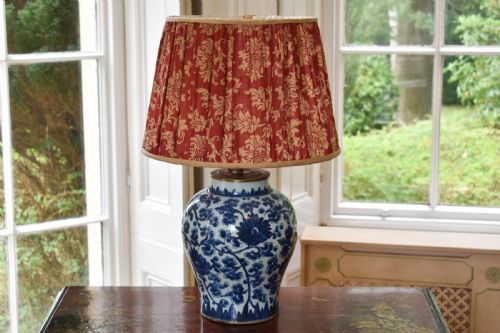



Red Chinoiserie Table Lamp
These red chinoiserie table lamps bring painted lacquer and oriental motifs to a room, offering a striking focal point for traditional and eclectic interiors.
Red Chinoiserie Table Lamp
A red chinoiserie table lamp combines oriental decoration with the functional lighting required for modern living spaces. These pieces draw upon styles such as Regency chinoiserie and Chinese export aesthetics, utilising vibrant finishes.
Buyers will encounter lamps alongside related occasional pieces like side tables, cabinets, and porcelain vases bearing similar decorative motifs. The selection spans pieces from the Regency era through the 1920s.
Lacquer finishes dominate the selection, often complemented by hand-painted details and gilt highlights. They serve as distinct accent pieces on sideboards or bedside cabinets.
Materials and construction methods
These lamps rely on wood, lacquer, and brass components to achieve their characteristic form and durability. Artisans applied layers of lacquer to wooden bases before executing hand-painted oriental scenes.
Gilt ornamentation frequently accents the red or black lacquer grounds, reflecting traditional decorative techniques. Metal mounts in brass provide structural support and decorative contrast to the painted bodies.
Red Chinoiserie Table Lamp Retail Price Guide 2026
Typical asking prices for red chinoiserie table lamp among the pieces listed under this phrase on Sellingantiques today, from the lower quarter to the upper quarter. They describe what is for sale here now, not the wider market.
Some Mandarin orange finishes are bright enough to wake up a dull corner entirely on their own.
Factors influencing quality
The refinement of the hand-painted decoration determines the visual appeal and sophistication of each lamp. Pieces featuring intricate brushwork and well-preserved gilt details stand apart from simpler iterations.
The integrity of the lacquer surface and the quality of the underlying wood or ceramic body dictate overall longevity. Original decorative schemes hold distinct interest for collectors compared to later re-paintings.
Heals
The Red Chinoiserie Table Lamp Glossary
- Chinoiserie
- European decorative style inspired by Chinese art and design, featuring painted motifs of figures, landscapes, and pavilions. This aesthetic flourished across furniture and decorative objects during various historical periods.
- Lacquer
- A durable resin finish applied in multiple layers to wood or other substrates, producing a smooth, polished surface. It forms the protective and decorative base for painted oriental designs.
- Gilt
- Application of gold leaf or gilt paint to highlight specific decorative elements on furniture and objects. This technique adds contrast against dark or brightly coloured lacquer grounds.
- Toleware
- Painted or enamelled sheet metalware used for decorative and functional household items. Examples include metal lamp bases finished to resemble other materials.
- Baluster
- A moulded shaft or pillar with a swelling lower portion supporting a lamp or architectural element. This form frequently appears in porcelain vase lamps.
Red Chinoiserie Table Lamp: Frequently Asked Questions
How do I style a red chinoiserie lamp?
Place the lamp on a dark wood side table or bedside cabinet where the red lacquer finish can contrast with surrounding furnishings. Pair it with neutral textiles to let the painted details stand out.
Consider the scale of the room and choose a shade that complements the height and proportion of the lamp base without overwhelming the decorative motifs.
What periods do these lamps date from?
The selection includes pieces from the Regency era through the 1920s, with various interpretations of oriental design. Edwardian and 1920s examples frequently incorporate lacquered wood or adapted vases.
Earlier influences appear in Regency chinoiserie furniture and later decorative items sharing the same aesthetic lineage.
What is the difference between lacquer and paint?
Lacquer involves building up multiple resin coats that are polished to a hard, glossy finish, whereas standard paint sits as a flat layer on the surface. Lacquering requires specialised application techniques traditional to Asian and European decorative arts.
This finish provides greater depth and resilience when properly maintained over decades.