
Red Central Asian Rug
When you search for a red central asian rug, you uncover tribal carpets, horse covers and embroideries woven or stitched by nomadic and village makers.
Red Central Asian Rug
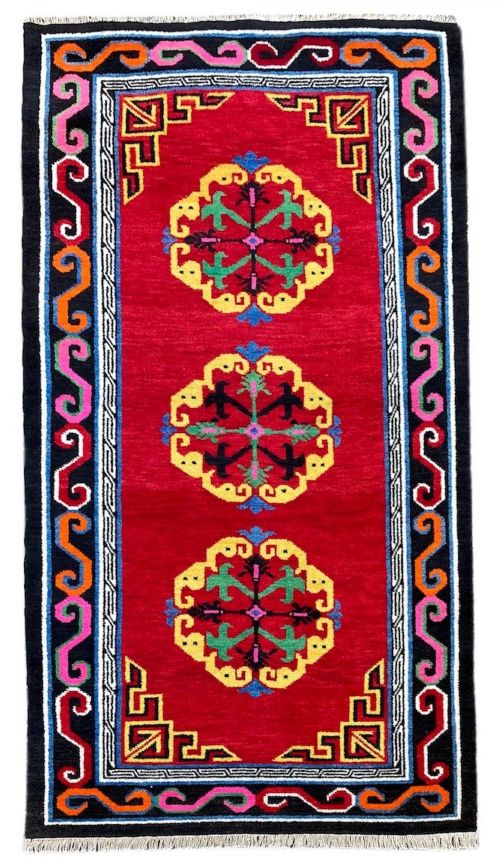
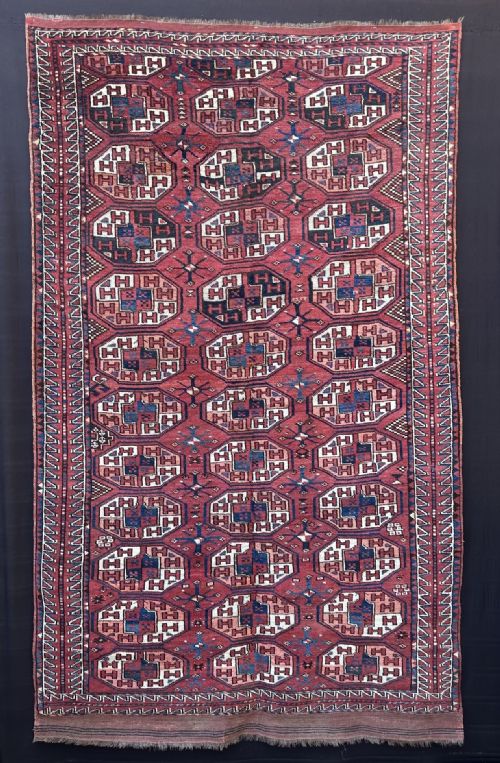
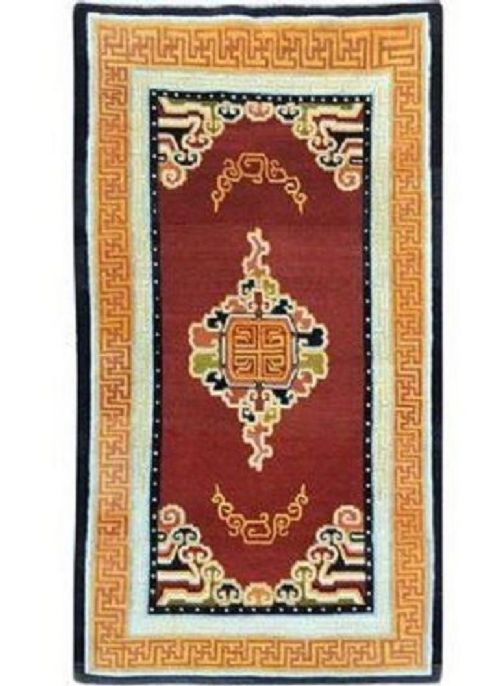
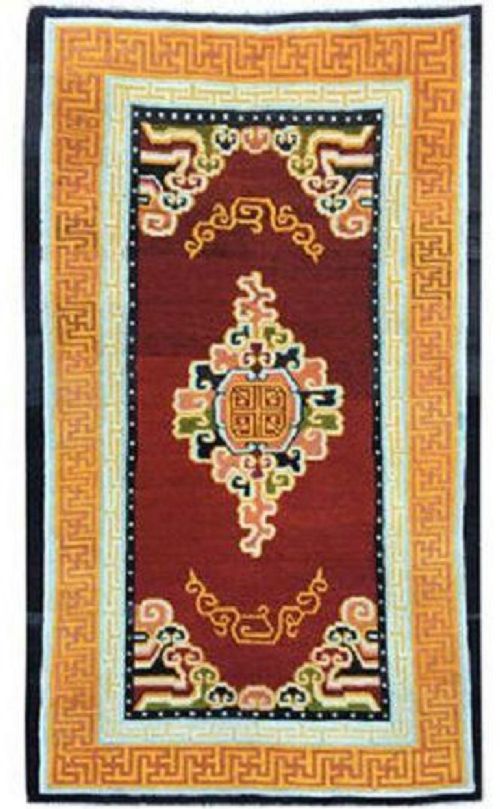
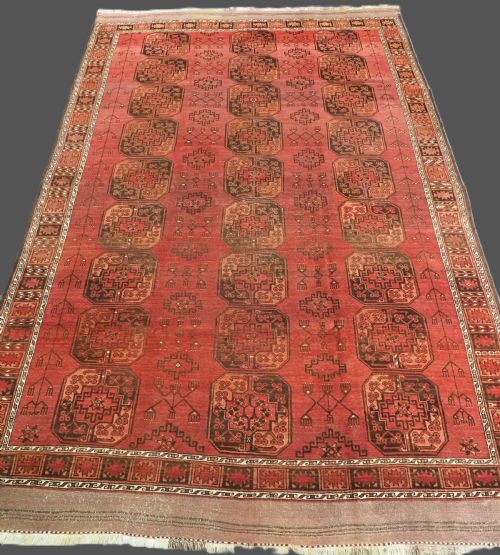
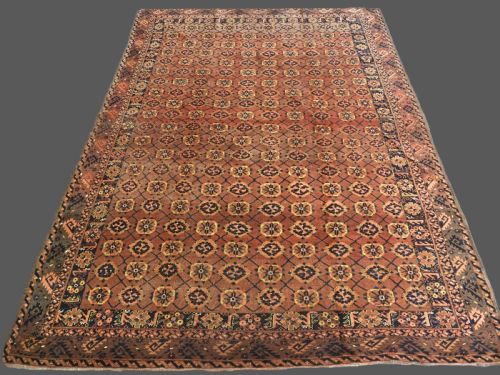
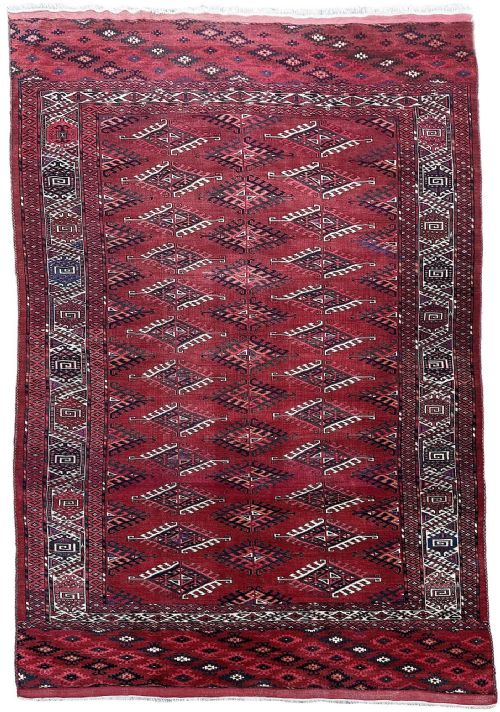
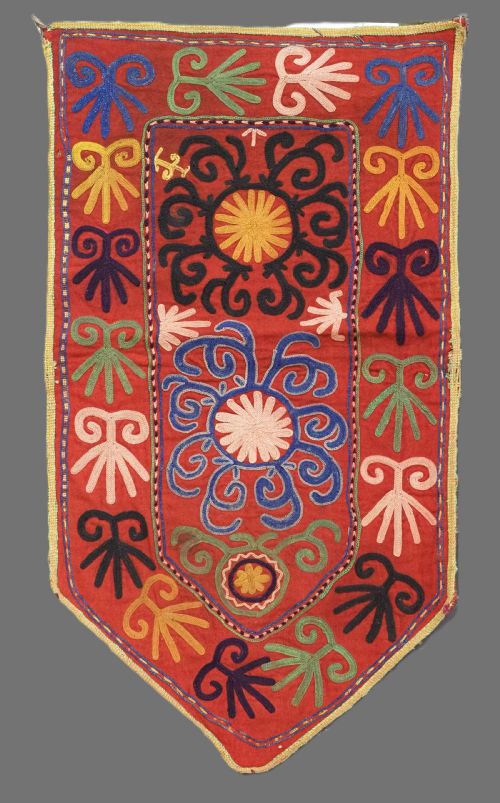
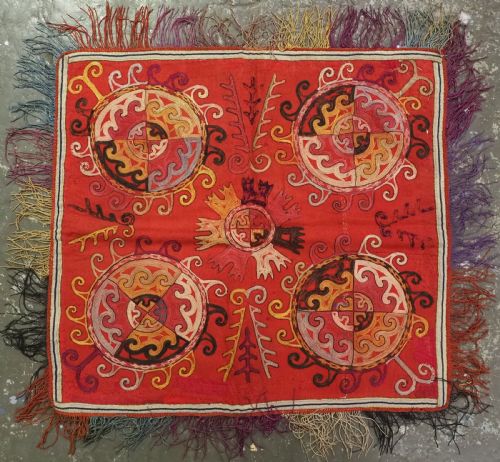
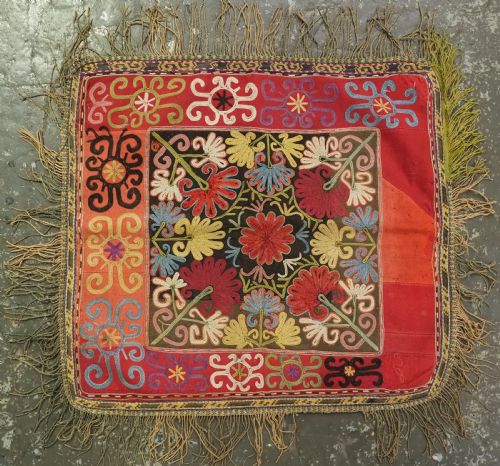
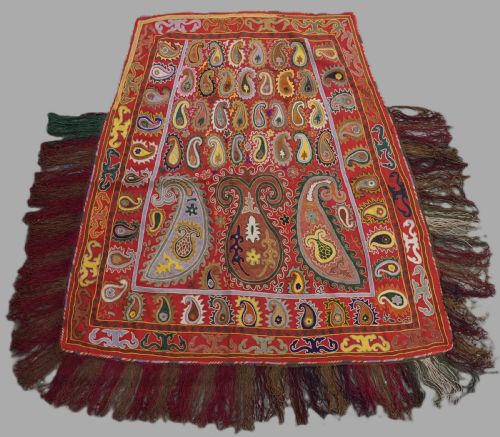
A red central asian rug encompasses tribal carpets, village rugs, tent door hangings, dowry embroideries and ceremonial horse covers originating from Turkmenistan, Uzbekistan and Tibet. The pieces gathered under this term span from the mid-nineteenth century through the early decades of the twentieth century, reflecting the material culture of nomadic groups such as the Yomut, Ersari, Tekke, Sariq and Lakai tribes.
Most items encountered on this page take the form of utilitarian or ceremonial textiles rather than standard domestic floor coverings. Buyers frequently encounter smaller tribal bags, saddle rugs, asmalyks and embroidered wall hangings alongside larger main carpets.
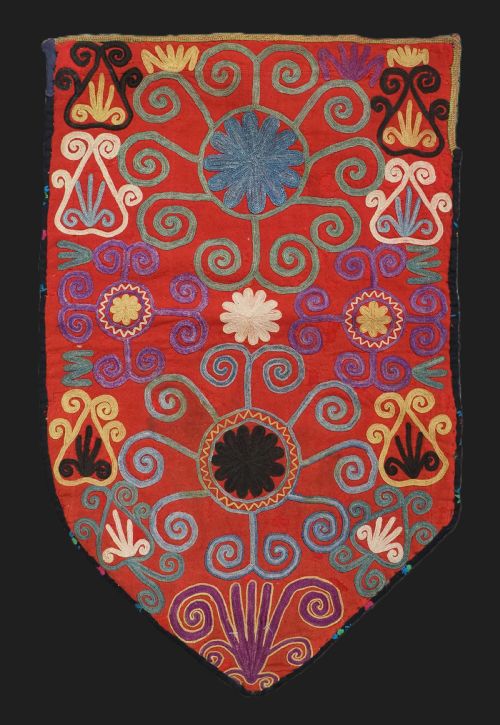
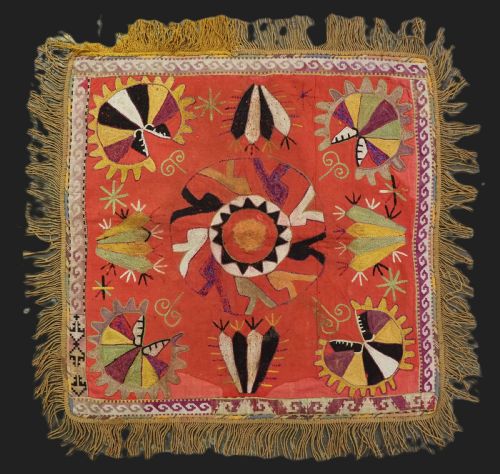
The dominant palette across these textiles centres on rich madder reds, terracotta and crimson, offset by secondary tones of indigo, ivory and dark brown. Regional variations dictate whether the piece is constructed as a pile-woven carpet or an embroidered felt and cotton hanging.
How they were made
Construction relies heavily on hand-spun wool and cotton, utilised both as foundation warps and wefts and as the primary pile or embroidery medium. Artisans employed natural dyes, deriving deep reds and earth tones from local flora and root sources to colour the wool and silk thread.
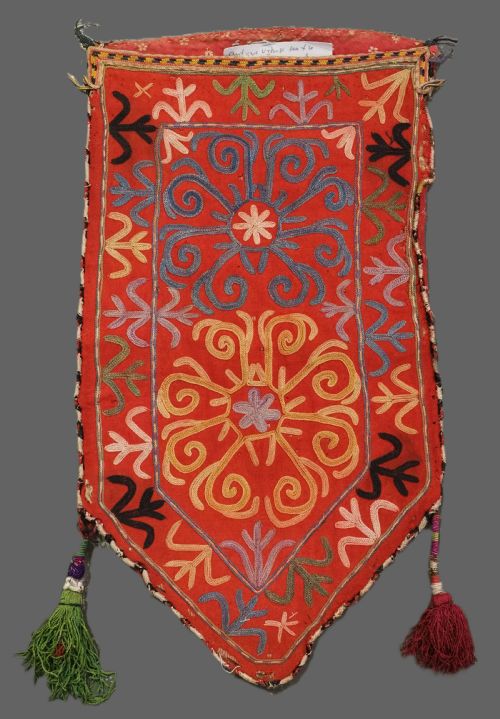
Certain textile forms incorporate specialised techniques such as felted wool bases combined with intricate silk thread embroidery, particularly evident in pieces originating from Uzbek and Lakai makers. Pile rugs are knotted on woolen foundations, while other examples utilise flatweave or embroidered structures designed for specific tribal functions.
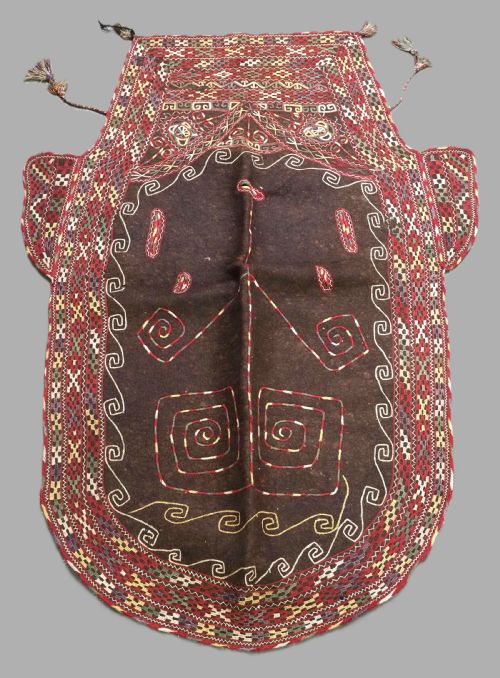
Several textiles served as ceremonial horse blankets and camel trappings, ensuring nomadic steeds travelled in proper wedding style.
What varies in quality
The distinction between tiers of quality rests upon the fineness of the knotting or the density and precision of the embroidery work. Tightly packed wool pile and finely executed stitching demonstrate greater artisanal skill and patience during production.
Integrity of materials and the survival of original structural elements, such as side cords, fringes and tassels, significantly influence the overall standard of a textile. Pieces retaining their full proportions and primary natural dye saturation represent the higher end of the surviving material.
The Red Central Asian Rug Glossary
- Asmalyk
- A five-sided ceremonial trapping produced by Yomut tribes, traditionally hung on the flanks of a bride's camel during wedding processions. These pieces display distinct geometric layouts and rich red grounds.
- Suzani
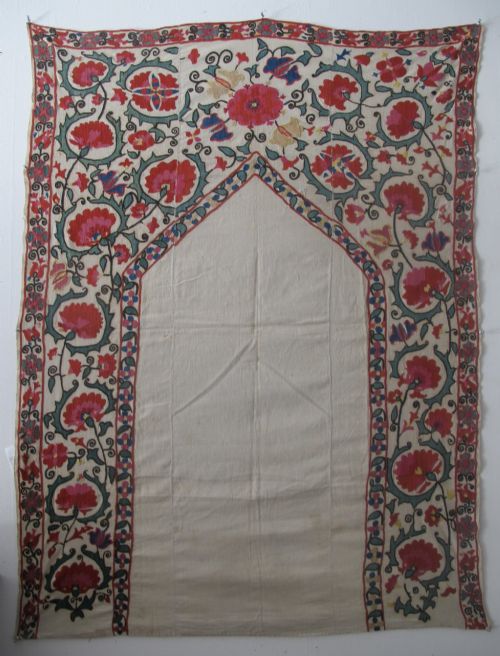
- A large embroidered wall hanging or dowry textile originating from Uzbekistan, worked in silk thread on a cotton or linen foundation. Floral and architectural motifs dominate their composition.
- Gapylyk
- A tent door rug or hanging placed over the entrance of a nomadic yurt, often woven by Ersari or other Turkmen groups. They serve both a decorative and a protective function within the nomadic encampment.
- Chuval
- A large face-pile storage bag utilised within Turkmen tents for household goods and bedding. They feature repeated gul motifs arranged across a red field.
- Ilgich
- An embroidered dowry hanging produced by the Lakai tribe of Uzbekistan, characterised by dynamic appliqué and chain-stitch embroidery on felt or fabric.
Red Central Asian Rug: Frequently Asked Questions
What is a red central asian rug used for?
These textiles served diverse roles within nomadic and village life, ranging from floor carpets and bedding storage bags to tent doorway hangings and animal trappings for weddings. Many pieces were created specifically for ceremonial use or as part of a bride's dowry.
Today, collectors primarily utilise these rugs and embroideries as wall hangings, table covers or decorative floor coverings in low-traffic areas of the home. Their rich red tones and geometric or floral motifs provide a striking focal point in traditional and modern interiors alike.
How do I care for an antique tribal rug?
Antique wool and silk textiles require gentle handling, starting with regular, low-suction vacuuming without a beater bar to remove dust from the foundation. Keeping them out of direct sunlight prevents the natural dyes from fading over time.
Professional cleaning by a specialist familiar with antique vegetable-dyed carpets is recommended when deep cleaning becomes necessary. Avoid harsh chemical treatments or excessive water, which can damage hand-spun wool and cotton threads.
How can I tell different Turkmen tribes apart?
Different tribal groups, such as the Yomut, Ersari, Tekke and Sariq, utilised distinct primary motifs known as guls, alongside characteristic secondary ornaments and border designs. Yomut pieces often display hooked or octagonal forms, while Ersari rugs frequently feature more relaxed geometric arrangements.
The palette and structural quirks, including the finish of the ends and the choice of sideline binding, also offer clues to the specific region and oasis where the textile was woven during the nineteenth or early twentieth century.
Are these rugs made with natural dyes?
Many pieces from the nineteenth and early twentieth centuries rely on natural dyes, particularly madder root for the characteristic red grounds, alongside indigo for blues and various plant extracts for yellows and browns. These dyes interact with wool fibres to produce subtle tonal variations and depth.
Examining the wool pile under natural light helps reveal the gentle abrash, or tonal shift, characteristic of traditional dyeing methods where individual dye batches varied slightly.