





Red Brown Tallboy Chest
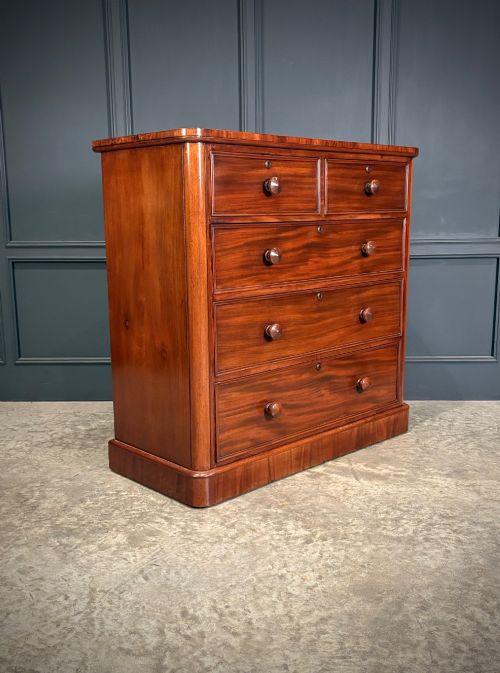
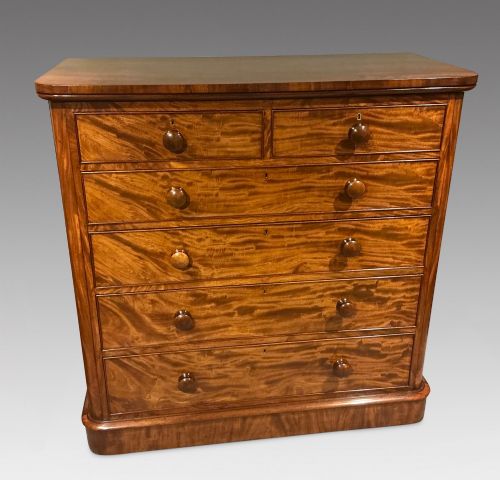
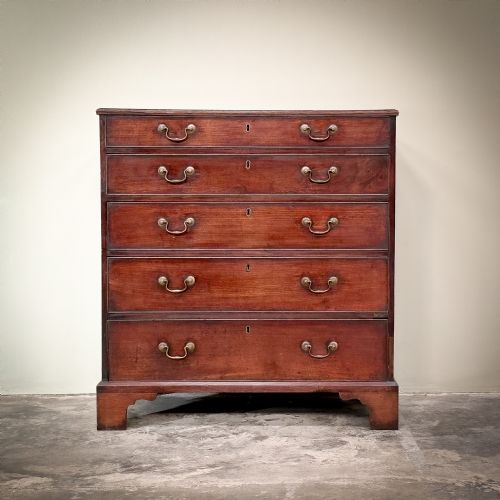
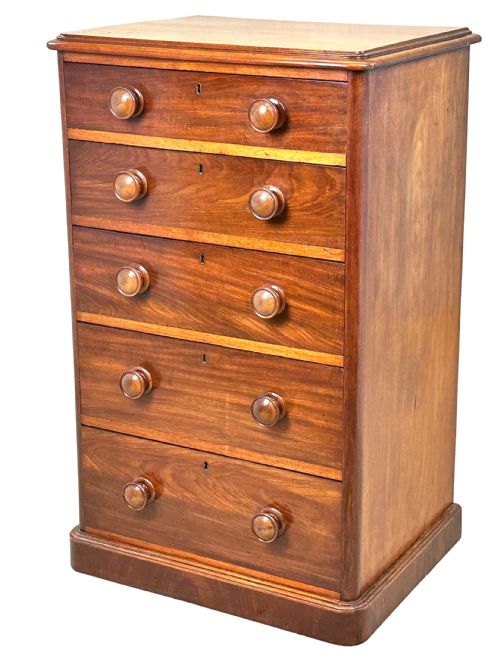
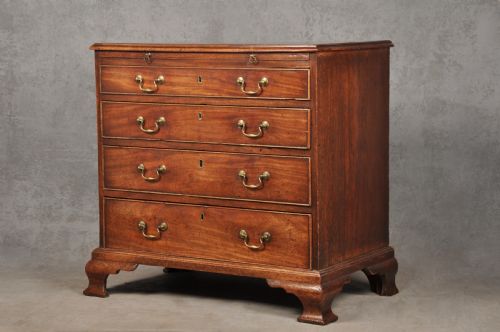
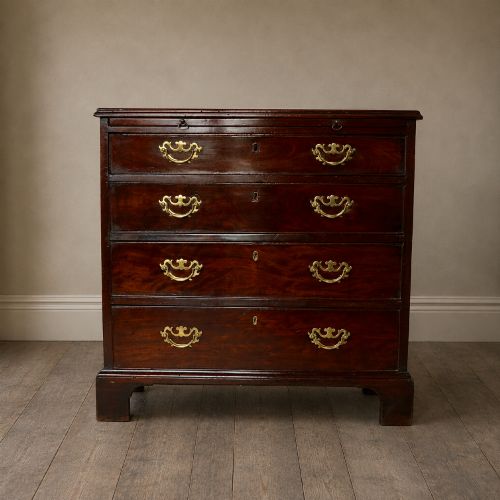
These red brown tallboy chest examples bring imposing vertical storage and rich timber grain to a room.
Red Brown Tallboy Chest
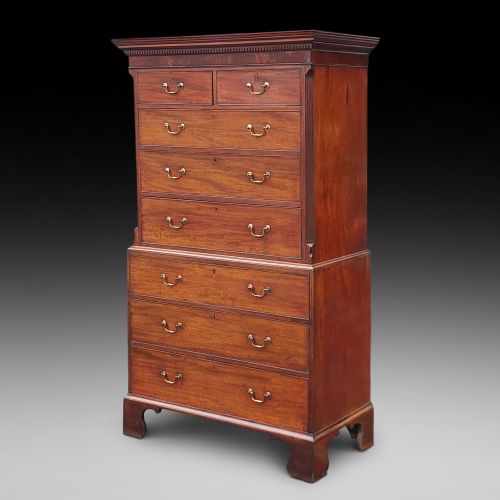
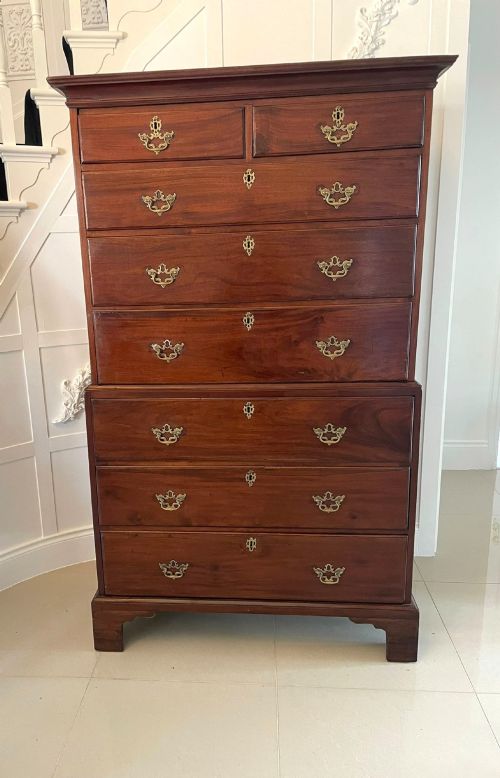
A red brown tallboy chest typically presents as a chest on chest or a tall chest of drawers designed to maximise vertical storage space while occupying a modest footprint on the floor. These pieces frequently date from the 18th Century and 19th Century, encompassing Georgian, George III, George II, and Victorian periods.
The form encompasses both traditional chest on chest configurations and grand bachelor's chests or highboy variants constructed in mahogany and flame mahogany veneer. Side cabinets also appear within these listings, reflecting the broader scope of tall and narrow storage forms handled by dealers.
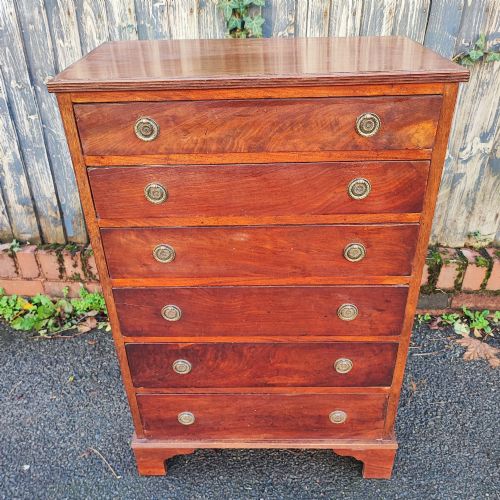
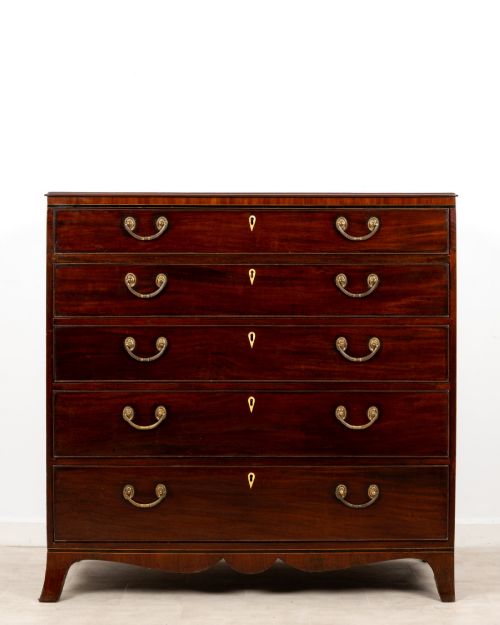
Buyers encountering this phrase will largely find solid mahogany and figured veneers finished in deep red brown tones, often complemented by brass hardware. Stylistic influences range from straightforward Georgian utility to refined Sheraton style and Regency elegance.
Materials and construction
Joinery relied on traditional hand-cut dovetails for drawer construction and sturdy frame assemblies designed to support the considerable weight of stacked carcases. Brass handles and escutcheons were cast and chased, secured with original or period-appropriate fixings to match the status of the furniture.
Red Brown Tallboy Chest Retail Price Guide 2026
Typical asking prices for red brown tallboy chest among the pieces listed under this phrase on Sellingantiques today, from the lower quarter to the upper quarter. They describe what is for sale here now, not the wider market.
Materials recorded across current pieces include mahogany, flame mahogany veneer, oak, pine, bone, and goncalo alves.
Judging quality and craftsmanship
The hierarchy of quality rests primarily on the selection of timber, particularly the vibrancy and matching of flame mahogany veneer across multiple drawer tiers. Superior pieces exhibit continuous grain patterns and meticulous timber selection that elevate a utilitarian storage box into a decorative focal point.
Proportion and secondary wood choice also dictate the grade of a piece, with finer examples maintaining slender cornices and delicate bracket feet or apron details. Original brass hardware and untouched patination further distinguish higher-tier examples from heavily restored or altered equivalents.
The Red Brown Tallboy Chest Glossary
- Tallboy
- A tall chest of drawers, often built as a chest on chest where a smaller upper section sits upon a larger base. This form became popular in the 18th Century to provide ample storage without taking up excess floor space.
- Flame mahogany
- A veneer cut from the fork of a mahogany tree where the branches join the trunk, producing a distinctive flickering flame pattern. Cabinet makers prized this timber for high-status drawer fronts and primary display surfaces.
- Chest on chest
- A two-part furniture form featuring an upper chest stacked directly onto a slightly deeper lower chest. This construction allowed craftsmen to transport heavy furniture up narrow stairwells before final assembly.
- Highboy
- A tall chest of drawers raised on a low frame or legs, combining vertical capacity with elevated clearance from the floor. The term frequently applies to American and British variants of mid-18th Century case furniture.
- Escutcheon
- A protective plate surrounding a keyhole, usually fashioned from brass or bone. These decorative mounts prevented the timber surrounding the lock from splitting during daily use.
Red Brown Tallboy Chest: Frequently Asked Questions
What is a red brown tallboy chest?
A red brown tallboy chest is a tall, vertical storage unit built from mahogany or walnut, designed with multiple stacked drawers to hold clothing while saving floor space.
These pieces predominantly date from the Georgian and Victorian eras, utilising rich timber veneers and brass hardware.
How do I tell Georgian from Victorian pieces?
Georgian pieces generally display lighter proportions, hand-cut dovetails, and restrained bracket feet or ogee mouldings dating from the 18th Century.
Victorian examples from the 19th Century often feature heavier carcases, darker finishes, and machine-assisted construction details alongside stylistic revivals.
Where should I place a tall chest?
These tall chests suit bedrooms, dressing rooms, or large hallways where vertical wall space is available but floor area is restricted.
Ensure the room has adequate ceiling clearance and that the piece is secured to the wall if necessary for safety.
What maintenance do these wooden chests need?
Maintain the timber by keeping the piece away from direct heat sources and sudden humidity changes that cause wood to split.
Apply occasional natural wax to nourish the mahogany surface and preserve the historic patination accumulated over centuries.