



Red and White Pottery
These red and white pottery pieces range from Staffordshire figures to Asian porcelains, offering bright decorative contrast for collectors.
Red and White Pottery
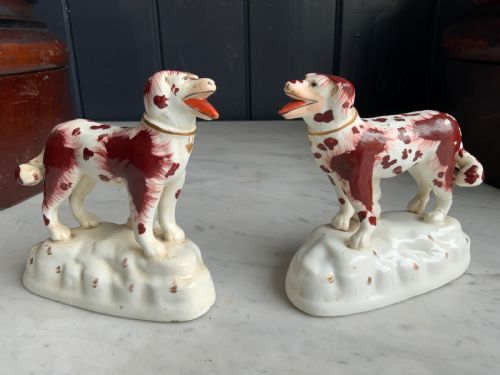
When you search for red and white pottery, you encounter a diverse mix of English earthenware figures and East Asian porcelain vessels. The English pieces often take the form of Staffordshire spaniels, cows, and spill holders created during the nineteenth century.
You are most likely to meet Victorian Staffordshire dogs and cows on this page, alongside Japanese Imari vases and Chinese export ceramics. These domestic English animals and oriental vessels share a bold palette of crimson tones against a pale ground.
The selection bridges vernacular British folk art and overseas ceramic traditions spanning the seventeenth through the early twentieth centuries. Each period brings its own characteristic form, from Georgian creamers to late Qing garlic-mouth vases.
Materials and methods
Makers shaped these objects using earthenware and porcelain bodies finished with glazes and enamel paint. Earthenware figures received lead glaze surfaces, while porcelain vessels utilised underglaze blue, copper-red, and iron-red pigments.
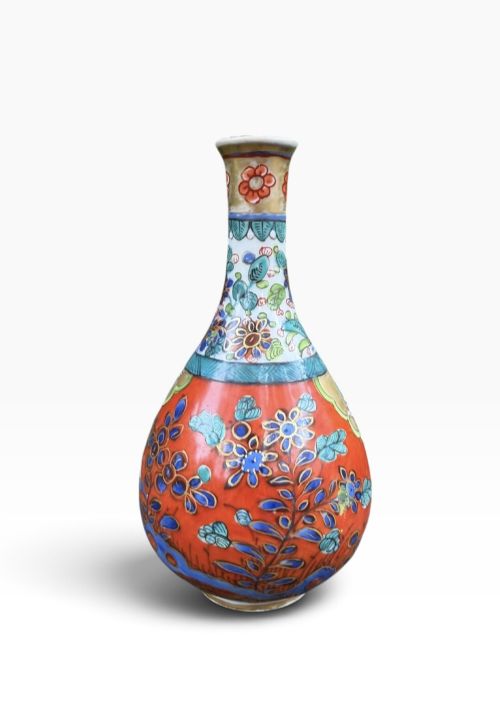
Potters applied vibrant enamel paints over or under the glaze to achieve the distinctive crimson highlights characteristic of Imari wares and clobbered porcelain. Gilt accents sometimes augmented these surfaces on Japanese and English pieces alike.
Red and White Pottery Retail Price Guide 2026
Typical asking prices for red and white pottery among the pieces listed under this phrase on Sellingantiques today, from the lower quarter to the upper quarter. They describe what is for sale here now, not the wider market.
Ceramic cows occasionally arrive with tiny calves attached, proving that nineteenth-century potters knew the universal appeal of a mother and baby animal.
Judging quality
On porcelain pieces, the clarity of the underglaze red and the control of the enamel colours distinguish the superior examples. The depth of the glaze and the overall balance of the form dictate the standing of a piece within its period.
Kinrin Workshop
The Red and White Pottery Glossary
- Clobbered
- Decorated porcelain where later workshops added secondary enamel colours, such as iron red, over an existing underglaze blue design. This practice altered older imported wares to suit changing European tastes.
- Earthenware
- Porous pottery fired at lower temperatures, commonly used for nineteenth-century English animal figures and utilitarian creamers. It requires a glaze to hold liquids.
- Imari
- Japanese export porcelain featuring a palette of iron red, blue, and gold. These pieces were produced in Arita from the seventeenth century onward.
- Spill holder
- A hollow ceramic figure or vase designed to hold wooden spills used for lighting candles and fires. They frequently take the form of Staffordshire animals with a vertical cylinder at the back.
- Underglaze
- Pigment applied to the ceramic body before the glaze is fired, protecting the colour beneath a glassy coating. This technique ensures permanence in copper-red and blue decorations.
Red and White Pottery: Frequently Asked Questions
What are Staffordshire pottery dogs?
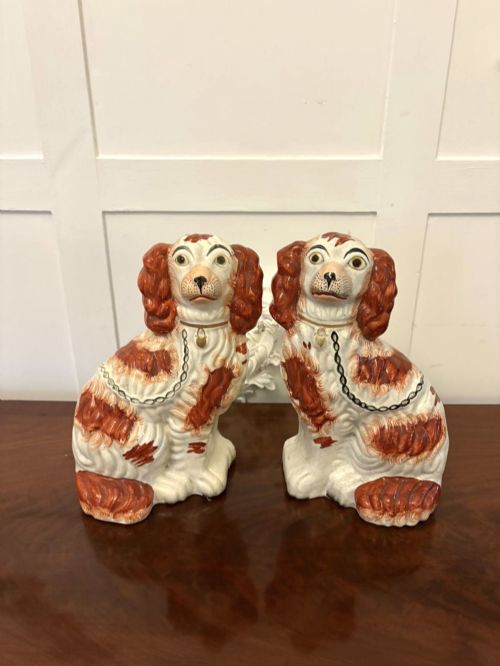
Staffordshire pottery dogs are earthenware figures modelled as spaniels, traditionally displayed on mantelpieces in Victorian homes. Potters produced them in matched pairs to sit at either end of a fireplace.
These figures often feature copper-red patches and gilt collars, reflecting the domestic tastes of nineteenth-century Britain. They remain some of the most recognisable examples of vernacular ceramic art.
How do I date Imari vases?
Dating Imari vases involves examining the porcelain body, the intensity of the iron-red enamel, and the style of the bamboo or floral patterns. Pieces from the seventeenth century display different potting characteristics compared to those made around nineteen hundred.
Export records and stylistic shifts between the Edo and Meiji periods help narrow down the decade of production. Examining the base and the condition of the glaze provides further chronological clues.
What is a cow creamer?
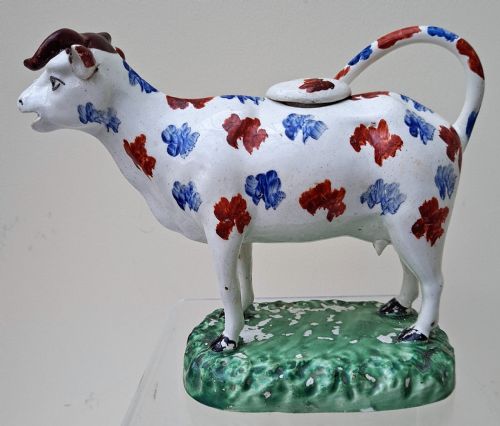
A cow creamer is a ceramic vessel shaped like a cow, designed to pour milk or cream from its mouth. Georgian and Victorian potters created these novelty pieces for use at the tea table.
English examples often incorporate whimsical details like calves standing alongside the main animal. They combined practical utility with charming rural decoration.
How do I care for antique pottery?
Antique pottery requires gentle handling and placement away from direct sunlight and sudden temperature fluctuations. Dusting with a soft, dry cloth preserves the fragile enamel paints and lead glazes.
Water should be kept away from earthenware pieces, especially those with unglazed bases or old repairs. Displaying them on stable surfaces prevents accidental knocks.