




Red and Gold Vase
These red and gold vase selections bring striking colour and metallic lustre to any room, combining rich enamels with fine craftsmanship.
Red and Gold Vase
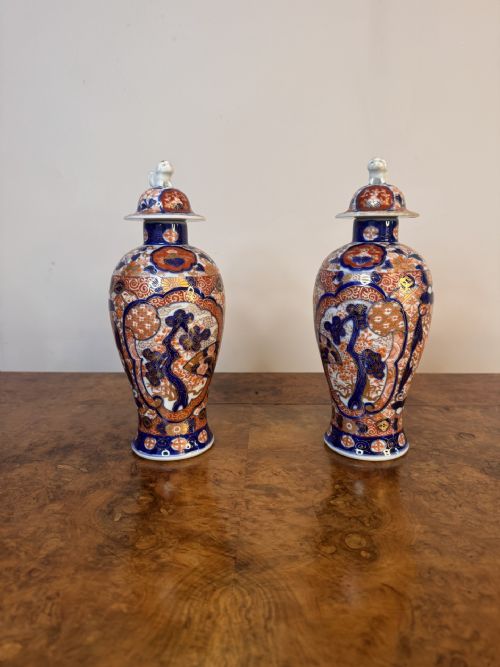
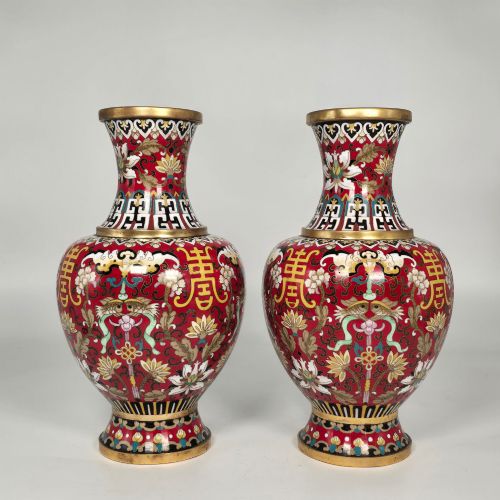
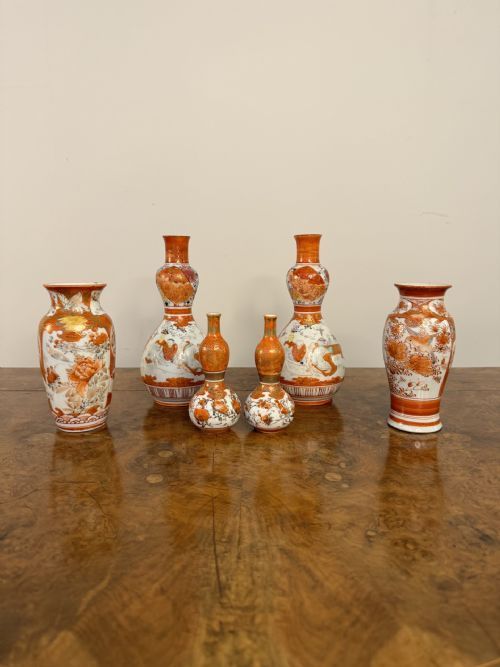
When you search for a red and gold vase, you encounter a vibrant mix of Japanese Kutani porcelain, Chinese cloisonné enamel, and European glass from the nineteenth and early twentieth centuries. These pieces range from cylindrical vessels and bottle vases to decorative mantel lustres and chargers, each displaying strong crimson tones highlighted with metallic leaf or enamel.
You are most likely to meet Japanese Kutani vases dating from the Meiji period on this page, often featuring intricate hand-painted designs in red and gold. Alongside these, nineteenth-century Bohemian and French glasswork appears, alongside Chinese cloisonné and English Victorian ruby glass decorated with gilt metal details.
How they were made
Potters and glassmakers utilised specialised techniques to achieve the characteristic crimson and metallic finish, combining porcelain or glass bodies with enamel paints and gold leaf. Japanese Kutani artisans applied precise hand-painted pigments directly onto the ceramic body, often firing the pieces multiple times to set the deep red tones and bright gold detailing.
Glassmakers created ruby and red vessels by introducing specific minerals into the molten glass batch before blowing and shaping the piece by hand. Once cooled, artists added gold enamel decorations, such as lotus or palmette motifs, or mounted the glass in gilt metal frames.
Red and Gold Vase Retail Price Guide 2026
Typical asking prices for red and gold vase among the pieces listed under this phrase on Sellingantiques today, from the lower quarter to the upper quarter. They describe what is for sale here now, not the wider market.
Several artists recorded here apparently abandoned pottery entirely to paint quiet still lifes of anemones and roses instead.
What varies in quality
The distinction between standard domestic wares and top-tier examples lies in the precision and complexity of the hand-painted decoration. Superior pieces display crisp, highly detailed brushwork and carefully applied gold leaf that remains sharp and well-adhered across the surface.
The depth and consistency of the red ground colour also determine the grade of a piece, with finer vessels showing an even, luminous hue without muddy patches or firing flaws. Additionally, the crispness of the porcelain potting or the clarity of the coloured glass contributes to the overall standard of the object.
Kinrin Workshop
The Red and Gold Vase Glossary
- Kutani
- A style of Japanese porcelain traditionally produced in Kaga province, widely recognised for its rich red and gold palette.
- Cloisonné
- A metalwork technique where thin wire partitions are soldered to a base to create compartments filled with coloured enamel paste.
- Mantel lustre
- A decorative ornamental glass vase hung with glass prisms, designed to sit on a fireplace mantel.
- Meiji Period
- The era in Japanese history spanning from eighteen sixty-eight to nineteen twelve, known for significant artistic output and international trade.
- Ruby glass
- A type of decorative glass coloured deep red through the addition of gold or copper compounds during melting.
Red and Gold Vase: Frequently Asked Questions
How do I date a red and gold vase?
Dating these pieces relies heavily on identifying the manufacturing style, material composition, and any maker marks present on the base. Japanese examples often align with the Meiji period aesthetic, while European glass works correspond to nineteenth-century revival styles.
Examining the wear on the base and the method of gilding also provides useful clues to the age of the item.
Are these vases suitable for holding water?
Most antique decorative vases are intended for display rather than functional daily use with fresh flowers and water. Moisture can potentially damage older interior glazes, enamel work, or delicate gold leaf applications over time.
If you do use them for floral arrangements, placing a small, discreet waterproof liner inside the vessel helps protect the historic material.
How do I clean a gilt glass vase?
Dusting these delicate surfaces requires only a soft, dry cloth or a gentle feather duster to remove loose particles. Avoid using modern chemical cleaners, abrasive cloths, or immersion in water, as these can strip away the applied gold enamel.
If a deeper clean is necessary, consult a professional conservator to prevent accidental damage to the antique finish.
What is the difference between Kutani and Imari?
Kutani ceramics typically feature a dominant palette of iron red and gold, often depicting pictorial scenes, figures, or natural motifs. Imari wares, by contrast, traditionally combine underglaze blue with iron red and gilt highlights in structured geometric patterns.
Both styles originated in Japan for export markets, but their visual textures and colour balances remain distinct.