






Red and Clear Glass
Red and clear glass brings together vibrant tones and transparent crystal in tableware and decorative objects spanning the Victorian period to the Art Deco era.
Red and Clear Glass
Red and clear glass encompasses vessels and decorative items that combine ruby, cranberry, or red-stained elements with transparent crystal or clear glass. Buyers searching this phrase encounter items designed for functional use and display, spanning centuries of manufacturing.
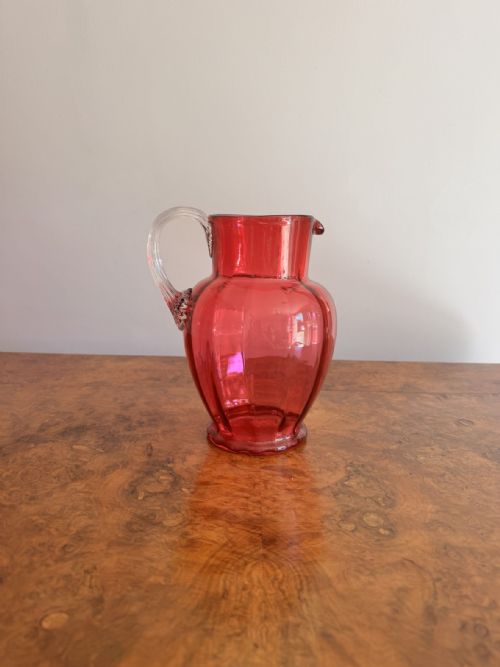
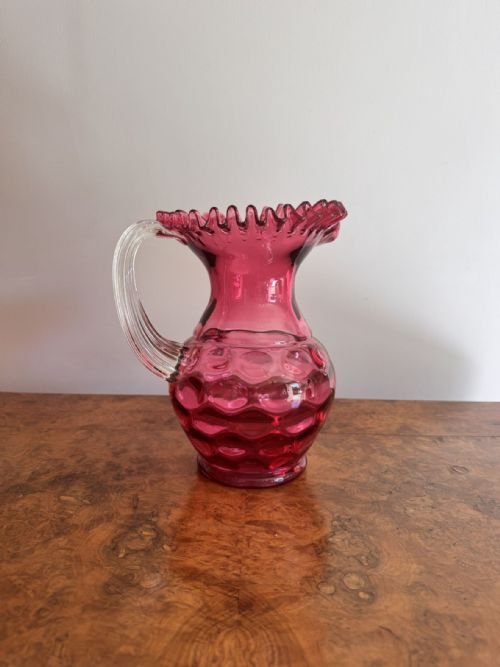
Cranberry glass jugs, decanters, and wine glasses dominate the Victorian offerings on this page. These pieces often feature hand-blown forms, sometimes paired with white piping or engraving.
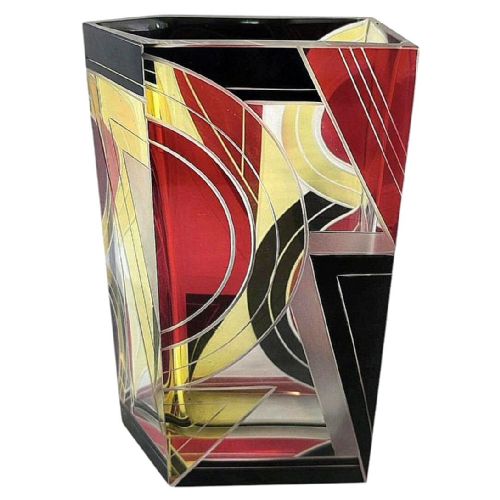
Art Deco examples introduce geometric enamel decoration, tall vases, and perfume bottles from makers working around nineteen thirty. Earlier Georgian specimens include colour twist ale glasses and scent bottles.
Materials and production methods
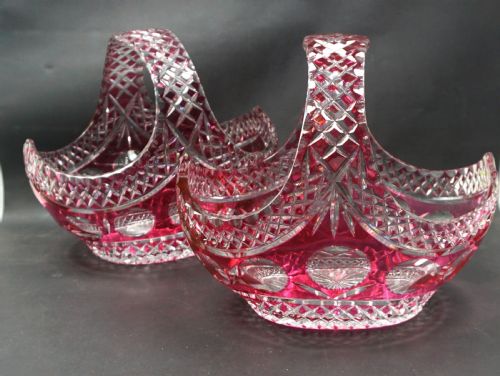
Makers utilised lead crystal, cranberry glass, and ruby glass, frequently employing overlay techniques where a layer of red glass covers a clear crystal core. Cut glass and engraved decoration then expose the clear layer underneath to create sharp contrast.
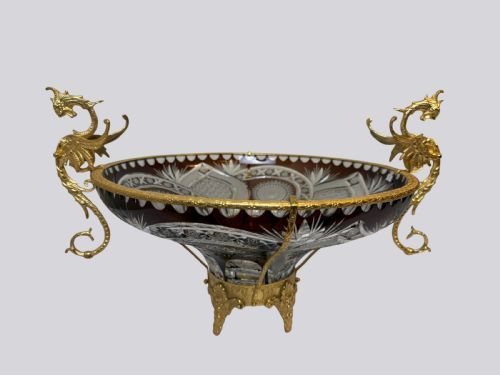
Hand-blowing shaped vessels such as jugs, decanters, beakers, and wine glasses, while glass hats and novelties utilised specialised cane work. Enamel decoration and gilt bronze mounts added surface detail to later pieces from the early twentieth century.
Red and Clear Glass Retail Price Guide 2026
Typical asking prices for red and clear glass among the pieces listed under this phrase on Sellingantiques today, from the lower quarter to the upper quarter. They describe what is for sale here now, not the wider market.
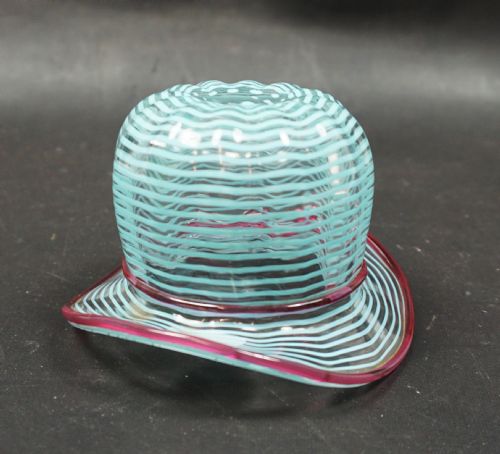
A tiny glass hat incorporating red cane decoration offers a playful glimpse into nineteenth-century pocket-sized novelty glass production.
Assessing quality in red and clear glass
Quality rests in the precision of the cut and the depth of the red colour, particularly in overlaid and cased vessels where the contrast between the ruby exterior and clear crystal depends on expert reduction. Engraved floral motifs and convolvulus designs executed with crisp detail elevate individual pieces.
Weight and balance distinguish superior lead crystal stemware and decanters from lighter domestic wares. The integration of mounts, such as silver and enamel closures on perfume bottles, also separates standard items from exceptional studio productions.
Val St. Lambert·Karl Palda·Rene Lalique·Charles Graffart
The Red and Clear Glass Glossary
- Cranberry glass
- A transparent pinkish-red glass coloured with gold chloride, widely utilised for Victorian tableware and decorative vessels. It appears frequently in jugs, decanters, and wine glasses.
- Overlay glass
- A technique involving a layer of coloured glass cased over a clear crystal body, then cut away to reveal the transparent layer beneath. This method creates striking panelled and geometric patterns on vases and decanters.
- Colour twist
- A manufacturing method found in Georgian stemware where coloured glass threads are twisted inside the stem. This technique requires considerable skill from the glassblower.
- Enamel decoration
- The application of fused glass powder to the surface of a vessel, often seen in geometric Art Deco patterns on vases and perfume bottles. It provides opaque colour contrast against clear or red glass bodies.
- Lead crystal
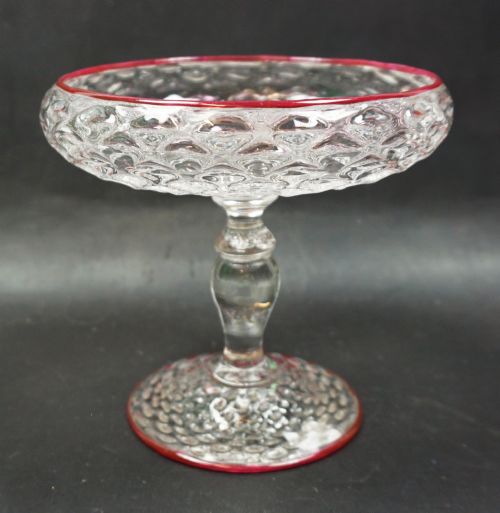
- A heavy, highly refractive form of glass containing lead oxide, used for high-quality decanters, tazzas, and stemware. It allows for deep, sharp cutting.
Red and Clear Glass: Frequently Asked Questions
How do I care for antique cranberry glass?
Wash pieces by hand in warm, soapy water using a soft cloth, avoiding abrasive sponges that might scratch the surface. Dry them immediately with a lint-free towel to prevent water spots on the clear and red glass.
Keep glass items away from direct sunlight and sudden temperature changes, which can stress antique material. Store stemware and decanters securely on stable shelves without overcrowding.
What is the difference between ruby glass and cranberry glass?
Cranberry glass tends to have a lighter, pinker hue achieved through gold chloride colouring in the melting process. Ruby glass often presents a deeper, more intense red tone.
Both materials appear across Victorian and later pieces, sometimes combined with clear crystal through overlay techniques.
How were red and clear glass decanters used?
Decanters served wine and spirits at the dining table during the Victorian and Edwardian eras. The contrasting red and clear sections allowed hosts to showcase coloured contents or highlight decorative cutting.
Matching sets often included wine glasses or tumblers designed for formal entertaining and display on sideboards.
Can I date these pieces by their style?
Stylistic markers help separate periods, such as Georgian colour twist stems, Victorian engraved convolvulus motifs, and Art Deco geometric enamel patterns. Maker attributions and material types further refine the timeline.
Examining the pontil mark on the base also indicates whether a piece is hand-blown and earlier, or mass-produced later.