






Red and Blue Enamel
These pieces with red and blue enamel bring together centuries of skilled craft across porcelain, metals, and jewellery.
Red and Blue Enamel
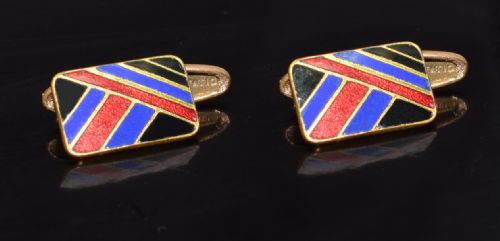
When you search for red and blue enamel, you encounter a diverse mix of antique ceramics, Japanese metalwork, and European jewellery spanning from the seventeenth century to the twentieth century. The selection ranges from Chinese export porcelain and early Japanese Imari bowls to Victorian gold pendants and English Art Deco cufflinks.
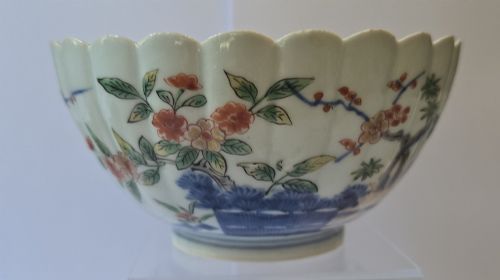
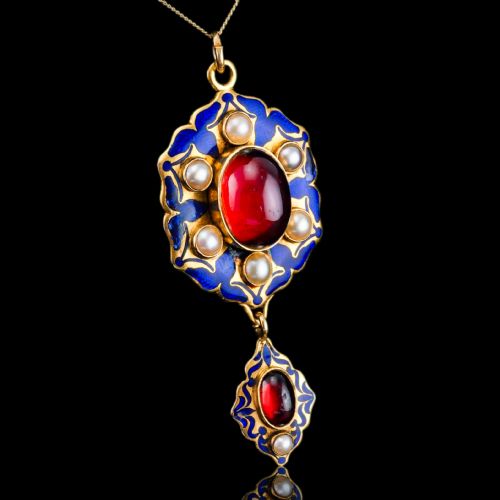
The version you are most likely to meet on this page is Japanese Imari porcelain, typically taking the form of decorative bowls and plates featuring characteristic cobalt blue underglaze paired with iron red overglaze. Alongside these ceramics, various centuries contribute distinct pieces such as Chinese transitional jars and Victorian Renaissance Revival jewellery set with garnets and pearls.
Materials and construction
The objects combine rigid substrates of porcelain, soft-paste porcelain, copper, brass, and 18K gold with vitreous enamels and gemstones like pearls and garnets. Ceramics rely on high-temperature firing for the cobalt blue underglaze, followed by low-temperature kilns to fuse the iron red enamel and secondary colours.
Metalwork utilises techniques such as cloisonné, where thin wire partitions hold the coloured enamel pastes before firing, or structural goldwork set with cabochon stones and suspended enamel drops. Cufflinks and pendants demonstrate miniaturised metal fabrication suited to personal adornment during the Victorian and Art Deco periods.
Red and Blue Enamel Retail Price Guide 2026
Typical asking prices for red and blue enamel among the pieces listed under this phrase on Sellingantiques today, from the lower quarter to the upper quarter. They describe what is for sale here now, not the wider market.
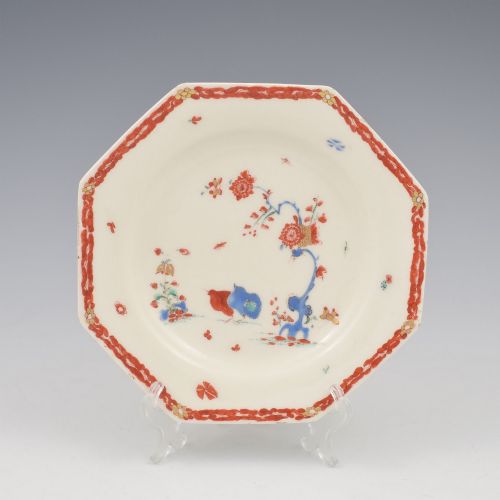
Two little partridges peer out from an eighteenth-century porcelain plate, keeping eternal watch over the red and blue glazes.
Judging quality in design and execution
Quality reveals itself in the precision of the brushwork and the stability of the glaze application across the surface of porcelain and cloisonné plates. Superior examples display crisp definition in complex motifs like quail patterns or landscape scenes, whereas lesser pieces show muddied pigment borders or uneven vitrification.
In jewellery and metal objects, refinement is visible in the neatness of wirework partitions, the secure grain-setting of garnets and pearls, and the purity of the gold alloy. The harmony between the deep cobalt blue and the vibrant iron red remains a primary measure of visual success.
The Red and Blue Enamel Glossary
- Imari
- A style of Japanese porcelain originating from the port of Arita, traditionally decorated in underglaze blue, iron red, and gilt. These wares were heavily exported to Europe from the seventeenth century onward.
- Cloisonné
- A metalworking technique where enamel paste is applied within compartments made by soldering flat metal wires to a metal base. The piece is then fired and polished smooth.
- Soft-paste porcelain
- A ceramic material composed of clay and glass frit, fired at lower temperatures than hard-paste porcelain. It produces a warm, creamy body common in eighteenth-century European factories.
- Holbeinesque
- A nineteenth-century revival style of jewellery inspired by sixteenth-century designs associated with Hans Holbein. Pieces characteristically incorporate heavy gold settings, coloured enamel, table-cut gemstones, and dangling pearls.
Red and Blue Enamel: Frequently Asked Questions
How do I care for antique enamel?
Keep enamel items away from prolonged direct sunlight and harsh chemical cleaners to preserve the integrity of the vitreous paste. Dust porcelain and metal surfaces gently with a soft, dry cloth.
Avoid soaking jewellery containing enamel, pearls, and garnets in water. Store pieces individually in lined boxes to prevent scratching against other items.
What is the difference between Imari and Arita ware?
Arita is the production town in Japan where the porcelain clay was mined and fired. Imari is the port from which these finished ceramics were shipped to domestic and international markets.
Over time, the name Imari became synonymous with the specific blue, red, and gold palette produced in the surrounding kilns.
How can I tell an eighteenth-century plate from a later copy?
Examine the foot ring and the base of the ceramic body for signs of age, such as kiln grit adhesion, wear marks, and subtle variations in the glaze. Eighteenth-century pieces often exhibit distinct weight and potting characteristics compared to later reproductions.
The iron red enamel on older pieces tends to feel slightly raised or textured to the touch due to the layering process.
Were these Japanese bowls made for export?
Many Japanese Imari and Arita bowls produced during the Edo and Meiji periods were specifically designed and manufactured for European trade markets. Artisans adapted traditional forms and motifs to suit Western interior tastes of the seventeenth and nineteenth centuries.
As a result, shapes like scallop-edge bowls and deep chargers frequently appear in Western collections from those eras.