

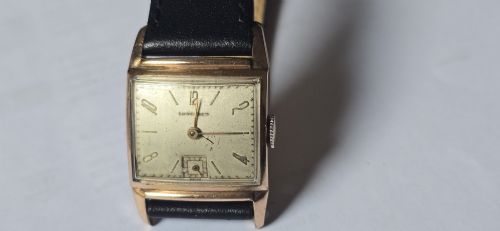
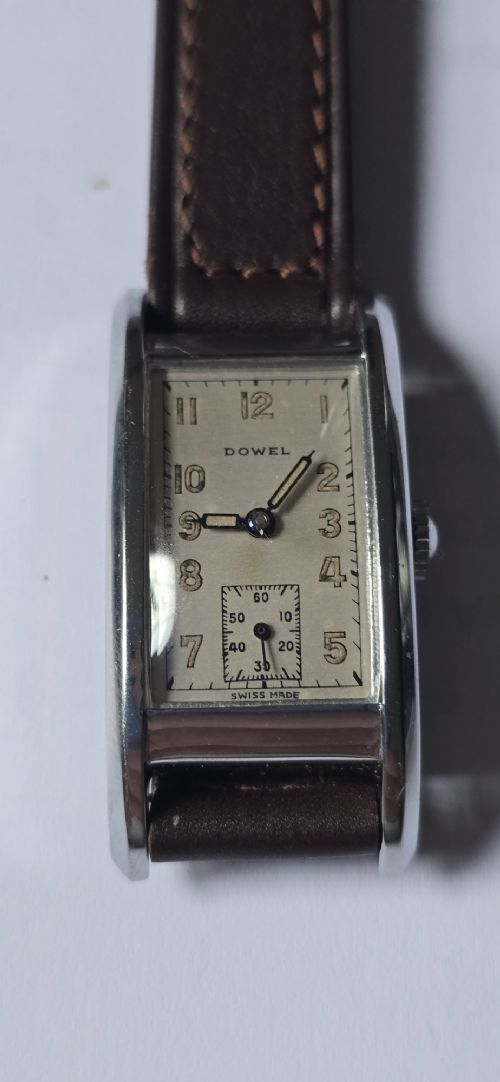


Rectangular Dial Wrist Watch
A rectangular dial wrist watch delivers sharp geometric presence on the wrist, drawing eyes away from standard round cases.
Rectangular Dial Wrist Watch
A rectangular dial wrist watch encompasses items originating from the 1930s, 1940s, 1950s, and 1960s periods. Buyers seeking this phrase encounter wristwatches and wrist watches styled in Art Deco and Mid-Century Modern designs.
The selections span from Swiss manual and mechanical tank movements to French productions, featuring distinct angular profiles. Many examples survive as old stock or carry mechanical movements housed in steel, chrome, and gold plate.
How they were made
Construction relies on metals such as stainless steel, chrome-plated steel, chrome, and solid 18ct white gold to form the geometric cases. Glass protects the dials, while leather supplies the straps for these wristwatches.
Movements inside these timepieces depend on mechanical and manual calibres, often Swiss-made, designed to fit within the narrow parameters of a rectangular silhouette.
Rectangular Dial Wrist Watch Retail Price Guide 2026
Typical asking prices for rectangular dial wrist watch among the pieces listed under this phrase on Sellingantiques today, from the lower quarter to the upper quarter. They describe what is for sale here now, not the wider market.
Some watches survived decades in dark drawers without ever touching a wrist, emerging today as untouched time capsules.
What varies in quality
Material choice defines the tier of a piece, moving from chrome-plated steel and gold plate up to solid 18ct white gold cases. The presence of original straps, buckles, or unworn old stock status elevates specific examples.
The intricacy of the movement and the pedigree of the maker, from Swiss houses to French workshops, separate standard production items from more distinguished horological specimens.
McDowells Dublin·Rolex·Omega·Rotary·Sperina·Zenith·Larex·Le Coultre
The Rectangular Dial Wrist Watch Glossary
- Tank watch
- A rectangular wristwatch with case sides that extend to form the attachment points for the strap, recalling military vehicle treads. This form gained prominence during the Art Deco period.
- Curvex
- A curved rectangular case and movement design that contours to the shape of the wrist. This technique allowed manufacturers to use larger mechanical movements inside arched wristwatch profiles.
- Manual wind
- A mechanical watch movement that requires the wearer to turn the crown by hand to tension the mainspring. These movements do not rely on an oscillating rotor.
- New old stock
- Unsold vintage merchandise discovered in unworn condition long after production ceased. These items retain their original factory state.
- Art Deco
- A design style spanning the 1920s and 1930s characterised by streamlined geometric shapes, symmetry, and sleek lines. It heavily influenced rectangular watch case design.
Rectangular Dial Wrist Watch: Frequently Asked Questions
How do I wind a mechanical rectangular watch?
Turn the crown between your thumb and index finger clockwise until you feel slight resistance. Do not force it past the stopping point.
Most vintage mechanical watches require a daily wind to keep accurate time throughout the day.
Are these watches waterproof?
Vintage rectangular wristwatches lack modern rubber gaskets and waterproof sealing technology. Exposure to moisture can damage the dial and rust the movement.
Keep these timepieces away from water, rain, and heavy humidity during daily wear.
How can I tell the period of the watch?
Examine the case style, dial typography, and movement signatures to determine the era of production. Art Deco cues point to the 1930s, while cleaner lines often suggest the 1950s or 1960s.
Documentation or service history from watchmakers can also verify the decade of origin.