

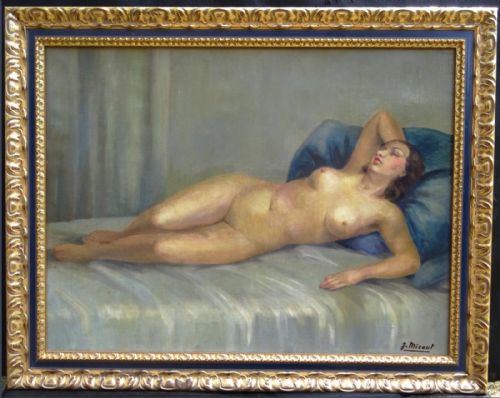
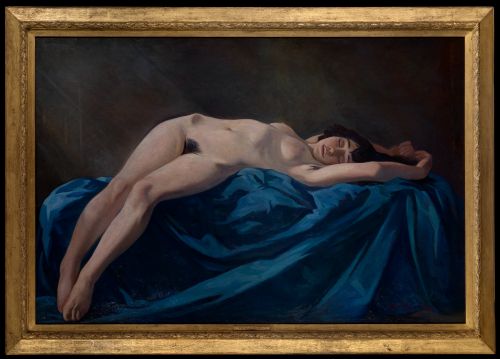
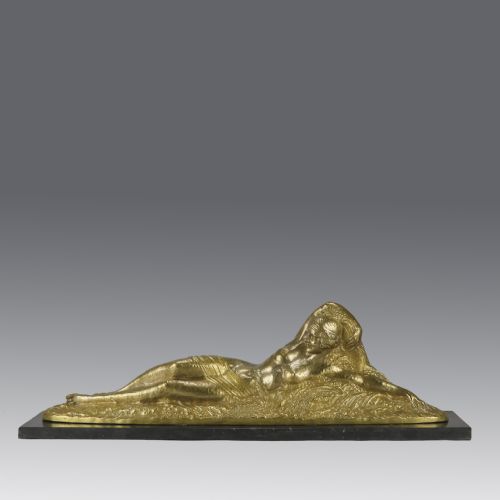





Reclining Female Nude
A reclining female nude captures the human form at rest, offering a timeless study in posture and classical grace that transforms any room.
Reclining Female Nude
A reclining female nude presents the human form stretched out horizontally, capturing a subject that has absorbed artists across generations. These works appear most frequently as oil paintings on canvas or board, alongside bronze and patinated bronze sculptures.
The selection ranges from nineteenth-century academic interpretations and bronze figures to twentieth-century modern British oils and Art Deco statuary. Collectors encounter everything from small cabinet figurines to large-scale canvas studies spanning the decades from the eighteen-eighties to the nineteen-sixties.
Materials and construction
The paintings utilise oil paint on canvas or board, often complemented by charcoal, chalk, or sanguine for preparatory lines and studies. Pigments capture subtle tonal gradations across skin and drapery.
Three-dimensional pieces rely on bronze, patinated bronze, alabaster, marble, onyx, and spelter. Foundries cast metal components using traditional methods, while stone works benefit from careful hand carving.
Reclining Female Nude Retail Price Guide 2026
Typical asking prices for reclining female nude among the pieces listed under this phrase on Sellingantiques today, from the lower quarter to the upper quarter. They describe what is for sale here now, not the wider market.
One recorded feline companion shares the canvas with its reclining subject.
Assessing quality and execution
Superior execution shows in the accurate rendering of anatomical weight and relaxed muscle structure rather than mere surface finish. The most successful pieces convey a natural sense of repose and physical volume.
Material choice and foundry reputation elevate metal and stone works, whilst canvas pieces depend on confident brushwork and balanced composition. Finer examples display a command of light and shadow that defines the contours of the body.
Demetre Chiparus·Josef Lorenzl·Sibylle May·Fernand Jean Barbier·James Pradier·Susse Freres·Ugo Cipriani·Frank Dobson·Fyffe Christie
The Reclining Female Nude Glossary
- Patinated bronze
- A bronze sculpture treated with chemical solutions to produce a specific surface colour and finish. This layer protects the metal while enhancing visual depth.
- Spelter
- A zinc-based alloy frequently utilised as a cost-effective alternative to bronze in twentieth-century statuary. It often receives a bronze-effect finish to mimic more expensive materials.
- Alabaster
- A fine-grained, translucent stone favoured for nineteenth and early twentieth-century decorative carvings. Its softness allows for delicate modelling of the human form.
- Sanguine
- A reddish-brown chalk used historically for figure drawing and preparatory sketches. Artists select it for its warm, fleshy tones.
- Art Deco
- A design style spanning the nineteen-twenties and nineteen-thirties characterising many of the figures and paintings found here. It prioritises stylised lines, geometric forms, and sleek materials.
Reclining Female Nude: Frequently Asked Questions
What periods do these pieces span?
The works stretch from the late nineteenth century through the mid twentieth century. They encompass academic nineteenth-century bronzes alongside Art Deco and mid-century modernist paintings.
Changes in style reflect evolving artistic approaches to the human form across different decades. Each era brings distinct materials and technical choices to the subject.
How were these bronze sculptures produced?
Makers employed traditional casting methods to shape metal into complex figurative poses. Foundries like Susse Freres oversaw the translation of clay or wax models into durable bronze.
Patination was then applied to the surface to achieve specific colouration and tonal depth. Marble or onyx plinths frequently served as bases for these metal figures.
How do I care for an oil painting on canvas?
Keep paintings away from direct sunlight and areas subject to sharp humidity changes. Gentle dusting with a soft, dry brush maintains the surface safely.
Avoid hanging pieces above active heat sources that might dry out the canvas or paint layer. Professional conservation should be sought for any deeper cleaning.
What distinguishes Art Deco interpretations?
Art Deco pieces favour stylised proportions, geometric clarity, and sleek surface finishes. Artists like Demetre Chiparus and Josef Lorenzl combined bronze with materials such as ivory, onyx, or marble.
These works emphasise decorative elegance and modern lines rather than strict academic realism. They capture the distinct aesthetic of the nineteen-twenties and nineteen-thirties.