

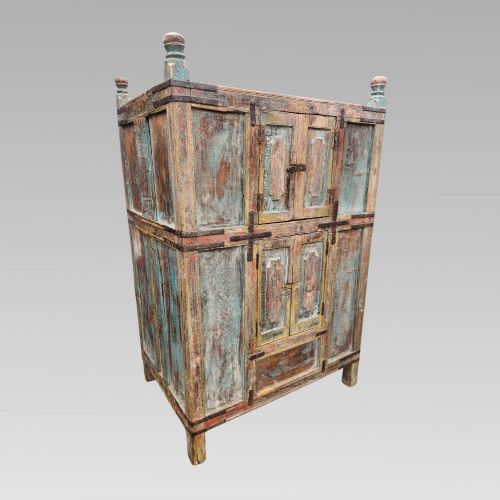
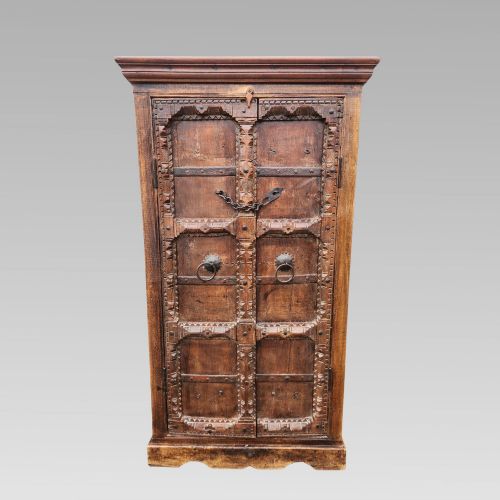
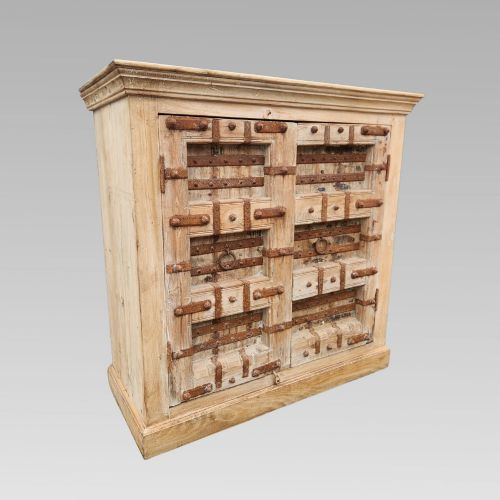
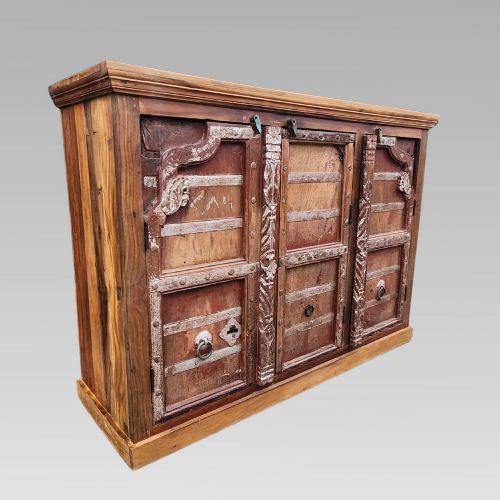


Reclaimed Storage Cabinet
These reclaimed storage cabinet pieces combine heavy industrial iron and steel with rustic Indian teak, cedar, and rosewood.
Reclaimed Storage Cabinet
A reclaimed storage cabinet provides functional shelving and door space through repurposed timbers and industrial metals. The pieces gathered here draw from nineteenth century, Victorian, and early twentieth century traditions.
Buyers will most frequently encounter Indian provincial and traditional Indian designs alongside industrial French and English country examples. These range from tall wardrobes and almirah cupboards to low sideboards and pine chests of drawers.
The objects serve primarily for household storage while displaying the distinct character of reclaimed materials. Each form reflects its specific period of origin, spanning from Victorian pine to nineteen thirties louvre door units.
Materials and construction methods
Construction relies heavily on reclaimed hardwoods such as teak, cedar, and rosewood, paired with pine for British country furniture. Carpenters and builders utilised salvaged structural elements to construct cupboards, wardrobes, and dressers.
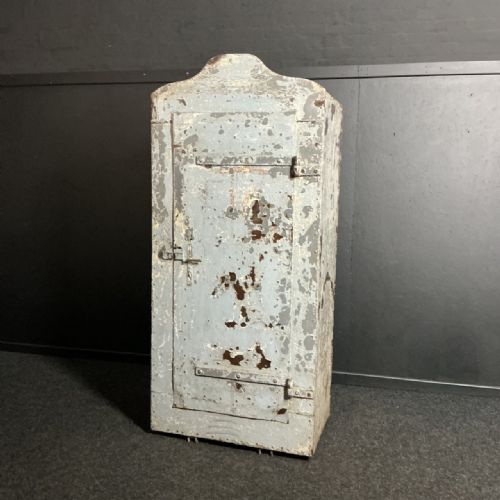
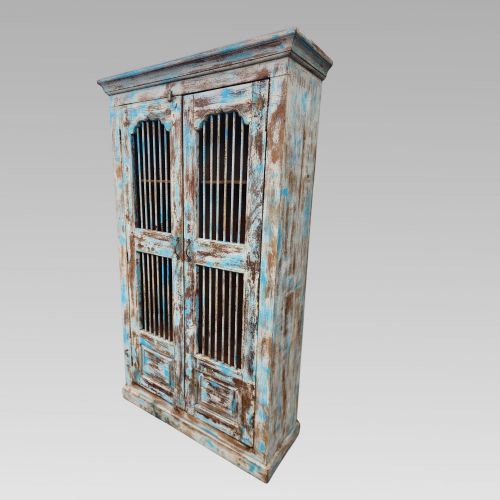
Metal components introduce industrial strength through iron, steel, and wrought iron elements. Painted finishes and original paint remnants appear across both the nineteenth century steel cupboards and the painted Indian storage units.
Reclaimed Storage Cabinet Retail Price Guide 2026
Typical asking prices for reclaimed storage cabinet among the pieces listed under this phrase on Sellingantiques today, from the lower quarter to the upper quarter. They describe what is for sale here now, not the wider market.
An engineer's cabinet carries original paint remnants from nineteen twenty.
Judging quality in reclaimed storage furniture
Quality separates ordinary utility pieces from finer statements through the selection and preservation of the reclaimed timber. Richness in the grain of reclaimed teak, cedar, and rosewood dictates the visual depth of the cabinet.
The integrity of original painted surfaces and ironwork defines the standard of industrial and provincial examples. Consideration of period hardware, such as louvre doors and wrought iron fittings, establishes the character of the construction.
The Reclaimed Storage Cabinet Glossary
- Almirah
- A traditional freestanding cupboard or wardrobe used for storage. These cabinets frequently feature heavy timber construction and panelled doors.
- Louvre door
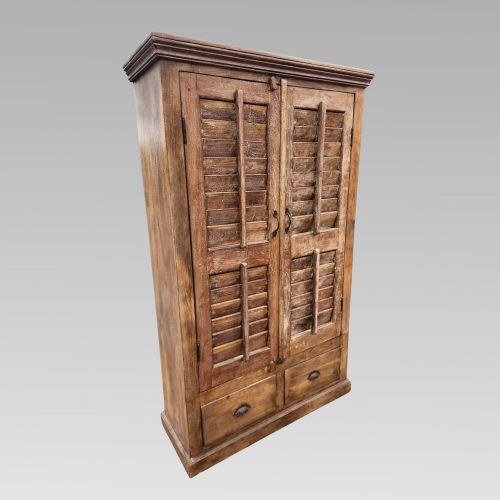
- A door built with horizontal slats that permit ventilation. This feature appears on selected rosewood storage cupboards.
- Dresser base
- A low wooden sideboard or storage unit fitted with cupboards or drawers. English pine versions represent this traditional form.
- Wrought iron
- Tough, malleable iron beaten into shape for structural support and hardware. French industrial cabinets utilise this metal for strength.
Reclaimed Storage Cabinet: Frequently Asked Questions
What materials make up a reclaimed storage cabinet?
The listings show a heavy reliance on reclaimed hardwoods including teak, cedar, and rosewood, alongside traditional pine. Industrial examples incorporate steel, iron, and wrought iron.
Paint finishes also appear, ranging from decorative painted steel to original paint remnants on French and Indian pieces.
Which periods do these cabinets originate from?
The inventory spans the nineteenth century, the Victorian era, and the early decades of the twentieth century, specifically covering the years nineteen hundred, nineteen twenty, and nineteen thirty.
Different regional traditions defined these periods, from English pine workshops to Indian provincial craftsmanship.
How were these storage cabinets originally used?
These pieces functioned as wardrobes, storage cupboards, almirahs, and sideboards for household organisation. Chests of drawers provided bedroom storage for clothing and textiles.
Industrial variants served engineering and workshop purposes before entering domestic settings as storage furniture.
What styles are represented in the collection?
Styles include traditional and rustic Indian designs, industrial French and general industrial pieces, alongside rustic English country and Victorian country forms.
Cabinet types range from tall wardrobes with shelves to low sideboards and multi-drawer chests.