




Realistic Portrait Art
Realistic portrait art captures human likeness and character with precision, offering an intimate connection to sitters from past centuries.
Realistic Portrait Art
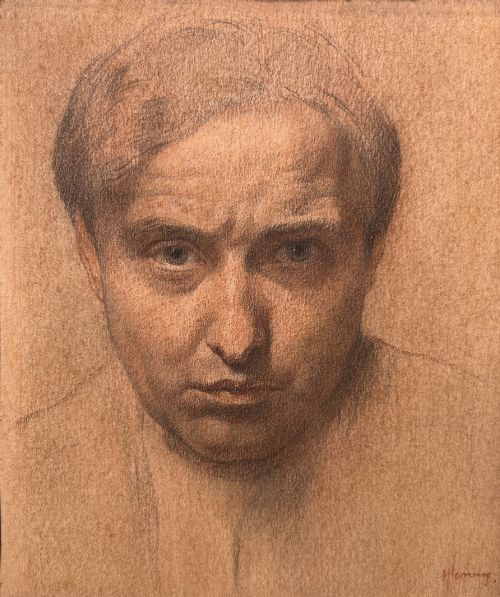
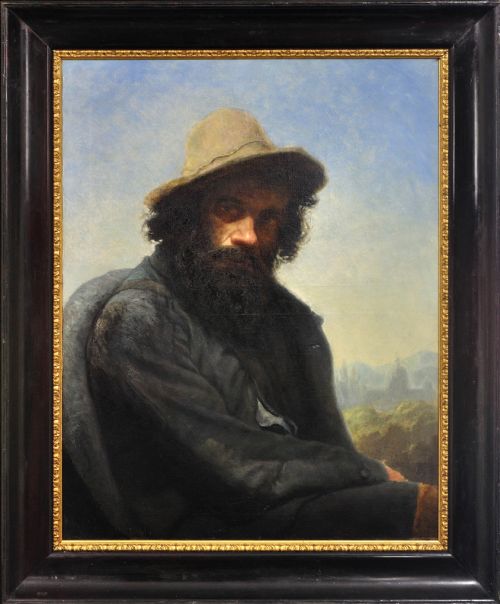
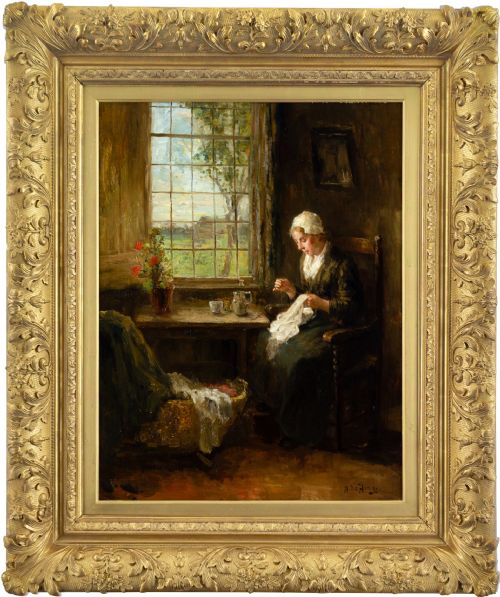
When you search for realistic portrait art, you encounter oil paintings, drawings, and bronze busts spanning the nineteenth and twentieth centuries. These works record individual sitters, self-portraits, and genre subjects rendered with careful attention to physical likeness and expression.
The pieces on this page originate from European and British schools, ranging from nineteenth century realism to mid-century realism. You will most frequently meet framed oil paintings on canvas or panel, alongside graphite and charcoal drawings on paper.
Makers represented include named artists such as Albin Mattenheimer, Herbert Johnson Harvey, and Bernard De Hoog, alongside pieces attributed to nineteenth century school workshops. Each work offers a direct window into historical portraiture traditions.
How they were made
These works rely on traditional media including oil paint applied to canvas, wood panel, or paper supports. Artists utilised fine brushes to build up skin tones and textures with deliberate realism.
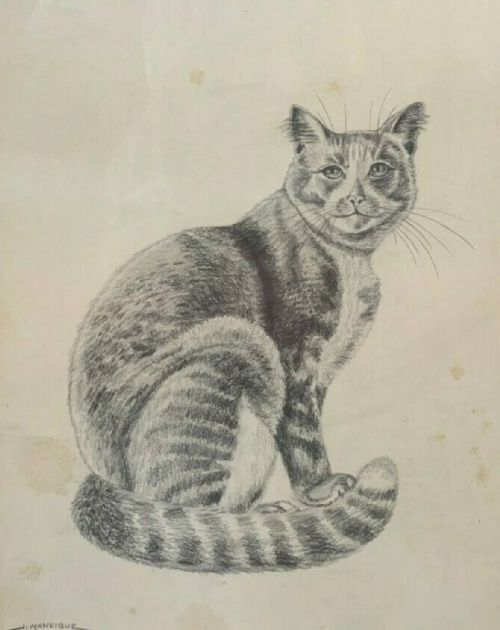
Works on paper employ chalk, charcoal, or pencil to achieve tonal gradation and fine linear detail. Sculpted pieces utilise cast bronze, often mounted on wood bases, capturing three-dimensional form and expression.
One listed portrait immortalises an Austrian gentleman enjoying a quiet pipe.
What varies in quality
Quality in these works rests upon the artist's command of anatomy, light, and psychological depth. Superior pieces convey character and texture with economy and precision, while lesser examples rely on stiff repetition.
The preservation of the primary medium also distinguishes pieces, particularly the stability of oil paint on canvas or the crispness of charcoal and pencil marks on aged paper.
Jozsef Molnar·Herbert Johnson Harvey·Albin Mattenheimer·Bernard De Hoog·J Manrique·Otto Rothenburgh·Erwin Eichinger
The Realistic Portrait Art Glossary
- Realism
- An artistic movement focused on the accurate, unvarnished depiction of real-life subjects without idealisation. It prioritises truthful observation over stylistic interpretation.
- Oil Paint
- A slow-drying paint made by mixing pigments with oils such as linseed. It allows artists to blend tones smoothly and build rich surface textures.
- Charcoal
- A dry drawing medium made from finely ground organic materials held together by a gum binder. It produces deep blacks and soft, smudged tonal transitions.
- Panel
- A rigid support for paintings, typically made of wood. It provides a stable, flat surface that resists the flexing common to stretched canvas.
- Bronze Bust
- A sculptural casting that depicts a person from the chest up. Bronze allows for sharp detail capture in metalwork.
Realistic Portrait Art: Frequently Asked Questions
What periods do these portraits cover?
The listings span from the nineteenth century through the mid-twentieth century, capturing shifting styles in academic and regional realism.
You will find works dated across the 1870s, early 1900s, 1920s, and 1950s.
Are all these portraits painted in oil?
No, while oil paintings on canvas and wood panel form a large part of the selection, other mediums appear.
You can also find charcoal drawings, pencil sketches on paper, and cast bronze busts.
How should I display a charcoal drawing?
Charcoal and pencil works on paper require careful framing behind protective glass to prevent smudging and fading.
Keep them away from direct sunlight to preserve the integrity of the paper and dark pigments.
What is the difference between a self-portrait and a genre portrait?
A self-portrait is created by the artist depicting their own likeness, offering insight into how they viewed themselves.
A genre portrait depicts an individual engaged in daily activities or posed as a character study, such as an Austrian gentleman with a pipe.