





Raphael Madonna Painting
A raphael madonna painting brings devotional grace and Renaissance mastery into a room, capturing the serene elegance of the Virgin and Child.
Raphael Madonna Painting
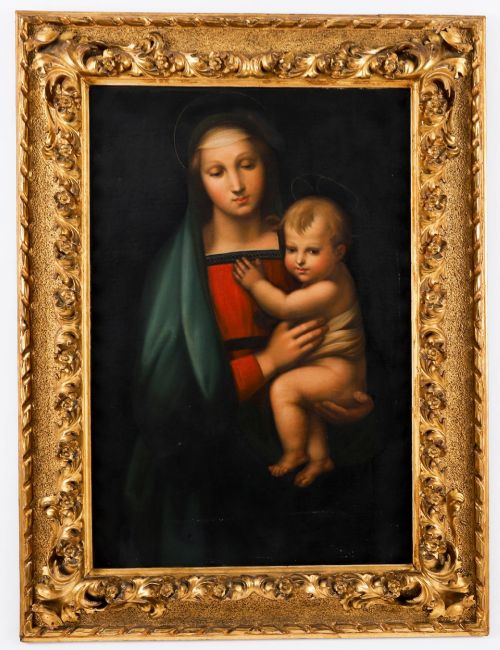
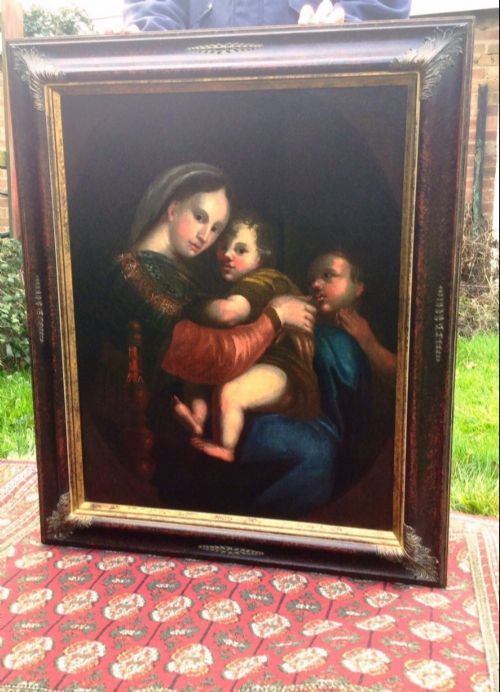
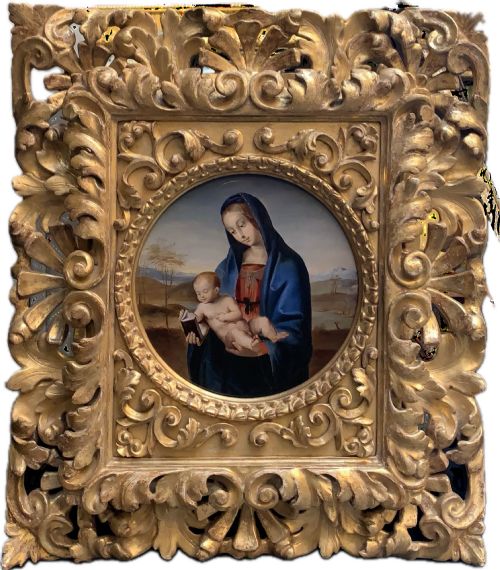
A raphael madonna painting on this page comprises oil paintings on canvas or panel, along with hand-painted porcelain plaques depicting the Madonna and Child. These works draw upon celebrated High Renaissance compositions such as the Conestabile Madonna, La Belle Jardinière, and the Madonna della Sedia.
Most examples appear as later interpretations rather than original Renaissance works, spanning from the eighteenth century through the nineteenth century and the Edwardian period. Followers, circles, and later hands faithfully recreate the balanced geometry and tender expression characteristic of the master.
Forms range from intimate wall art to very large proportions, often framed in period giltwood with gesso and gold leaf ornamentation. Buyers encounter stylistic revivals that emulate Italian Renaissance ideals with varying degrees of fidelity to the original composition.
Materials and Techniques
Makers utilised oil paint applied to prepared canvas or wooden panels, building up smooth glazes to achieve the luminous flesh tones and draped vestments typical of religious portraiture. Alternatively, some artisans executed these subjects as meticulous hand-painted porcelain plaques.
Framing often involves elaborate giltwood surrounds finished with gesso and gold leaf, providing the traditional architectural weight suited to religious wall art of this scale.
Raphael Madonna Painting Retail Price Guide 2026
Typical asking prices for raphael madonna painting among the pieces listed under this phrase on Sellingantiques today, from the lower quarter to the upper quarter. They describe what is for sale here now, not the wider market.
Current listings feature oil paintings on canvas and panel alongside hand-painted porcelain plaques, spanning the eighteenth century to the Edwardian period.
Assessing Quality and Execution
Quality rests in the fidelity of the draughtsmanship and the subtlety of the brushwork in capturing the facial expressions and tender interaction between the Madonna and Child. Stronger examples display confident handling of light, shadow, and drapery that echoes the sophistication of the High Renaissance.
The sophistication of the secondary materials, particularly the depth of the gilding and the integrity of the wooden panel or canvas support, distinguishes more ambitious works from simpler decorative copies.
G.F. Penni·Raffaello Sanzio
The Raphael Madonna Painting Glossary
- Follower of
- An artist working closely in the manner and style of a master, often during the same period or shortly afterwards. This designation indicates a skilled hand rather than a direct pupil.
- After Raphael
- A phrase indicating that the artwork is a copy or interpretation of a known composition by Raphael. Such works were standard practice for artists learning technique or fulfilling demand for famous religious imagery.
- Giltwood
- Timber that has been coated with a thin layer of gold leaf or gold paint. It frequently forms the ornate frames surrounding religious oil paintings from the eighteenth and nineteenth centuries.
- Porcelain plaque
- A flat tablet of fired ceramic material painted with ceramic colours and glazed. Continental artisans often used these smooth surfaces for miniature reproductions of Renaissance masterpieces.
Raphael Madonna Painting: Frequently Asked Questions
Are these original sixteenth century paintings?
The selection primarily consists of later interpretations, copies, and revival pieces dating from the eighteenth century, the nineteenth century, and the Edwardian era. These works pay homage to the Renaissance master rather than originating from his lifetime.
Such paintings reflect the enduring popularity of religious iconography among later collectors who desired classical devotional art for their interiors.
What subjects do these paintings depict?
The compositions focus almost exclusively on the Madonna and Child, frequently referencing specific famous works like the Conestabile Madonna or La Belle Jardinière. Some variations include additional figures such as Saint John the Baptist.
These sacred themes were rendered to inspire quiet contemplation and to bring classical Italian composition into domestic spaces.
How should I hang a large oil painting?
Works of very large proportion require secure wall fixings anchored directly into structural studs or masonry to support the weight of the canvas and heavy giltwood frame. Position the centre of the canvas at standard eye level to replicate gallery presentation.
Keep these oil paintings away from direct sunlight and fluctuating heat sources to protect the canvas, paint layers, and gold leaf framing.
How do I distinguish eighteenth from nineteenth century works?
Eighteenth century pieces often lean towards classical interpretations with softer, more muted tonal transitions, while nineteenth century examples frequently embrace Renaissance revival aesthetics with brighter palettes and sharper detail. Examining the stretcher frames, canvas weave, and gesso application helps clarify the likely age.
Consulting the specific stylistic cues of the period helps place the artwork within its correct historical context of production.