


R Lalique Opalescent Glass
R lalique opalescent glass combines shifting blue and amber tones with sculptural relief, capturing light through pressed and moulded forms.
R Lalique Opalescent Glass
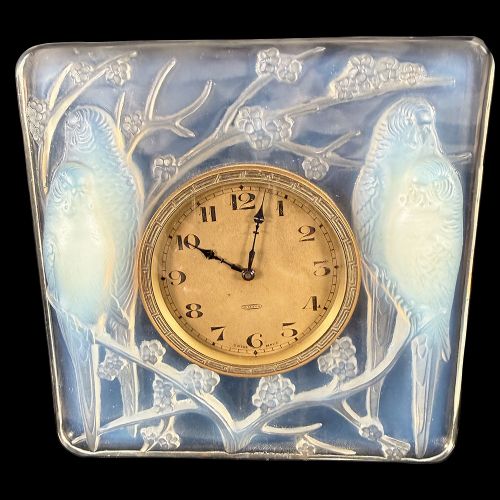
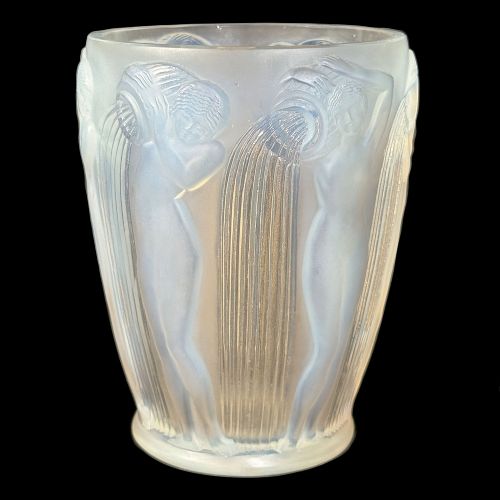
Collectors searching for r lalique opalescent glass encounter decorative objects produced primarily during the Art Deco and Art Nouveau periods, spanning from the early twentieth century into the nineteen-thirties. The selection centres on functional and ornamental forms, including vases, shallow bowls, car mascots, perfume bottles, clocks, plates, and boxes.
Vases and bowls dominate the inventory, often featuring flora, fauna, and classical figures moulded directly into the body. These items reflect the transition from organic plant motifs to geometric styling characteristic of the period's output.
Smaller domestic accessories such as ashtrays, paperweights, and perfume bottles with specialised stoppers complete the range of objects available. Each category demonstrates the versatility of pressed and moulded techniques applied to domestic glassware.
How r lalique opalescent glass was made
Production relied on pressed glass and moulded glass techniques, allowing complex three-dimensional reliefs of birds, fish, and floral patterns to emerge across surfaces. Molten material was forced into metal dies or gathered into open moulds to shape deep vessels and flat plates alike.
The characteristic opalescent effect was achieved through specific chemical agents added to the batch, causing the glass to catch transmitted light as warm amber and reflected light as cool blue. Supplementary treatments such as blue staining or frosted finishes were frequently applied to enhance the contrast of the moulded details.
Listings feature items from the nineteen-tens, nineteen-twenties, and nineteen-thirties, executed in opalescent, frosted, and blue-stained glass.
What varies in quality in r lalique opalescent glass
The strength and clarity of the opalescent effect differ across pieces, depending on the chemical composition of the melt and the thermal control during cooling. Stronger optical shifts between blue and amber indicate a more successful firing.
Crispness in the moulded relief separates standard domestic production from finer examples. Sharp definition along the feathers, scales, and floral petals reveals the precision of the original metal matrices before wear diminished their output.
Rene Lalique·Sabino
The R Lalique Opalescent Glass Glossary
- Opalescent Glass
- Glass that diffuses light so that it appears bluish when lit from the front and amber or yellowish-orange when lit from behind. This optical property defines the primary visual appeal of these decorative items.
- Moulded Glass
- Glass shaped by being pressed or blown into a prepared cavity or metal form. This method enables consistent replication of intricate sculptural motifs.
- Car Mascot
- An ornamental figurine mounted on the radiator cap of an automobile during the early twentieth century. These pieces double as heavy glass paperweights when removed from vehicles.
- Coupe Ouverte
- A French term for an open bowl or shallow vessel. Such pieces frequently display dense interior reliefs of fish or botanical subjects.
- Frosted Glass
- Glass treated with acid or mechanical abrasion to produce a matte surface. This texture contrasts with polished highlights across raised decorative elements.
R Lalique Opalescent Glass: Frequently Asked Questions
How do I identify genuine r lalique opalescent glass?
Genuine pieces display specific weight, characteristic colour shifts between blue and amber under varying light, and precise relief moulding. Examination of the base often reveals signature marks corresponding to the period of manufacture.
Surface wear and the tactile quality of the frosted areas provide further indicators of authenticity when compared against documented production archives.
What periods do these glass pieces come from?
The objects originate primarily from the early twentieth century through the nineteen-thirties, spanning the height of the Art Nouveau and Art Deco movements. Production dates align with the active years of the designer and associated contemporary workshops.
Design motifs generally transition from flowing floral stems in the nineteen-tens to symmetrical geometric arrangements and stylised fauna by the nineteen-thirties.
How should I clean opalescent glass?
Cleaning requires warm water and mild soap applied with a soft cloth to protect the delicate frosted and polished surfaces. Abrasive materials or harsh chemicals should be avoided entirely to prevent scratching the glass body.
Careful drying with a lint-free cloth maintains the surface finish and prevents water spots from obscuring the subtle opalescent glow.
Were car mascots meant to be displayed on vehicles?
Car mascots were originally designed to mount onto automobile radiator caps during the motoring era of the early twentieth century. Many examples include integrated metal bases or threaded collars intended for this exact purpose.
Today, collectors frequently display these sturdy glass sculptures as desk ornaments or paperweights inside domestic interiors.