



Queen Victoria Commemorative
Queen Victoria commemorative pieces are tangible fragments of a long reign, sought after for their direct connection to royal history and patriotic display.
Queen Victoria Commemorative
When you search for queen victoria commemorative objects, you encounter a diverse array of items spanning the nineteenth century and the early twentieth century. These pieces capture significant milestones, notably jubilees and exhibitions, reflecting the public devotion of the Victorian era.
The selections available here range from practical furnishings and textiles to decorative ceramics and medals. You are most likely to meet utilitarian jugs, portrait figures, and flags marking the long duration of the reign from eighteen thirty-seven to nineteen hundred and one.
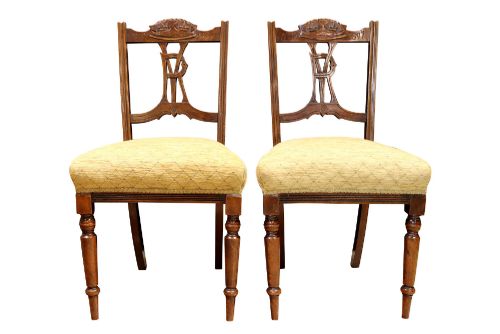
The forms encompass walnut side chairs, prattware child sets, stoneware vessels, and framed union jack flags. Each object serves as a physical record of loyalty produced during specific decades of the nineteenth century and the early nineteen hundreds.
How they were made
Makers utilised earthenware, stoneware, and specialised pottery techniques like flow blue and prattware to shape portrait figures and commemorative jugs. These ceramic pieces required careful moulding and glazing before undergoing kiln firing to set the colours and details.
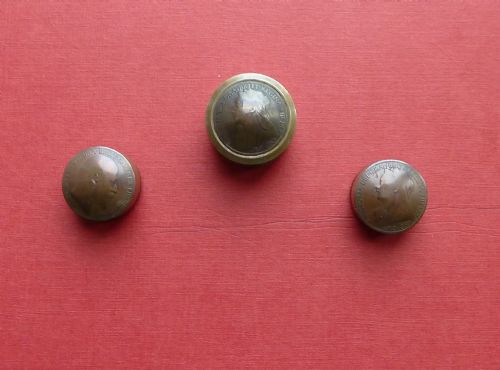
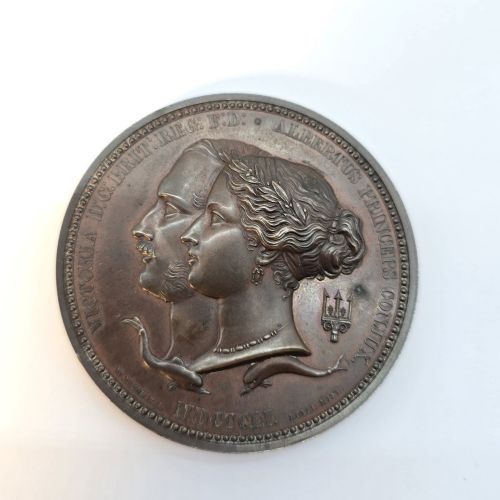
Metalwork items, such as large bronze medals, involved striking from heavy dies to produce crisp relief portraits of the monarch. Textile pieces like cotton flags and banners relied on traditional weaving and printing methods to display national emblems and dates clearly.
Woodworking skills are evident in items like walnut side chairs, which incorporated carved ornamentation suited to Victorian decorative styles. The combination of textiles, metals, ceramics, and timber demonstrates the varied manufacturing trades active during the period.
Queen Victoria Commemorative Retail Price Guide 2026
Typical asking prices for queen victoria commemorative among the pieces listed under this phrase on Sellingantiques today, from the lower quarter to the upper quarter. They describe what is for sale here now, not the wider market.
George Shaw preserved his official juror status from the eighteen fifty Great Exhibition inside a heavy bronze medal.
What varies in quality
Material choice and scale heavily influence the standing of an object, with large stoneware vessels and official bronze medals representing higher production standards. Complete sets and well-preserved textiles retain greater integrity compared to fragmented or heavily worn examples.
Doulton Lambeth·Staffordshire Pottery
The Queen Victoria Commemorative Glossary
- Prattware
- A type of multicoloured earthenware popular in the nineteenth century, often featuring underglaze colours applied to moulded ceramic bodies. It is commonly found in small decorative items and children sets.
- Stoneware
- A heavy, dense ceramic fired at high temperatures until vitrified, making it impervious to liquids. It was frequently utilised for large utilitarian jugs and vessels.
- Flow blue
- A cobalt blue transfer printing technique where the colour intentionally blurred slightly into the surrounding white glaze during firing. This created a hazy, distinctive aesthetic popular on nineteenth-century ceramics.
- Diamond Jubilee
- The celebration marking sixty years of a monarch reign, specifically commemorated in eighteen ninety-seven for Queen Victoria through specialised furniture and memorabilia.
Queen Victoria Commemorative: Frequently Asked Questions
What periods do these pieces date from?
The items originate primarily from the nineteenth century, encompassing the Victorian era as well as early twentieth-century pieces produced around nineteen ten. Dates often correspond directly to specific royal events or jubilees.
Catalogued objects reflect manufacturing styles shifting from mid-century earthenware and stoneware towards later commemorative furnishings and flags.
How were commemorative jugs used?
Stoneware and ceramic jugs served both decorative and functional purposes in nineteenth-century households, often displayed during public celebrations and royal anniversaries.
Larger vessels held liquids for gatherings, while smaller portrait jugs functioned primarily as mantelpiece ornaments marking the monarch reign.
Are flags and banners original?
Textiles such as the union jack flags from the nineteenth century represent period fabric production associated with major royal milestones like the diamond jubilee.
These cotton pieces were manufactured for public display during national celebrations and patriotic events.
How do I identify Staffordshire figures?
Staffordshire pottery figures of Queen Victoria typically feature moulded earthenware construction with hand-painted or transfer-printed details depicting the monarch.
They range in scale from cabinet pieces to large portrait sculptures intended for display on nineteenth-century sideboards and shelves.