




Queen Anne Liquor Cabinet
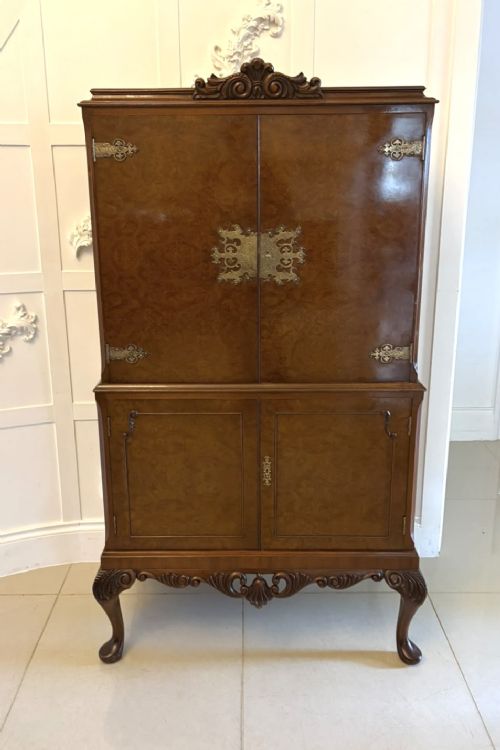
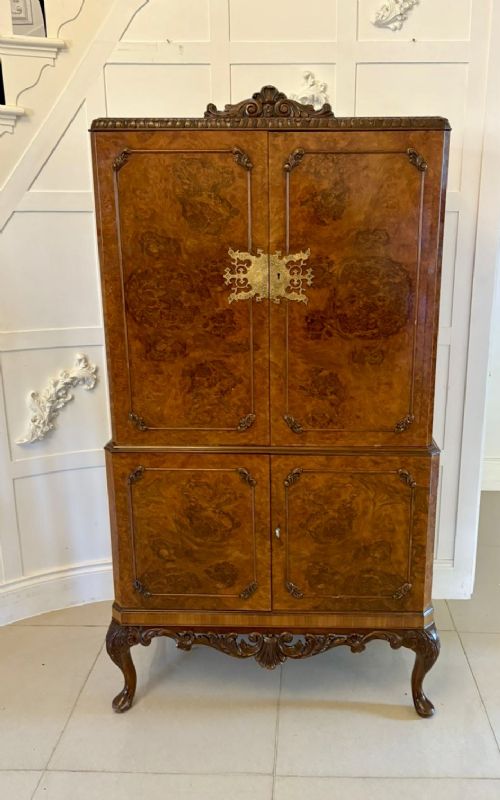
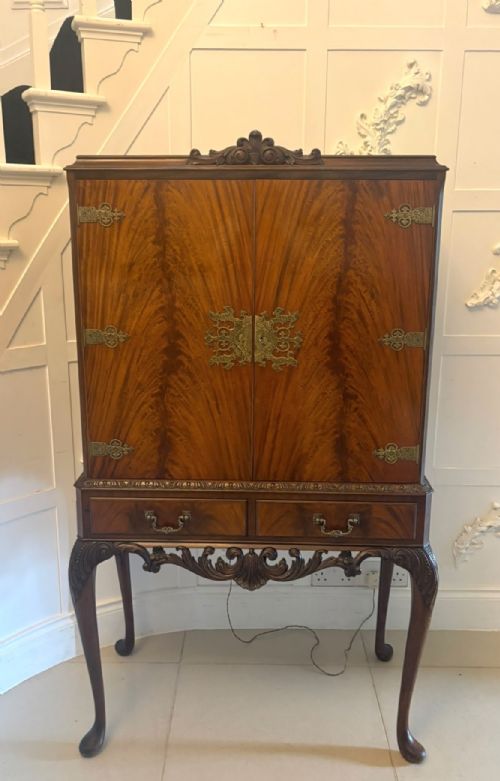
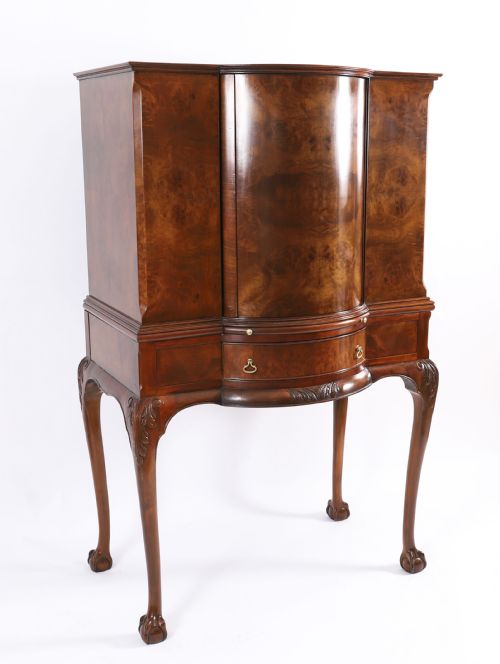
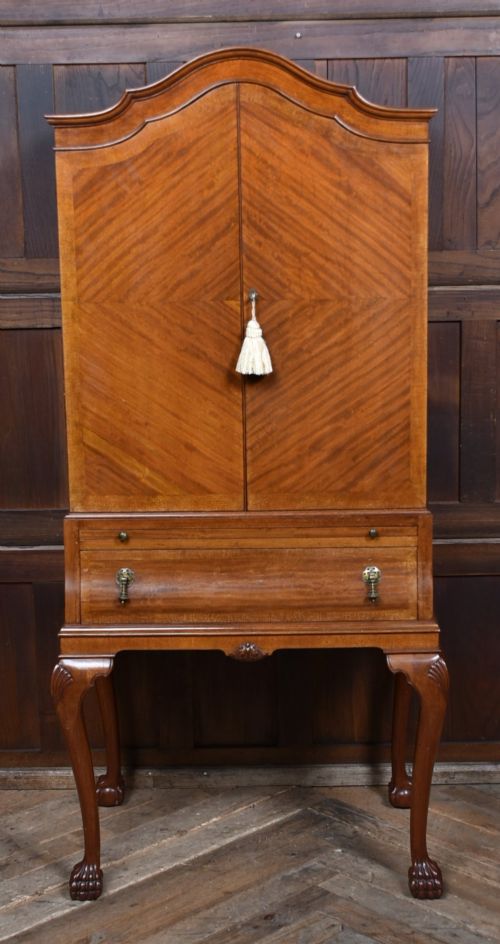
When you seek a queen anne liquor cabinet, you are looking at revived classical forms designed for entertaining, most frequently met in figured burr walnut from the 1920s.
Queen Anne Liquor Cabinet
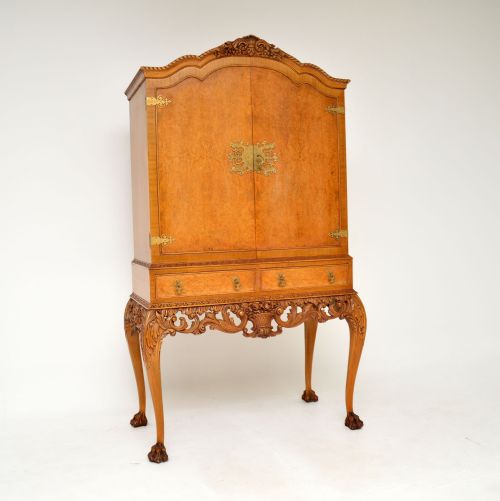
A queen anne liquor cabinet brings domestic entertaining into a formal furniture housing, typically taking the form of a cocktail or drinks cabinet built during the 1920s and 1930s. The revival of Queen Anne taste dominates these examples, employing characteristic cabriole shaping and substantial proportions.
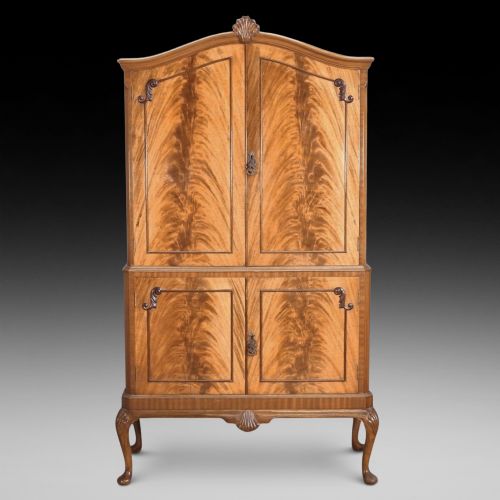
Most pieces encountered on this page date from the 1920s or 1930s, though occasional Edwardian mahogany forms also appear. These drinks cabinets and dry bars function as principal reception room pieces designed to store glassware and bottles behind panelled or veneered doors.
How they were made
Construction relies heavily on walnut and burr walnut veneers laid over secondary timbers such as oak, creating striking figured surfaces on the primary elevations. Mahogany and plain walnut also form the structural carcasses of these cabinets.
Interior fitments incorporate glass, mirror panels, and brass hardware to assist with the display and service of drinks. These materials are combined with traditional cabinetmaking joinery to support heavy bottles and internal shelving.
Queen Anne Liquor Cabinet Retail Price Guide 2026
Typical asking prices for queen anne liquor cabinet among the pieces listed under this phrase on Sellingantiques today, from the lower quarter to the upper quarter. They describe what is for sale here now, not the wider market.
Listings span the Edwardian era through the 1930s, with burr walnut and mahogany appearing alongside mirror and glass elements.
What varies in quality
The choice and symmetry of the burr walnut veneer determine the visual impact of the upper tier pieces, contrasting with simpler flat walnut or mahogany surfaces. Grain matching across doors and panels separates standard production from superior examples.
Internal complexity also marks out the better specimens, with integrated lighting systems, revolving mechanisms, and purpose-built compartmentalised dry bars offering greater sophistication than basic shelved interiors.
The Queen Anne Liquor Cabinet Glossary
- Burr walnut
- Timber sliced from the irregular growth knots of a walnut tree, producing highly figured, swirling grain patterns. It is typically utilised as a decorative veneer on statement furniture.
- Cabriole leg
- A furniture leg that curves out and then in, mimicking an animal's limb, frequently ending in a pad or claw foot. This form is a defining characteristic of Queen Anne style design.
- Demi-lune
- A half-moon shape applied to the footprint or front elevation of a cabinet. This curved format allows the piece to sit flush against a wall while offering distinctive interior angles.
- Cocktail cabinet
- A specialised storage piece developed for home entertaining, equipped to hold bottles, shakers, and glassware. Interiors often feature mirrored backs and glass preparation surfaces.
Queen Anne Liquor Cabinet: Frequently Asked Questions
What periods do these cabinets come from?
The pieces seen here belong principally to the 1920s and 1930s, with some Edwardian examples also present.
They represent revivalist tastes rather than genuine early eighteenth-century production.
What woods are most common?
Burr walnut and standard walnut dominate the selection, often combined with oak internal framing.
Mahogany is also utilised, particularly in Edwardian variations.
How were these cabinets used?
They served as dedicated storage units for hosting guests in domestic reception rooms.
Owners stored spirits, mixers, and specialist glassware inside for evening entertaining.
How do I spot Queen Anne style?
Look for characteristic curved lines, particularly on the legs and structural supports.
This revival style adapts classical eighteenth-century silhouettes for early twentieth-century homes.