

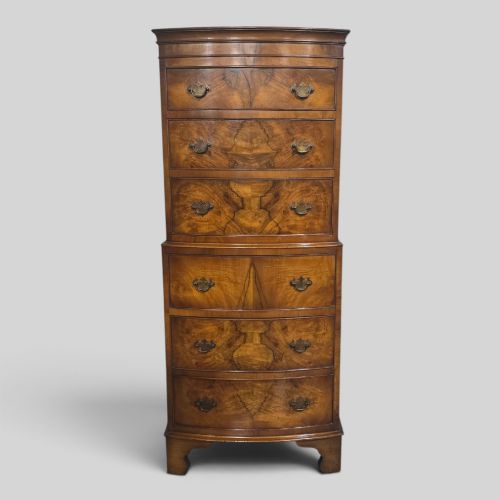
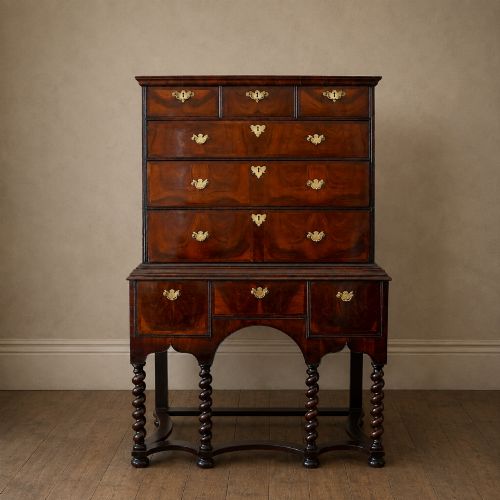
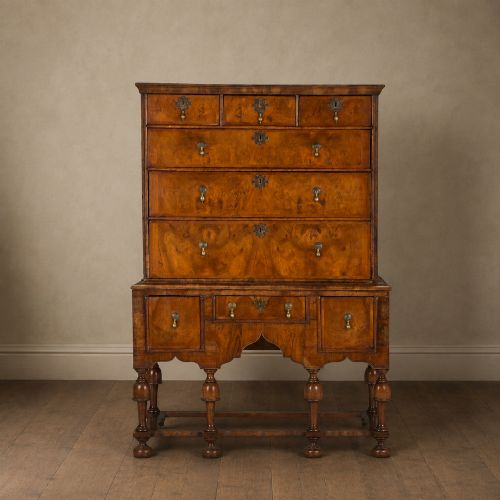
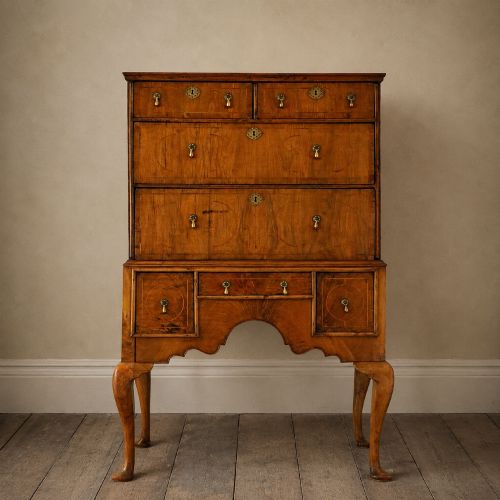



Queen Anne Highboy Chest
These pieces known as a queen anne highboy chest combine upper drawer compartments with lower supportive stands for practical elegance.
Queen Anne Highboy Chest
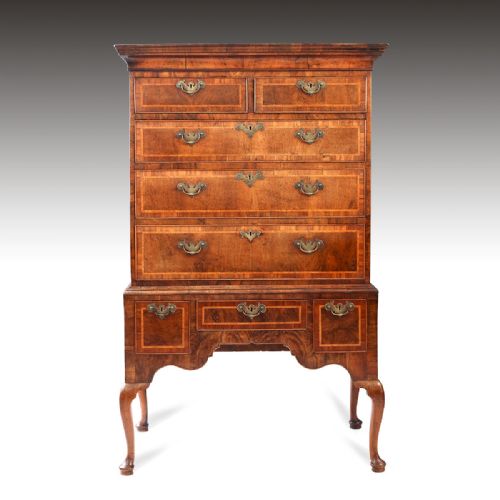
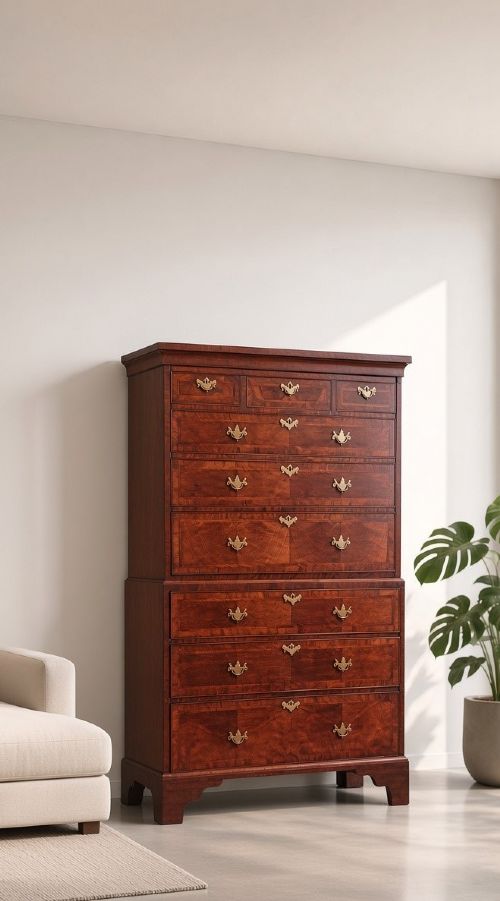
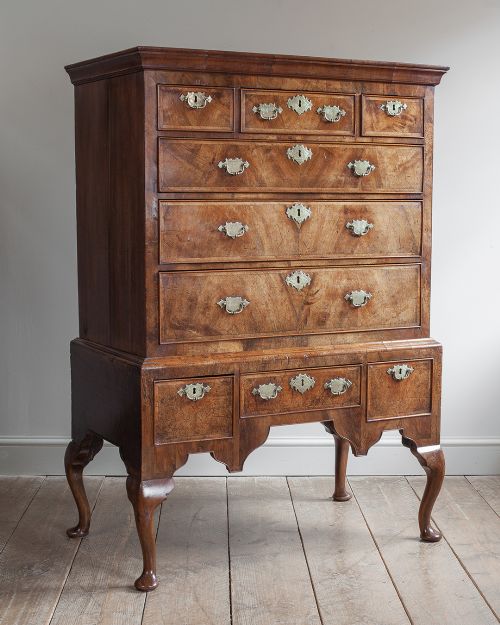
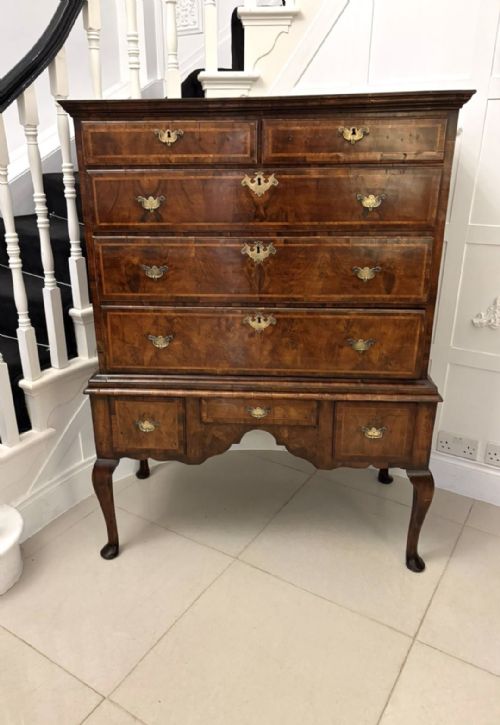
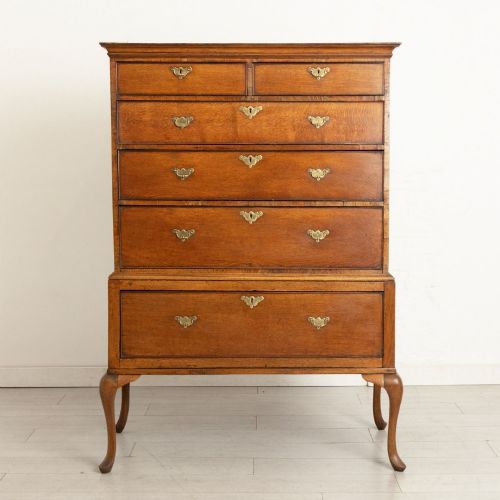
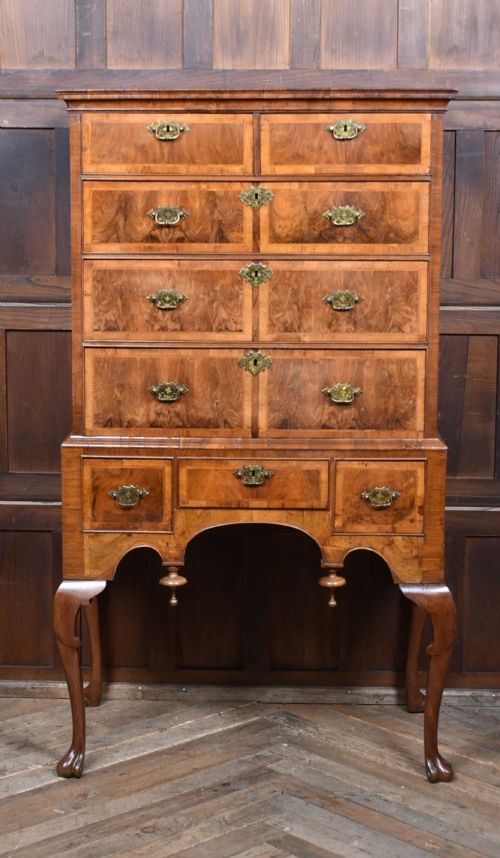
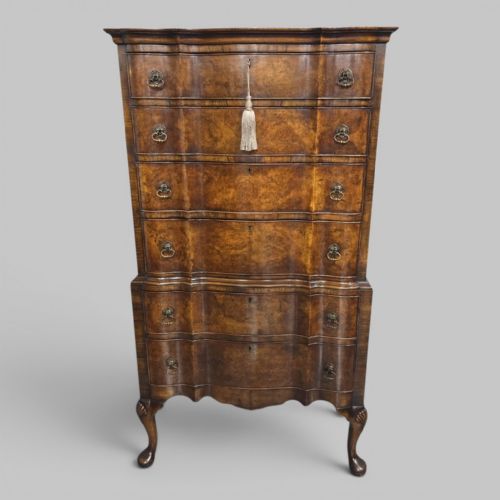
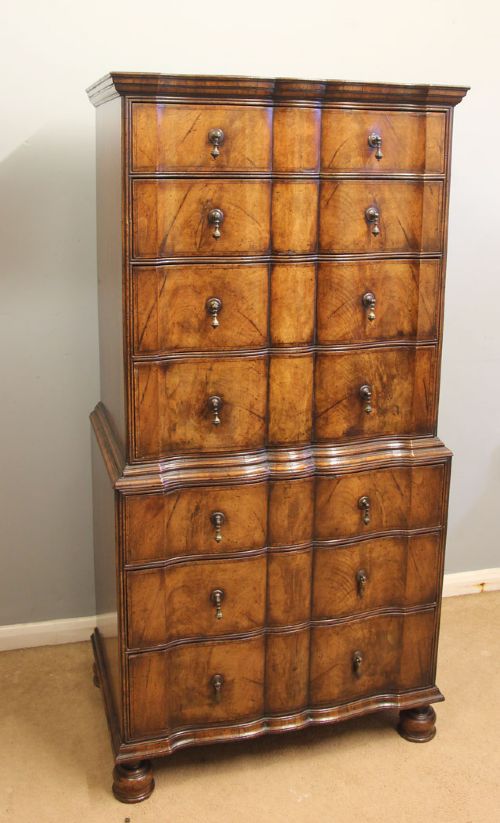
A queen anne highboy chest represents a taller storage form split into an upper section sitting upon a lower stand or base. The listings reveal formats such as chests on stands, chests on chests, tallboys, and cabinets on chests.
Most examples originate from the eighteenth century, including the Georgian and George I periods, alongside later twentieth century revivals. Oak and walnut dominate the structural forms, supplemented by distinct variations in timber choice and layout.
How they were made
Cabinetmakers utilised timber like oak and walnut, frequently applying burr walnut veneer, figured walnut, or oyster veneer across primary surfaces. Crossbanding borders drawer fronts while brass handles and escutcheons secure functional points.
Lower stands integrate cabriole legs characteristic of the period style. Construction techniques join upper drawer carcasses to supportive bases or incorporate stacked chest configurations.
Listings feature walnut, oak, pine, and yew wood, alongside veneer variations such as burr walnut and oyster veneer.
What varies in quality
The sophistication of the timber veneer surface sets individual examples apart, particularly the patterned figuring seen in burr walnut and oyster cuts. Intricate crossbanding and well-figured grain enhance visual depth across the drawer fronts.
Proportion and structural integrity define the distinction between pieces, notably in the transition from the upper chest to the cabriole legs of the stand. Associated stands or later revivals present different construction traits compared to period originals.
The Queen Anne Highboy Chest Glossary
- Chest on stand
- A two-part furniture form comprising an upper chest of drawers mounted upon a separate low frame with legs. This configuration elevates storage off the floor.
- Cabriole leg
- A furniture leg featuring a double curve, typically arching outward at the knee and tapering inward toward the foot. It is a defining feature of the period style.
- Veneer
- A thin layer of figured wood applied over a secondary timber foundation to display decorative grain patterns. Burr walnut and oyster cuts are notable examples.
- Tallboy
- A tall chest of drawers formed by stacking one cabinet section upon another. These tall units maximise vertical storage capacity.
- Crossbanding
- A narrow strip of veneer laid around the border of a drawer front with the grain running perpendicular to the centre panel.
Queen Anne Highboy Chest: Frequently Asked Questions
What is a highboy chest?
A highboy chest is a tall storage furniture piece consisting of drawers stacked vertically, often resting on a raised stand with legs.
These designs provide ample drawer space while maintaining a lighter footprint in a room compared to massive wardrobes.
How do I date these chests?
Dating relies on identifying timber types, construction methods, hardware styles, and overarching design characteristics like cabriole legs.
Eighteenth-century originals display period-specific joinery and materials, whereas later revivals from the twentieth century exhibit distinct secondary woods and manufacturing signatures.
Where should I place a highboy?
These tall chests suit bedrooms, hallways, or living spaces where vertical wall space allows the piece to stand without crowding.
Ensure adequate ceiling clearance and stable flooring beneath the legs to support the height of the stacked drawer sections.