

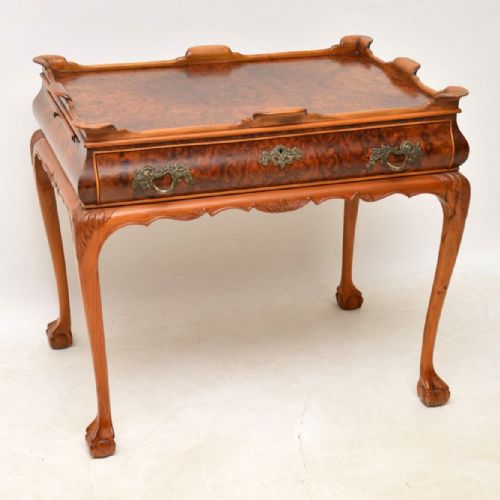
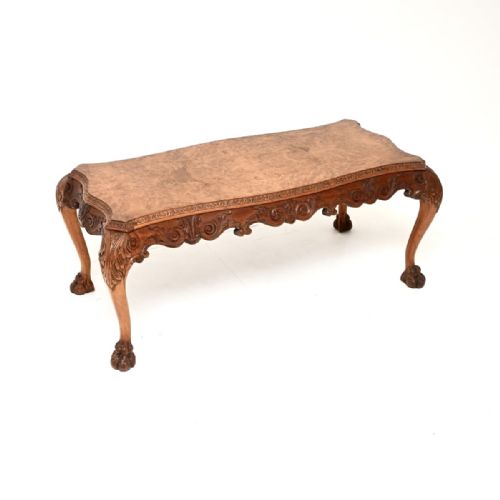
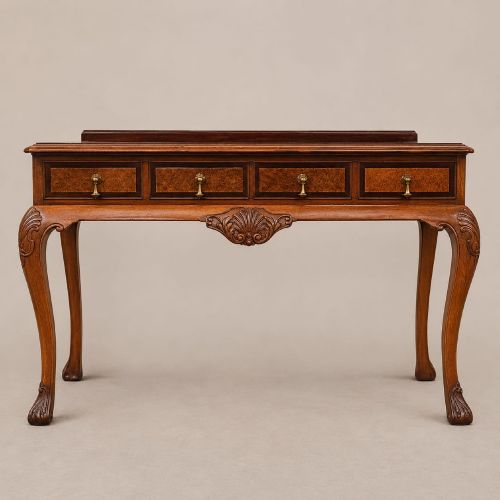
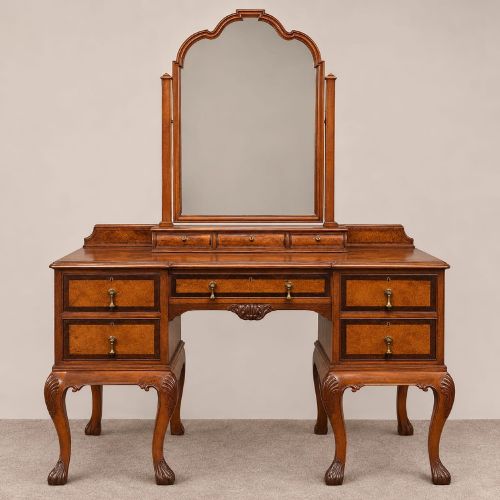
Queen Anne Burr Walnut
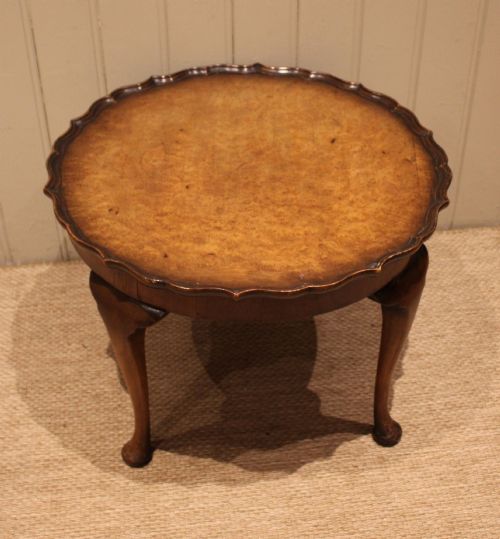
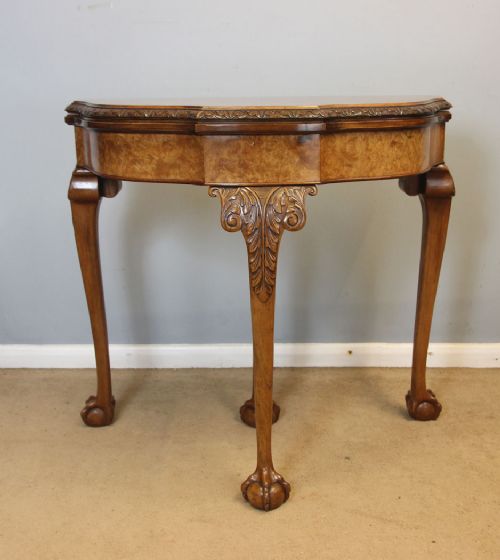
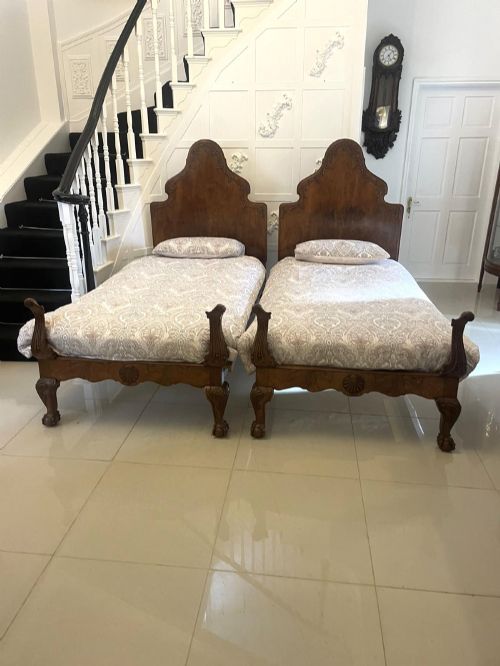
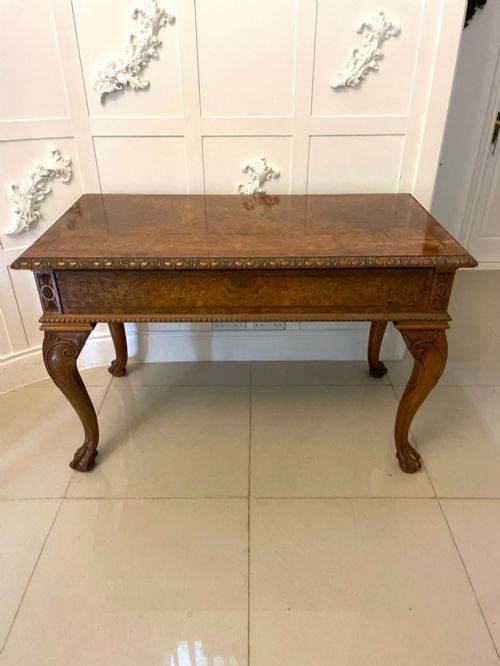
Queen Anne burr walnut furniture combines rich, swirling timber figures with restrained early eighteenth-century forms that anchor a room.
Queen Anne Burr Walnut
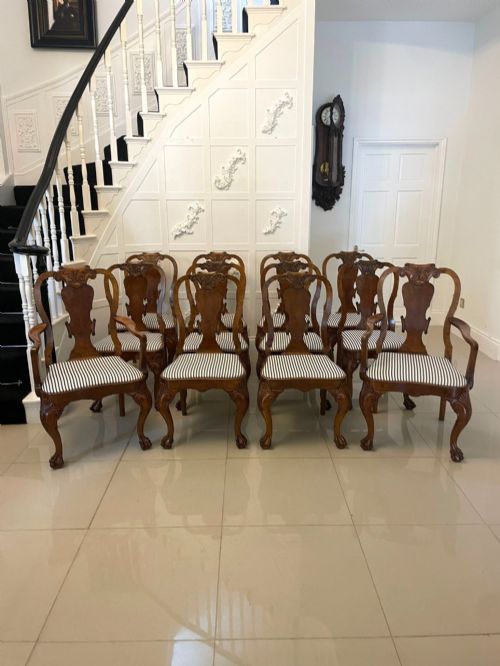
When you search for queen anne burr walnut, you encounter pieces spanning from the early eighteenth century through to later revival periods in the twentieth century. The selection ranges from authentic period chests of drawers and fall-front bureaux to twentieth-century cocktail cabinets, wardrobes, and dining sets.
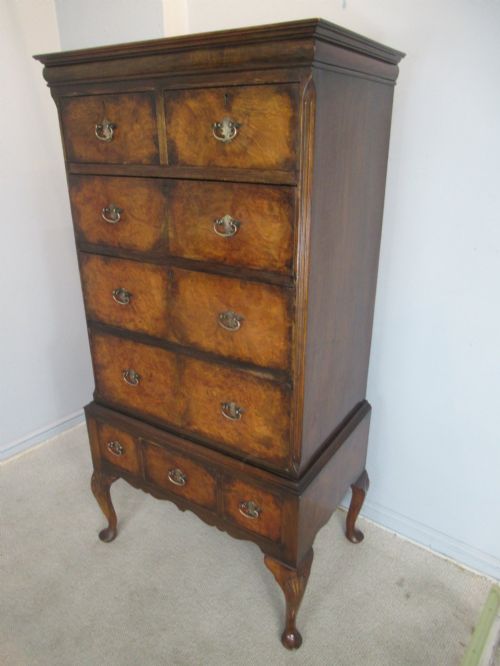
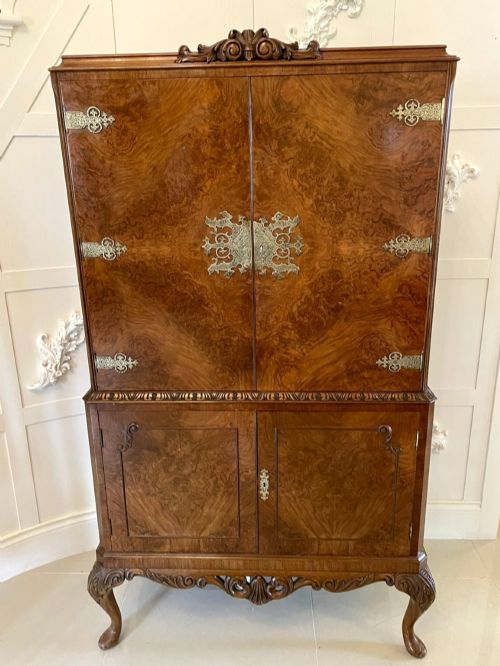
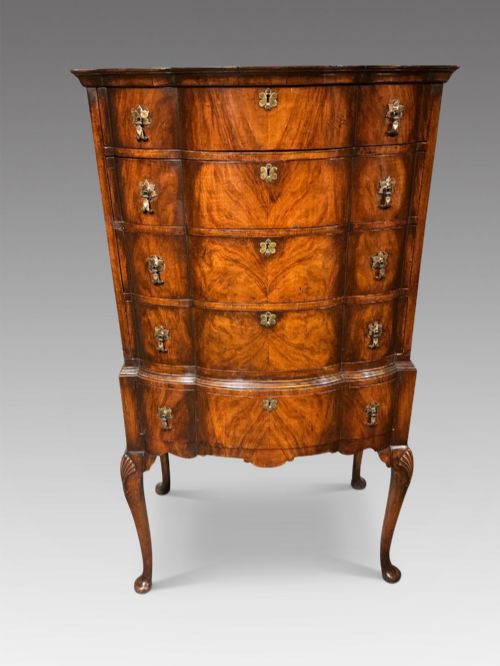
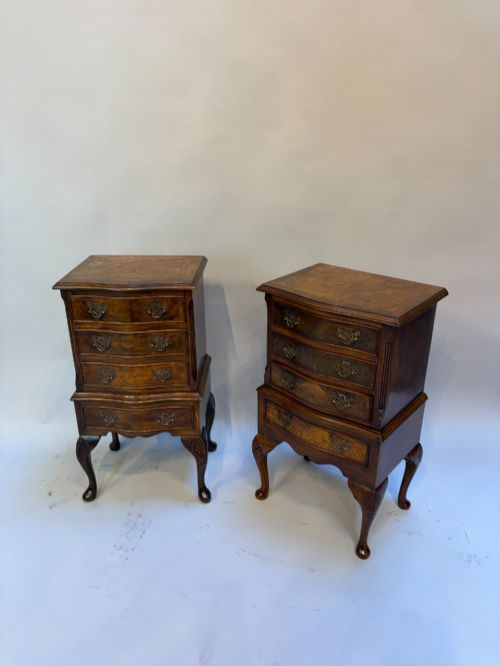
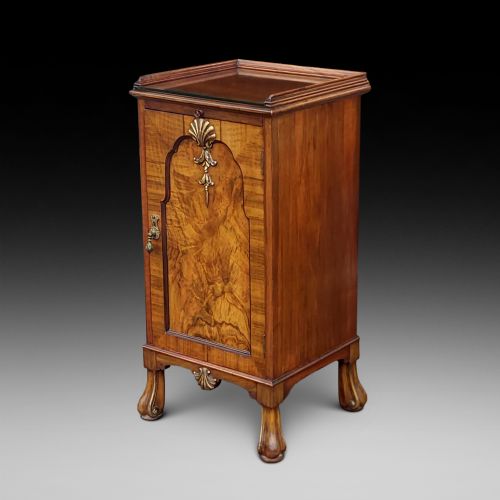
The most common forms on this page are chests of drawers, bureaux, and desks, alongside revival wardrobes and cocktail cabinets produced during the Edwardian era and the 1920s. These later revival pieces adapt traditional walnut forms for twentieth-century interiors while retaining characteristic cabriole legs and figured timber surfaces.
Materials and construction
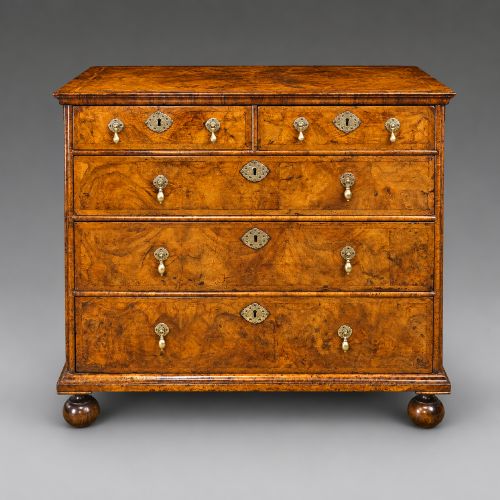
Cabinetmakers utilised burr walnut veneer applied over secondary timbers such as oak, taking advantage of the knotty, swirling growth patterns found at the junction of branches or roots. This figured veneer is carefully matched and symmetrical, creating complex decorative patterns across drawer fronts and cabinet doors.
Structural elements like drawer linings, carcases, and internal dividers frequently incorporate oak or other solid timbers to provide stability. Brass hardware, including drop handles and escutcheons, complements the deep brown tones of the walnut surface.
Queen Anne Burr Walnut Retail Price Guide 2026
Typical asking prices for queen anne burr walnut among the pieces listed under this phrase on Sellingantiques today, from the lower quarter to the upper quarter. They describe what is for sale here now, not the wider market.
Listings feature both eighteenth-century period pieces and twentieth-century revival items utilising burr walnut veneer, oak, and brass.
Judging quality in walnut furniture
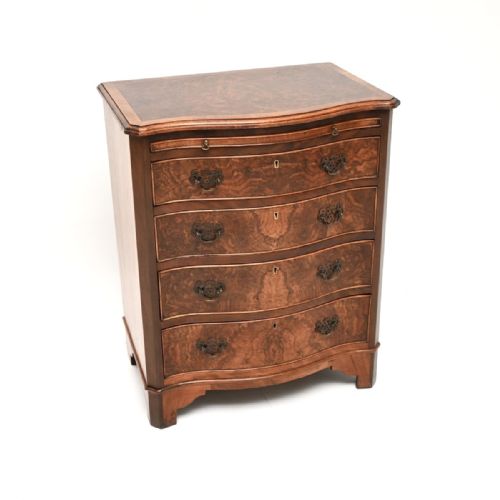
Quality rests upon the visual depth and movement of the burr walnut veneer, where tightly packed, complex figuring distinguishes superior examples from plainer surfaces. The precision of the veneer matching across drawer fronts and panels demonstrates the cabinetmaker's skill.
Proportion and the handling of traditional details, such as cabriole legs and brass hardware, separate well-balanced pieces from heavier reproductions. Structural integrity in the underlying carcase and drawer construction ensures durability alongside aesthetic appeal.
Waring & Gillow
The Queen Anne Burr Walnut Glossary
- Burr walnut
- A figured veneer sliced from tree growths that produces intricate, swirling patterns. It is prized for its decorative complexity on cabinet fronts and tabletops.
- Cabriole leg
- A furniture leg that curves outward and then tapers inward, terminating in a pad or foot. This form is characteristic of the Queen Anne style.
- Bureau bookcase
- A writing cabinet featuring a fall-front desk compartment combined with upper shelving enclosed by doors. It provides both workspace and storage.
- Chest on chest
- A tall storage unit constructed in two stacked sections, with a smaller chest sitting atop a larger base. Also known as a tallboy.
- Marquetry
- Inlaid patterns created using various woods and materials applied to a wooden carcase. It adds pictorial or geometric decoration to surfaces.
Queen Anne Burr Walnut: Frequently Asked Questions
How do I date a piece?
Authentic eighteenth-century examples display construction methods such as hand-cut dovetails and solid oak drawer linings. Revival pieces from the Edwardian period and the 1920s often utilise machine-sawn timber and twentieth-century hardware.
Examining the secondary timbers and the thickness of the veneer helps distinguish original period furniture from later revivals.
How should I care for burr walnut?
Keep walnut furniture away from direct sunlight and heat sources to prevent the veneer from drying out or lifting. Regular dusting with a soft, dry cloth maintains the surface.
Avoid silicone-based polishes and apply a traditional beeswax sparingly to nourish the timber when necessary.
What is a lowboy?
A lowboy is a small table with drawers, typically standing on four cabriole legs, produced from the early eighteenth century onward. It served variously as a dressing table or a side table.
The form highlights the figured grain of walnut on the top surface while offering compact storage.
Are revival pieces well made?
Revival pieces from the early twentieth century often display high standards of cabinetmaking, utilising traditional veneering techniques and solid secondary woods. Makers during this era reproduced earlier forms with considerable attention to detail.
These pieces offer the visual appeal of eighteenth-century furniture combined with the structural stability of later manufacturing.