



Queen Anne Arm Chair
A queen anne arm chair brings balanced proportion and robust comfort to a room, pairing padded seating with distinctive curvilinear woodwork.
Queen Anne Arm Chair
When searching for a queen anne arm chair, buyers encounter a mix of genuine period survivals and later revival pieces spanning the nineteenth and early twentieth centuries. The selection encompasses open armchairs, upholstered wingbacks, and desk chairs designed for study or library use.
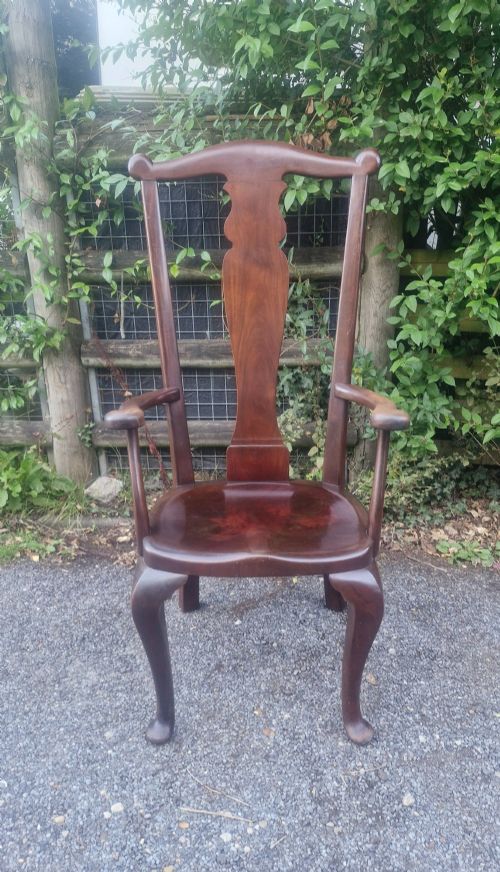
Most examples found here adopt the Queen Anne style executed in later eras, particularly the Victorian and Edwardian periods as well as the 1920s. Walnut and mahogany predominate, often shaped into carver chairs, barrel backs, and fireside seating.
How they were made
Cabinetmakers constructed these frames primarily in walnut and mahogany, occasionally turning to beech, chestnut, or rosewood for specific forms. Joinery relied on traditional pegged mortise and tenon joints to secure the load-bearing uprights and seat rails.
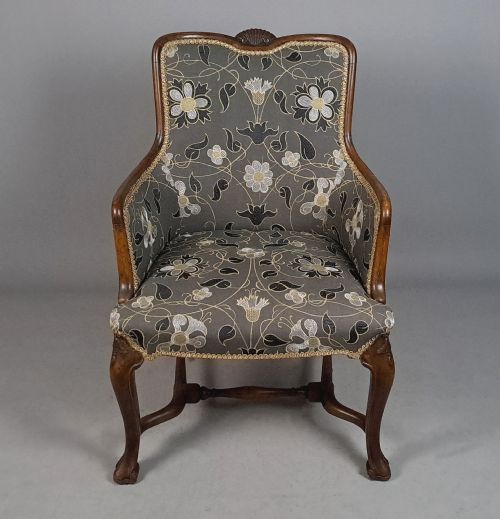
Upholstery techniques evolved across the periods represented, incorporating horsehair stuffing, linen webbing, and diverse surface coverings like leather, velvet, fabric, and brass detailing. Marquetry inlay and carved vase splats added decorative depth to the structural woodwork.
Queen Anne Arm Chair Retail Price Guide 2026
Typical asking prices for queen anne arm chair among the pieces listed under this phrase on Sellingantiques today, from the lower quarter to the upper quarter. They describe what is for sale here now, not the wider market.
A diminutive childs armchair demonstrates that miniature comfort was serious business in the Victorian parlour.
What varies in quality
The distinction between standard commercial production and superior craftsmanship rests in the fluidity of the timber shaping and the crispness of carved elements. Better examples display carefully selected grain patterns on walnut or mahogany veneers and balanced proportions in the backrest and arms.
Construction integrity dictates long-term stability, separating sturdy office and library seating from lighter decorative items. The precision of the joinery and the depth of the upholstery work reflect the original maker's investment of time and material.
Waring and Gillow
The Queen Anne Arm Chair Glossary
- Cabriole leg
- A furniture leg that bends outward in a convex curve and tapers inward in a concave curve below, imitating animal limbs. This form provides structural strength without heavy bracing.
- Wingback
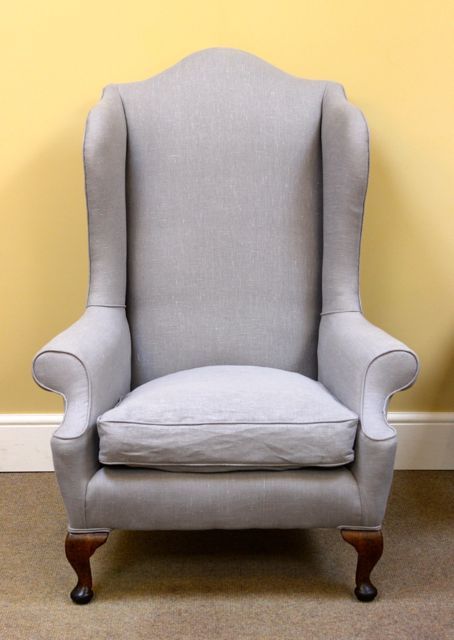
- An upholstered armchair with side panels attached to the arms and framing the back. These projections originally blocked draughts and retained hearth heat.
- Carver chair
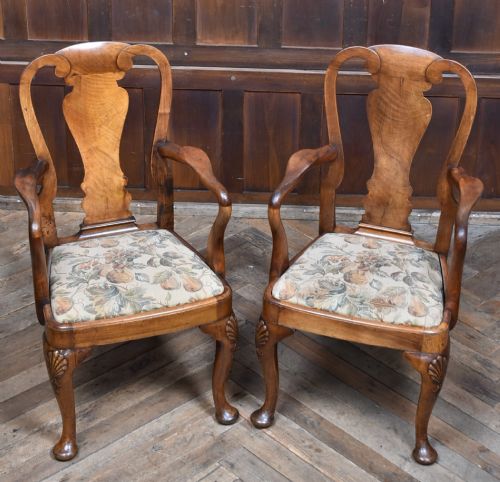
- An armchair designed with open sides, historically used at the head of a dining table or as a desk seat. It matches the simpler dining chairs in a set.
- Vase splat
- A central vertical wooden strip in a chair back shaped like a classical vase. It provides lumbar support while offering space for decorative grain or inlay.
- Marquetry
- The art of applying decorative pieces of veneer to a structural structure to form geometric or pictorial designs. Walnut and exotic timbers frequently form these patterns.
Queen Anne Arm Chair: Frequently Asked Questions
How do I identify a revival chair?
Revival pieces display machine-sawn timber uniformity and twentieth-century hardware underneath the upholstery webbing. Examining the underside reveals tool marks and wood seasoning consistent with later production.
Original eighteenth-century examples exhibit hand-cut joinery, iron or wrought fixings, and timber shrinkage patterns unique to centuries of age. Comparing the carcass construction helps clarify the period of manufacture.
Were these chairs used at desks?
Many examples function as desk or library seating, featuring lower arms and sturdy swivel or fixed walnut frames. These versions allowed writers and readers to sit comfortably for extended periods.
Dining rooms and parlours also received open arm and carver chairs to match larger table suites. Their versatile forms adapted easily to domestic workspaces and formal rooms alike.
What is a wingback used for?
Wingback chairs offered protection from cold draughts in unheated rooms when placed near hearths. The upholstered side panels trapped warmth around the head and shoulders.
Later Victorian and Edwardian iterations maintained this silhouette primarily for comfortable reading and fireside relaxation. The enclosed design creates a private seating niche within a larger room.
How should I care for walnut wood?
Walnut frames require occasional treatment with specialist wax to nourish the grain and prevent the timber from drying out. Avoiding direct sunlight preserves the rich brown tone and prevents veneer lifting.
Leather and fabric upholstery components need gentle dusting and professional cleaning tailored to the specific textile. Proper humidity control in the room prevents timber splitting.