
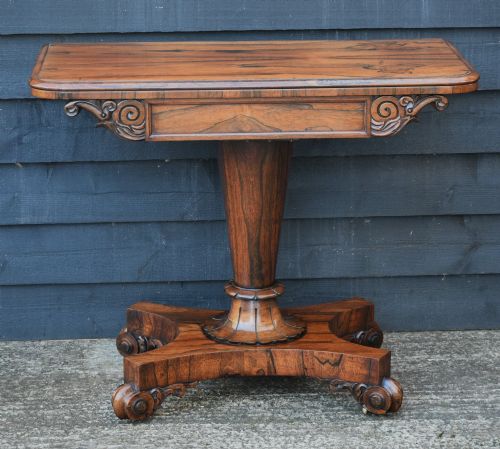
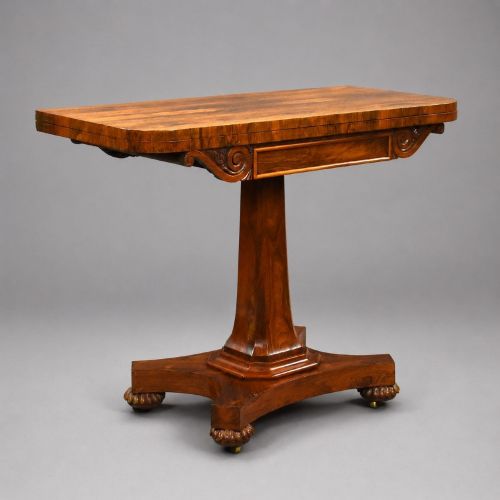
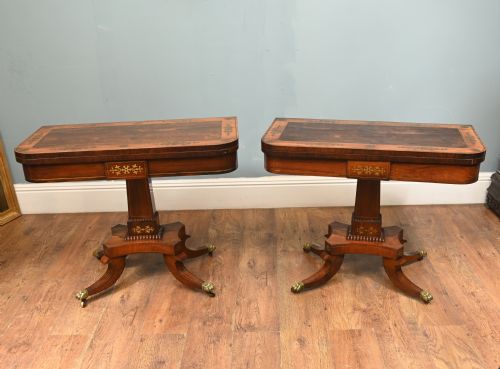
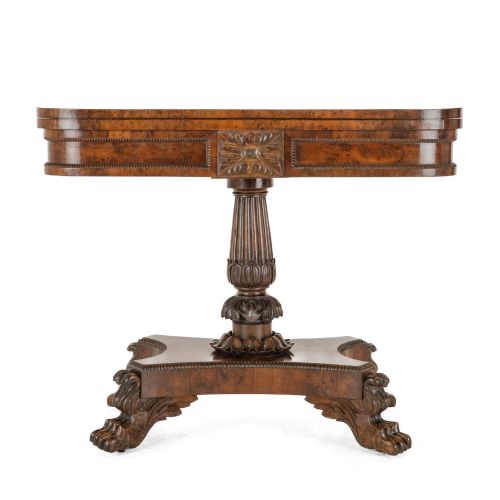


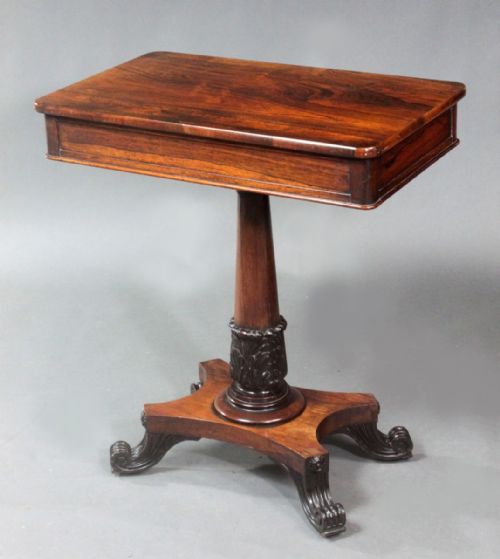


Quadform Base Games Table
These quadform base games table pieces are versatile folding furniture designed for social play and tea, offering exceptional timber surfaces.
Quadform Base Games Table
A quadform base games table represents a specialised category of antique furniture spanning the Georgian, Regency, and Victorian periods. Buyers examining this search phrase encounter various forms including fold-over card tables, tea tables, and dedicated games tables.
The pieces on this page originate predominantly from the nineteenth century, with strong representation from the Regency and William IV eras. Common configurations include pedestal supports with sophisticated quadform bases, alongside occasional and console variants.
Makers utilised rich timbers such as rosewood and mahogany, frequently incorporating brass inlay, burr yew, and boxwood details. These tables served dual purposes in period parlours, functioning as compact side furniture before unfolding for cards or tea.
Distinctions in craftsmanship and finish
The standard of a quadform base games table depends heavily on the choice of timber veneer and the precision of brass inlay. Superior examples display carefully matched grain patterns across the fold-over top and balanced proportions in the pedestal base.
Mechanical integrity of the pivoting and folding mechanism separates finer pieces from standard production. Artisans who executed crisp carving on the pedestal supports and maintained tight joints achieved greater longevity and aesthetic balance.
Quadform Base Games Table Retail Price Guide 2026
Typical asking prices for quadform base games table among the pieces listed under this phrase on Sellingantiques today, from the lower quarter to the upper quarter. They describe what is for sale here now, not the wider market.
Listings feature rosewood, mahogany, burr yew, and boxwood across Georgian, Regency, and Victorian periods.
William Trotter
The Quadform Base Games Table Glossary
- Quadform base
- A four-sided pedestal foundation supporting the central column of the table. This configuration provides stability for heavy fold-over tops.
- Fold-over top
- A hinged wooden surface that opens to double the table area for card playing or tea service. The interior often conceals a lined playing surface.
- Gaming well
- A recessed compartment beneath the folding top used for storing counters and cards. These compartments appear frequently in Victorian variations.
- Stringing
- Thin strips of contrasting wood or brass inlaid into channels on the table surface. This decorative technique defines borders on Regency and Georgian pieces.
Quadform Base Games Table: Frequently Asked Questions
How were these tables used originally?
Georgian and Victorian households utilised these pieces as decorative console or side tables during the day. When evening arrived, hosts unfolded the top to accommodate card games, social gatherings, or afternoon tea.
Interior compartments and gaming wells kept counters and cards neatly stored when the table was closed.
How do I identify a Regency period table?
Regency examples frequently display dark rosewood timber enhanced by precise brass inlay and classical pedestal forms. The proportions tend to reflect classical architectural restraint popular in the early nineteenth century.
Makers of this era favoured clean lines combined with rich wood grains rather than heavy surface carving.
How do I care for antique rosewood tables?
Keep these timber surfaces away from direct sunlight and excessive heat fluctuations to prevent the rosewood and veneer from drying out. Regular dusting with a soft cloth preserves the natural finish without requiring heavy polishes.
Protect the fold-over hinges by lifting and supporting the top properly whenever opening or closing the mechanism.