
Qing Carved Hardwood Table
Choosing a qing carved hardwood table brings dense, richly figured timbers and intricate traditional joinery into domestic interiors.
Qing Carved Hardwood Table
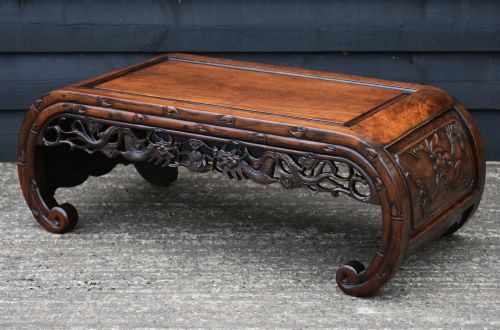
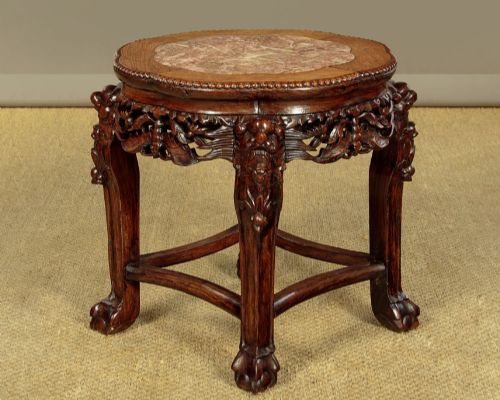
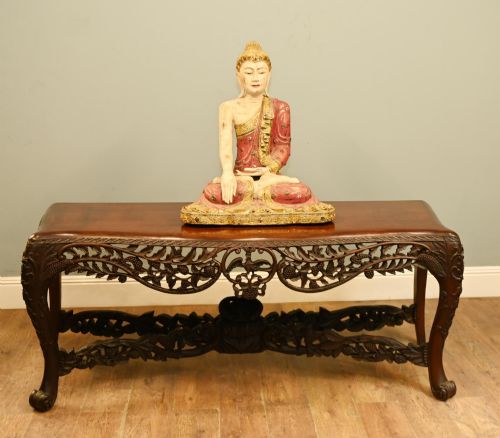
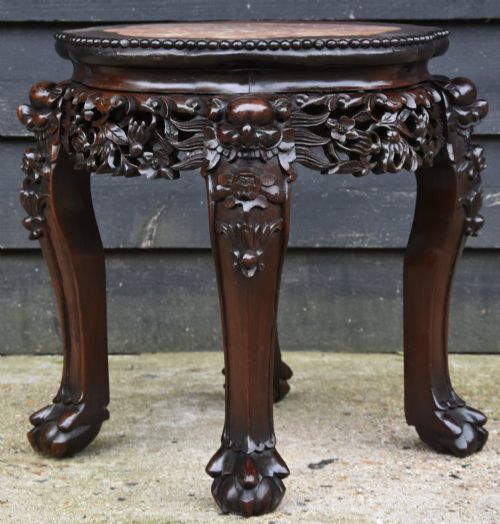
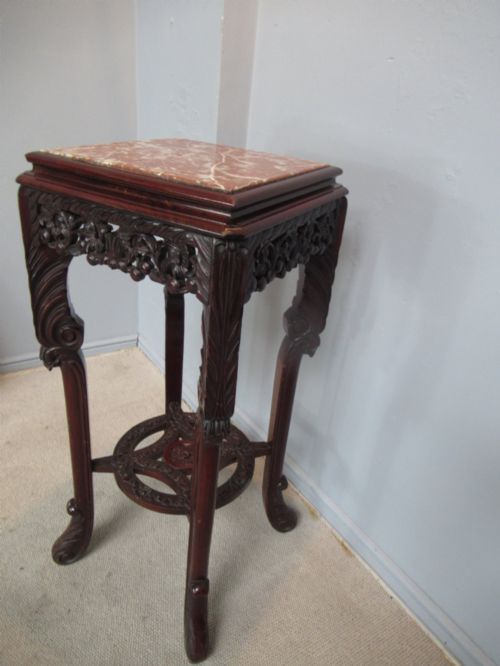
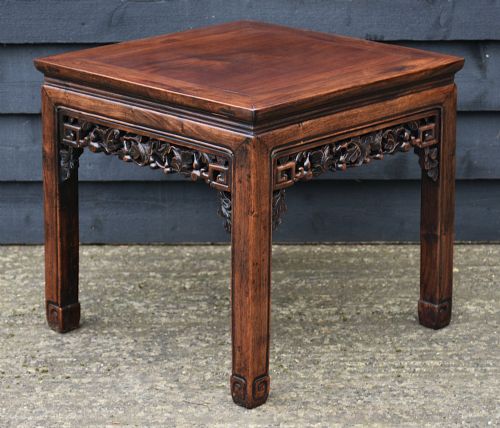
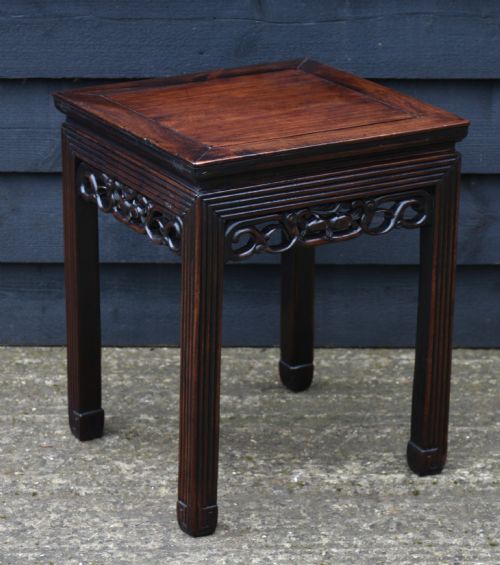
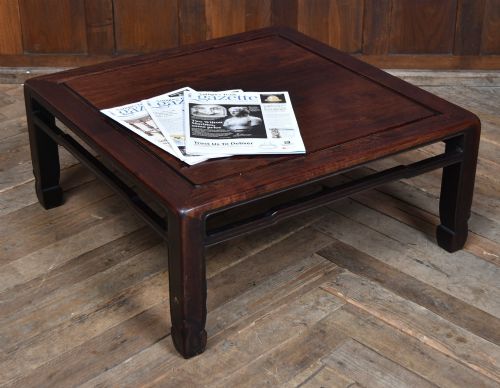
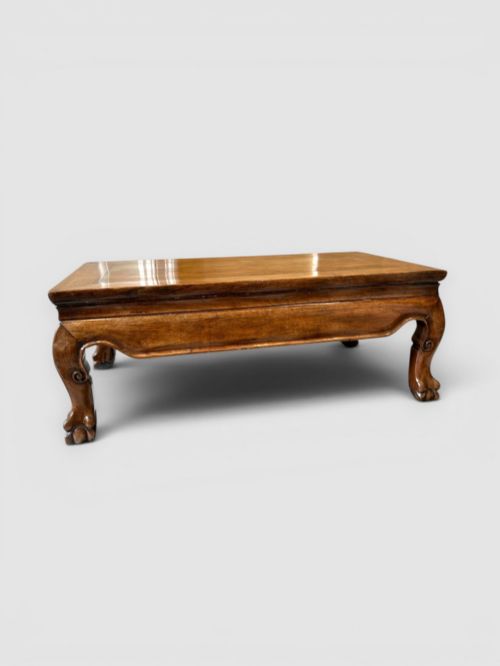
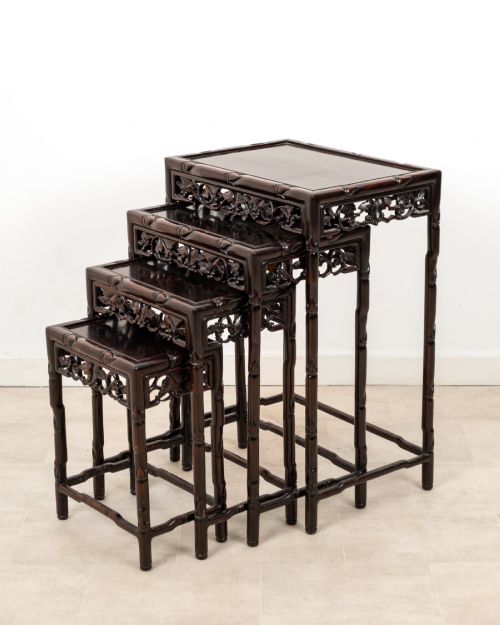
A qing carved hardwood table encompasses a broad variety of domestic forms produced during the late Qing Dynasty, predominantly dating from the nineteenth century into the early twentieth century. Buyers encounter numerous functional shapes on this page, including low kang tables, nested quartetto sets, plant stands, and larger console or centre tables.
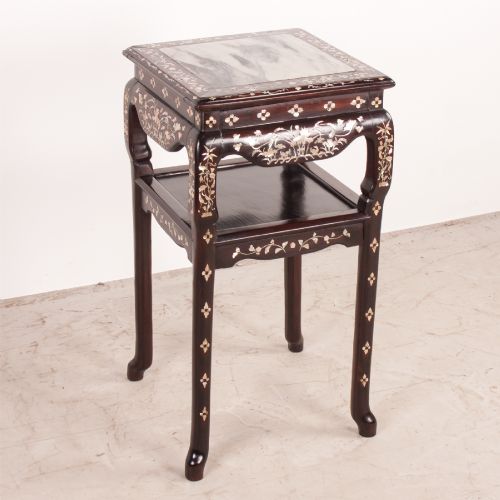
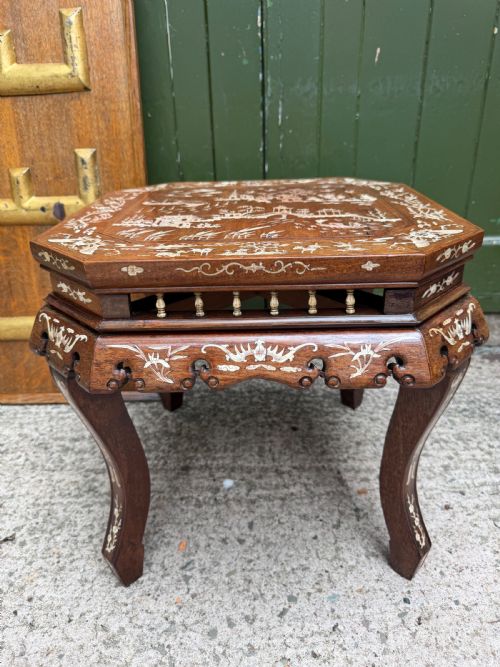
Many examples incorporate inset panels of variegated rouge marble or ceramic tiles, while others utilise mother-of-pearl inlay to decorate surfaces. These pieces reflect traditional Chinese scholarly tastes and export production, ranging from compact occasional stands to substantial altar and ritual tables.
How They Were Made
Maker-craftsmen utilised dense, heavy timbers such as rosewood, hongmu, padouk, elm, and huanghuali, chosen for their natural durability and deep grain patterns. These exotic hardwoods were seasoned and shaped using traditional joinery methods that minimised the need for metal fixings.
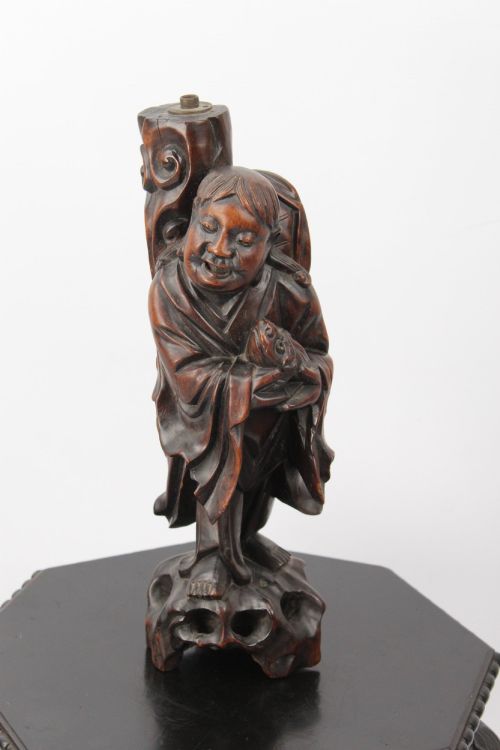
Surface decoration involved meticulous hand-carving of floral, scroll, and figural motifs, alongside the meticulous insertion of contrasting materials like marble panels, mother-of-pearl, and brass wire.
What Varies in Quality
The standard of a qing carved hardwood table is determined by the depth, crispness, and relief of the hand-carving, alongside the selection and figuring of the primary timber. Superior examples display tightly fitted joinery without visible gaps, balanced proportions, and well-chosen marble inserts with natural clouding and rich colouration.
Lesser pieces often exhibit flatter, more mechanical carving, plainer timber grains, and simpler construction methods that lack the refinement and tactile presence found at the top of the range.
The Qing Carved Hardwood Table Glossary
- Hongmu
- A category of dense, fragrant tropical hardwoods prized for dark red or brownish-black tones. This heavy timber forms the structural base for many fine Qing Dynasty furnishings.
- Kang table
- A low domestic table traditionally used on a heated brick bed for dining, writing, or resting. These pieces sit close to the floor and frequently feature scroll ends.
- Quartetto
- A matched set of four graduated nesting tables designed to slide neatly beneath one another. They offer flexible surface space in formal reception rooms.
- Padouk
- A durable exotic hardwood displaying rich reddish-brown colouration that darkens with age. Artisans utilised this timber for robust stands and coffee tables.
Qing Carved Hardwood Table: Frequently Asked Questions
What is a kang table used for?
A kang table served as a low, portable surface for daily activities such as drinking tea, reading, or writing while seated on a raised sleeping platform. In modern interiors, these low tables function effectively as coffee tables or decorative display platforms.
Their compact proportions and scroll ends allow them to sit comfortably in contemporary living spaces without dominating the room.
How do I identify Hongmu timber?
Hongmu translates as red wood and covers several dense tropical hardwoods with deep red, purple, or near-black coloration. The wood possesses a heavy, dense feel and a fine grain that often shows subtle natural lustre.
Over decades of exposure to light, the timber deepens in tone, developing a rich patina across carved surfaces.
Are marble inserts original to these tables?
Marble panels set into the tops of nineteenth-century plant stands and centre tables are generally original components. The stone was chosen to provide a cool, durable surface for vases and decorative objects, as well as visual contrast against the dark timber.
Inspectors look for natural veining and secure fit within the surrounding wooden frame.
How should I care for a hardwood table?
Maintenance requires keeping the timber away from direct heat sources and rapid humidity shifts to prevent wood movement. Gentle dusting with a dry, soft cloth preserves the wax finish and natural patina.
Avoid liquid polishes and commercial cleaners that can sink into carved recesses or damage aged surfaces.