



Provincial Wooden Buffet
When you search for a provincial wooden buffet, you are looking at substantial storage furniture built from regional timbers across Europe.
Provincial Wooden Buffet
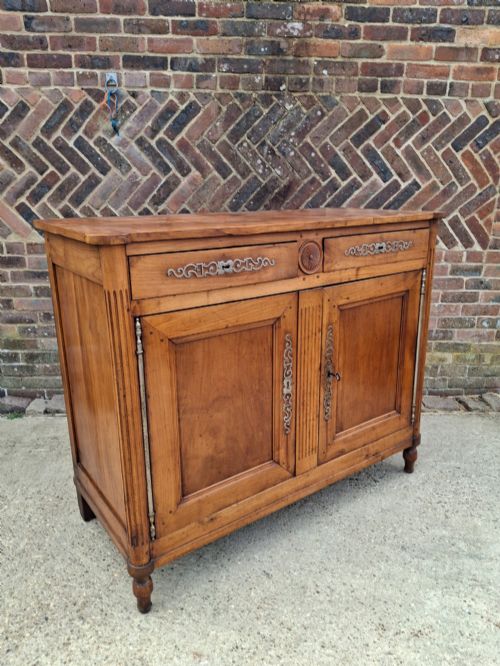
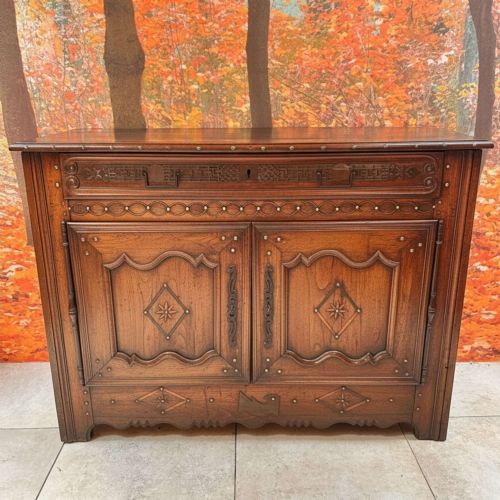
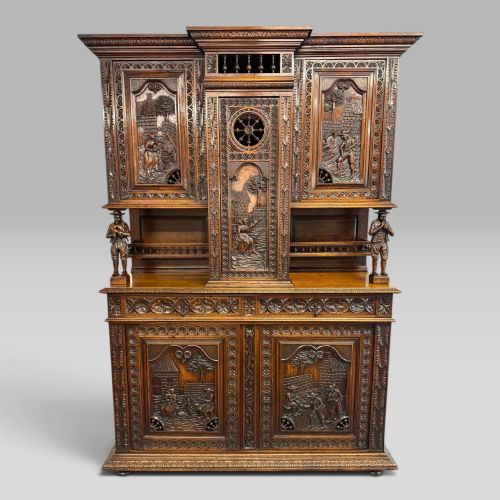
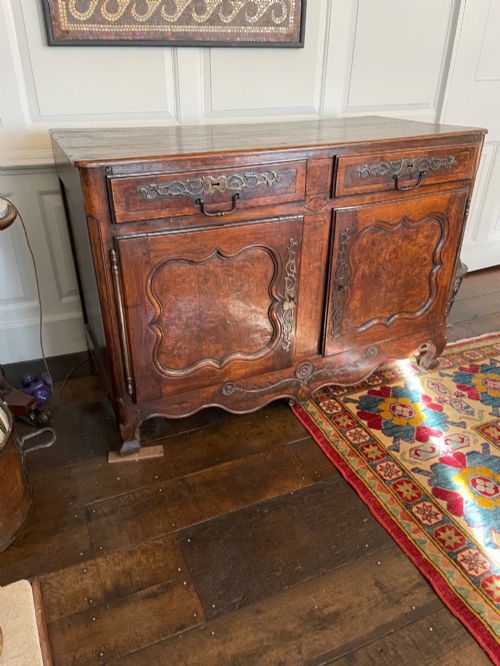
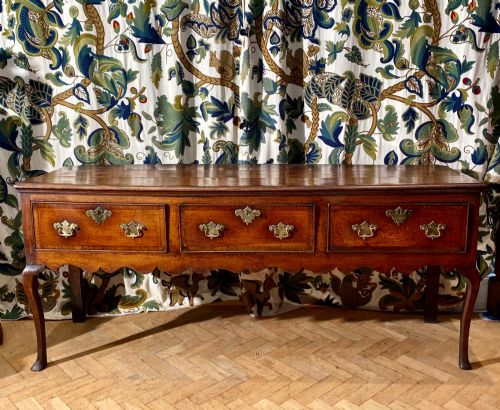
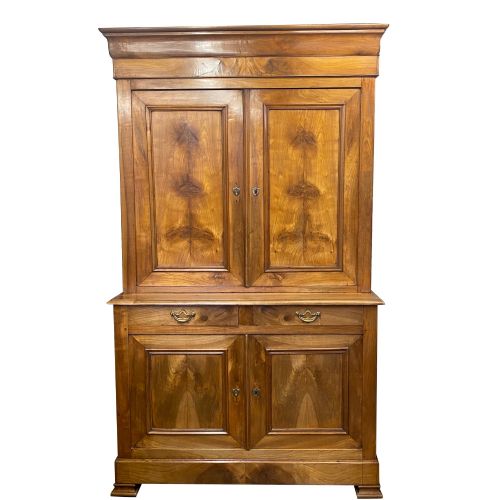
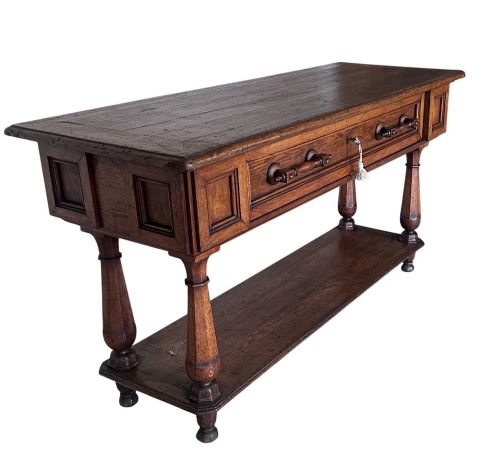
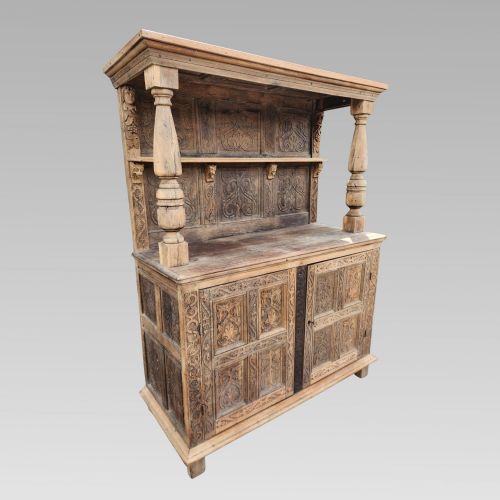
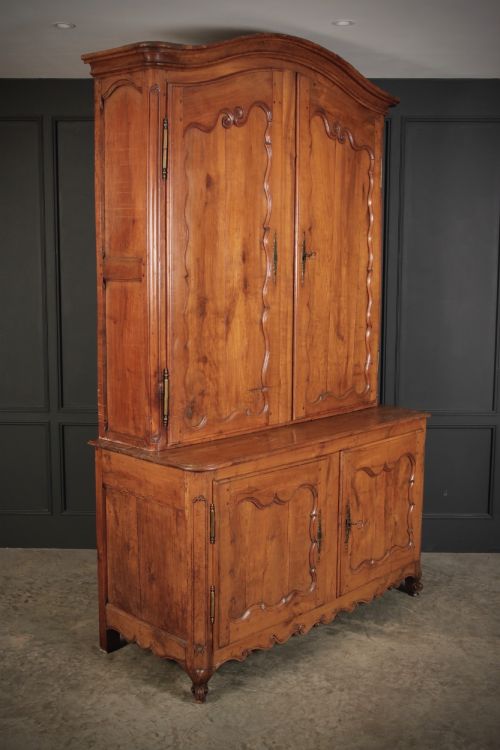
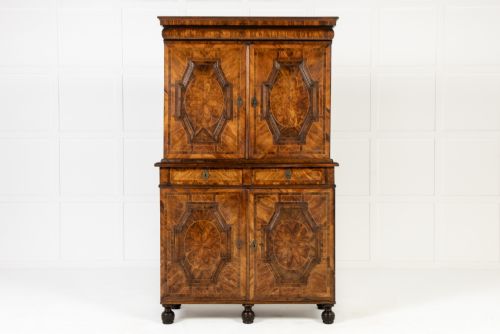
A provincial wooden buffet provides heavy storage for domestic spaces, originating from regional workshops rather than metropolitan centres. These pieces take the form of low serving tables, sacristy cupboards, large enfilades, and two-part housekeeper cupboards designed for daily utility in kitchens, hallways, and living rooms.
The version you are most likely to meet on this page is the French provincial buffet or dresser base dating from the eighteenth or nineteenth century. They appear frequently in solid oak, walnut, and cherry wood, often featuring multiple doors and drawers constructed for practical household storage.
How these pieces were made
Regional makers built these buffets using solid regional hardwoods such as oak, walnut, cherry wood, fruitwood, and chestnut. Joinery relied on traditional framing methods to handle the natural movement of large timber panels over centuries of use.
Metal components were restricted to functional wrought iron hinges and brass mounts or handles. Surfaces were finished by hand, developing deep patinas through decades of wax polishing and domestic wear.
Provincial Wooden Buffet Retail Price Guide 2026
Typical asking prices for provincial wooden buffet among the pieces listed under this phrase on Sellingantiques today, from the lower quarter to the upper quarter. They describe what is for sale here now, not the wider market.
Many an eighteenth-century cherry wood buffet carries the faint aroma of old beeswax and centuries of quiet French kitchen life.
What varies in quality
Quality rests upon the selection of timber and the structural integrity of the carcass. Dense, figured woods like burr ash or well-matched walnut indicate a higher tier of commission compared to utility grades of plain oak or chestnut.
The crispness and depth of hand-carved detailing separate standard provincial work from finer regional pieces. Well-executed panelling and original iron or brass hardware elevate a buffet beyond simple domestic storage.
The Provincial Wooden Buffet Glossary
- Buffet
- A low sideboard or cupboard used for storing and serving food. These pieces typically feature doors enclosing shelving alongside practical drawers.
- Enfilade
- A long sideboard or buffet designed with a series of connected cabinet doors across the front. This form developed for large dining rooms and serving spaces.
- Dresser base
- A lower cabinet structure fitted with drawers and cupboards, historically topped with open shelving for plate display. These form the heavy foundation of provincial kitchen storage.
- Housekeeper cupboard
- A tall two-part storage cabinet used for linens and provisions. They combine deep lower cupboards with upper storage sections.
- Patina
- The surface sheen and colour developed on wood through age, handling, and regular polishing. It serves as an indicator of genuine period use.
Provincial Wooden Buffet: Frequently Asked Questions
Where did provincial wooden buffets originate?
These pieces originated in regional rural areas outside capital cities, particularly across France, Italy, and Scandinavia. Local craftsmen built them to serve the daily storage needs of large country houses, farmhouses, and chateaux.
Makers utilised whatever hardwoods grew locally, resulting in distinct regional styles that reflected the materials and traditions of each specific European province.
How were these buffets used historically?
Historically, provincial buffets functioned as utility furniture for storing tableware, linens, and dry foodstuffs in kitchens and dining rooms. Their heavy tops also served as preparation or serving surfaces during large family meals.
Lower cupboards and drawers kept household goods secure and dust-free, while taller variants housed household provisions and household textiles.
How do I style a wooden buffet in a modern home?
A wooden buffet anchors a modern dining room, hallway, or living space by providing substantial surface area and deep internal storage. You can place lamps, ceramics, or artwork on the top surface while using the cupboards for everyday tableware or linens.
The warm tones of aged oak, walnut, and cherry wood complement both contemporary minimalist interiors and traditional rustic spaces.
How can I tell the period of a wooden buffet?
Dating relies on examining construction techniques, timber selection, and stylistic details such as hardware and carving. Eighteenth-century examples often display hand-adzed interior boards and pegged mortise and tenon joints.
Nineteenth-century pieces tend to show more mechanised preparation while retaining regional characteristics and traditional forms established in earlier eras.