


Provincial Oak End Table
These provincial oak end tables bring rugged utility and honest regional character into a room.
Provincial Oak End Table
A provincial oak end table is a sturdy, regional piece designed for practical daily use rather than formal display. Buyers seeking a provincial oak end table will find examples originating primarily from French, English, and continental workshops spanning the eighteenth and nineteenth centuries.
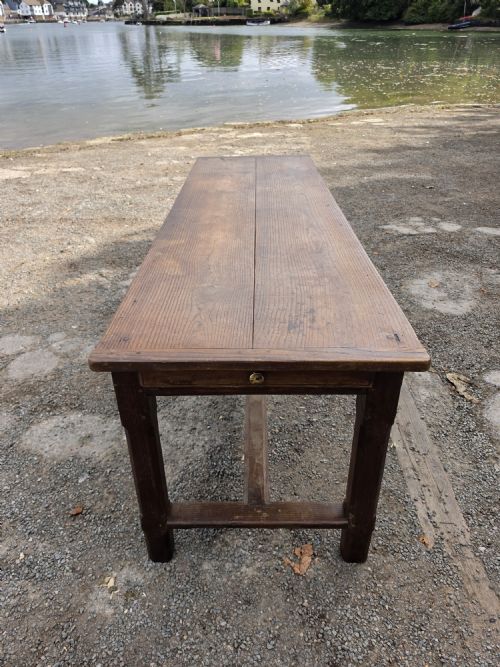
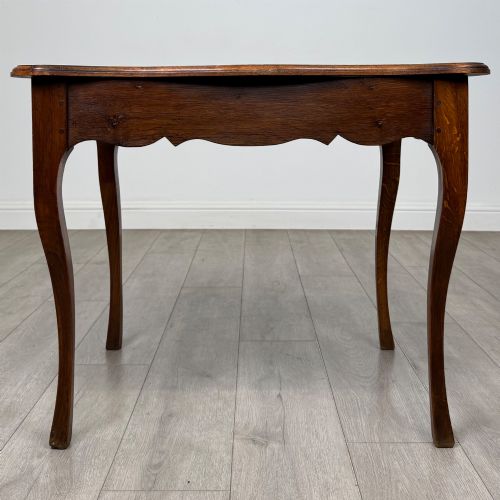
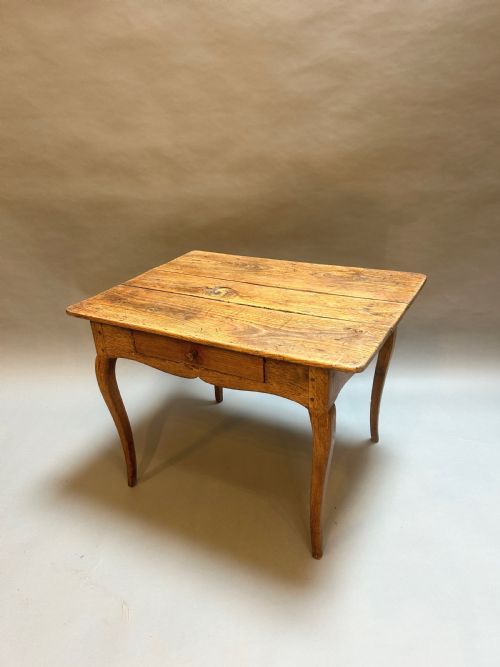
Makers utilised resilient regional timbers, most notably oak supplemented by pine, beech, and hornbeam. The designs range from unpretentious English country models to pale French bleached oak and French provincial formats carrying decades of honest patination.
Materials and construction methods
Makers built these tables primarily from solid oak, selected for durability and strength, often supported by secondary timbers like pine and beech in less visible structural areas. Joinery relied on traditional hand-cut methods suited to hardworking rural workshops rather than urban cabinet-making yards.
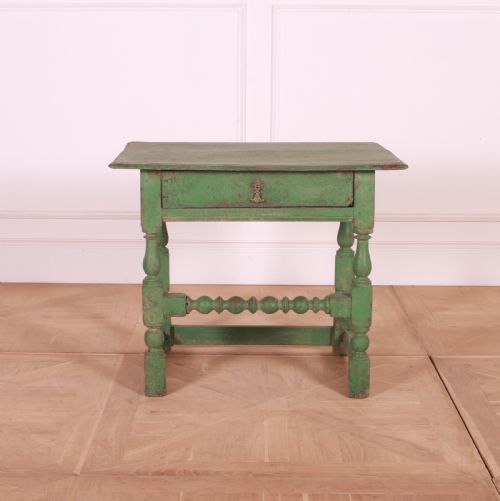
Surfaces frequently show the marks of hand-planing and simple edge-mouldings, while hardware such as brass handles and iron fittings were forged for utility. Some examples feature applied paint finishes or deliberate bleaching, altering the natural tone of the timber while preserving the underlying grain.
The site listings span from the mid-eighteenth century through the Edwardian era, incorporating painted surfaces, brass fittings, and iron hardware.
Assessing quality in regional tables
Quality in these rural pieces rests on the integrity of the timber selection and the retention of original structural fabric. Superior examples exhibit tightly fitted joints, well-balanced proportions, and a rich, undisturbed surface patination accumulated through genuine age and use.
Lower-tier variations often display heavy modern intervention, unsympathetic timber replacements, or surfaces stripped of their historic character. The distinction lies in whether a piece retains its honest regional identity or has suffered from over-restoration and clumsy repairs.
The Provincial Oak End Table Glossary
- Provincial
- Describing furniture made in regional areas outside the capital, typically prioritising practical utility and local timber over fashionable court styles. These pieces often reflect the specific traditions of French or English country districts.
- Patina
- The surface sheen and colour built up on wood through decades of handling, polishing, and exposure to light. A genuine patina provides a tactile depth that modern finishes cannot replicate.
- Bleached oak
- Timber treated to lighten its natural dark or golden tone, creating a pale, neutral finish often associated with nineteenth-century French country furniture. This process softens the visual weight of the wood.
- Occasional table
- A small, movable table designed for temporary or specific uses around a room, such as holding a lamp or book. They appear frequently in eighteenth and nineteenth-century domestic interiors.
Provincial Oak End Table: Frequently Asked Questions
Where were these tables made?
These pieces originated in regional workshops across England, France, and continental Europe, far from metropolitan cabinet-making centres. Local craftsmen built them for everyday use in rural homes.
Maker identity is rarely recorded, as these utilitarian items were valued for function rather than artistic attribution. Their design reflects the specific timber supplies and domestic needs of each region.
How do I style a provincial table?
A provincial oak table suits both traditional country interiors and modern minimalist spaces needing warmth and texture. Place one beside a sofa or bed to introduce grounding organic material.
Keep styling simple to let the historic timber grain and honest construction take focus. Avoid overcrowding the surface so the character of the wood remains visible.
Are these pieces made of solid oak?
Most examples utilise solid oak for primary visible surfaces, selected for its strength and durability. Secondary timbers such as pine, beech, or hornbeam sometimes appear in internal framing.
Regional makers used whatever strong local hardwoods were available to hand. This mix of woods is entirely normal for vernacular furniture of this age.
How do I care for antique oak?
Maintain antique oak surfaces by dusting regularly with a dry, soft cloth and avoiding silicone-based polishes. Keep the wood away from direct heat sources and extreme humidity fluctuations.
Feeding the dry timber occasionally with a traditional wax preserves the historic patination. Proper care protects the surface without stripping away the character accumulated over centuries.