




Provincial Oak Commode
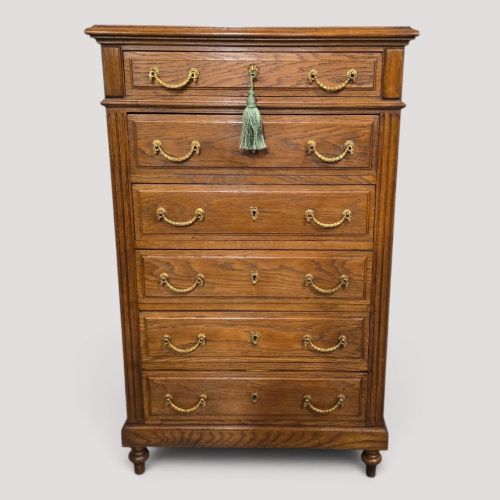
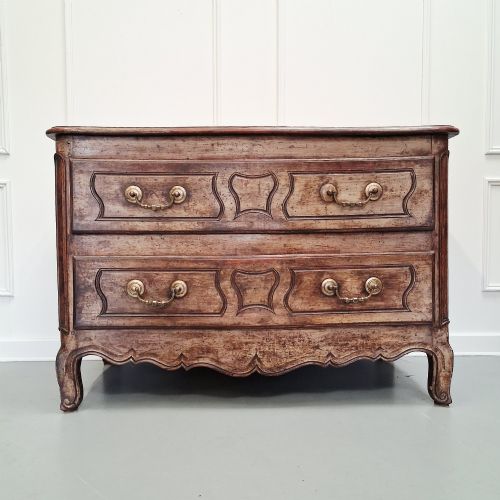
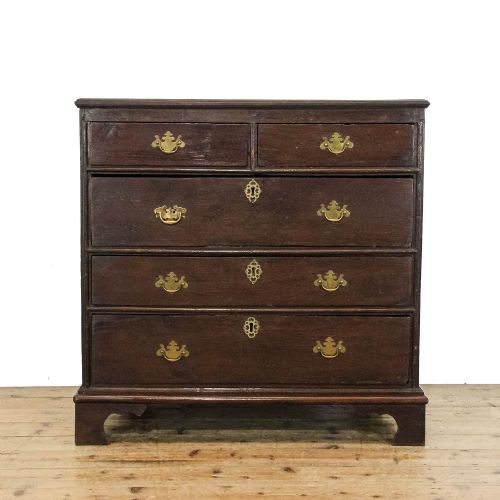
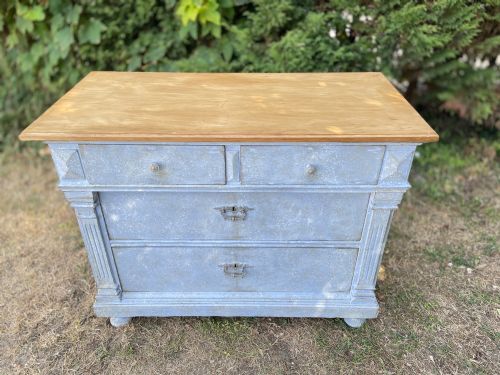
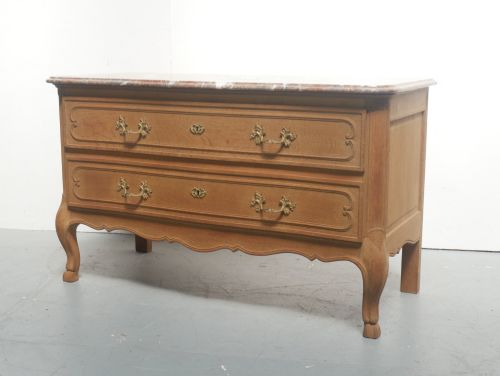
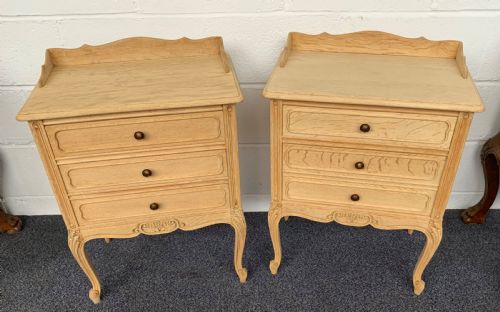
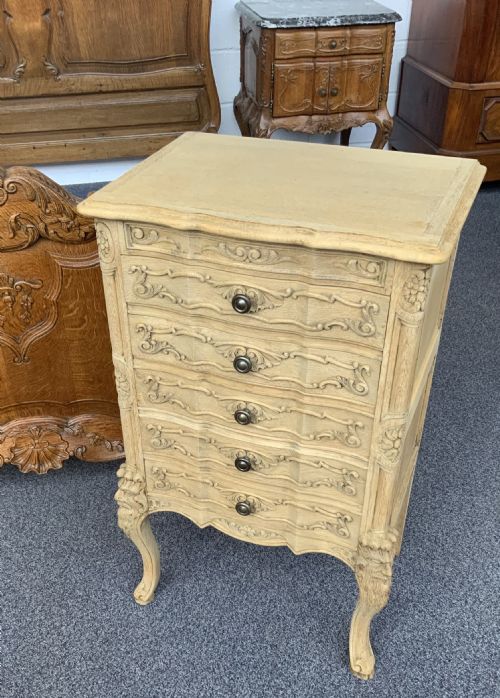
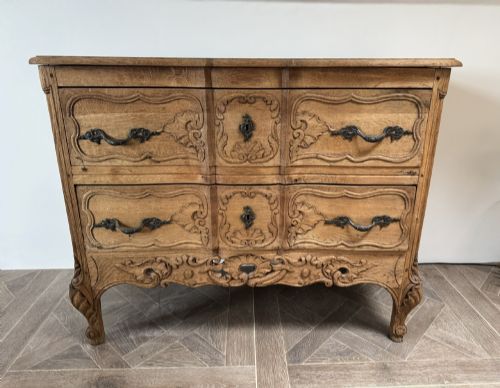
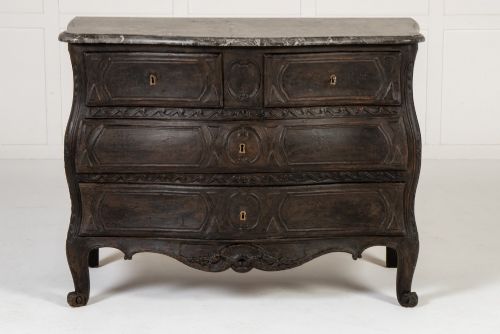
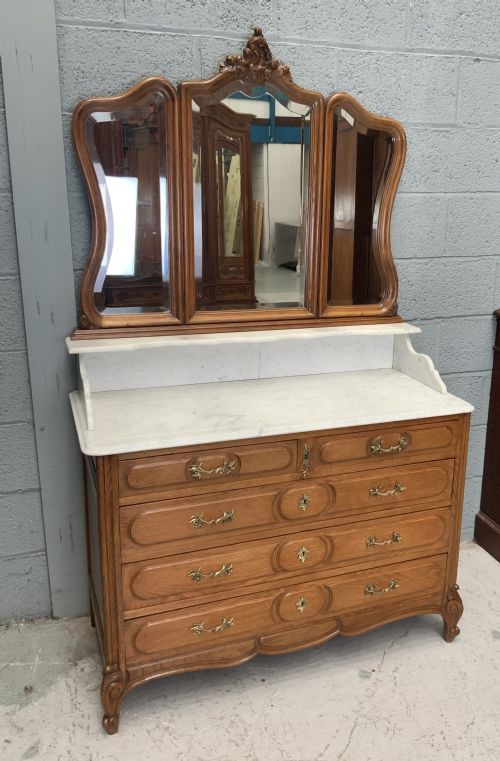
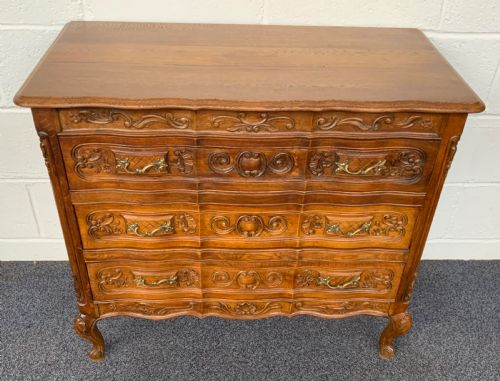
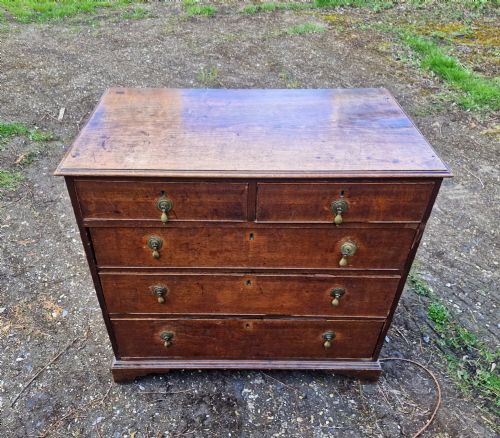
These pieces are a provincial oak commode, offering robust storage with regional character.
Provincial Oak Commode
A provincial oak commode provides practical storage through chests of drawers and bedside cabinets shaped by local cabinetmakers rather than metropolitan workshops. Buyers seeking a provincial oak commode encounter forms spanning the eighteenth century, the nineteenth century, and early decades of the twentieth century.
The inventory on this page ranges from Georgian country examples to French provincial and Gustavian style designs. Pieces appear in formats such as serpentine chests, bombe commodes, washstands, and compact bedside cabinets.
Materials and construction
Makers built these pieces primarily from solid oak, sometimes supplemented by fruitwood or enhanced with paint, ebonising, liming, and modern bleaching techniques. Brass handles and mounts provide functional hardware, while certain tops feature inset marble.
Joinery relies on traditional methods adapted to regional workshops, incorporating hand-carved details, panelled sides, and shaped drawer fronts such as diamond-point fronts.
A few commodes even double as washstands or house a lift top, proving that provincial cabinetmakers loved a secret compartment.
Distinctions in quality
Quality rests upon the crispness of hand-carved details and the proportion of the carcass, particularly in serpentine and bombe profiles where fluid movement requires precise timber selection. Superior examples maintain original hardware and stable joints across the drawers.
The finish also dictates distinction, ranging from scrubbed or bleached oak surfaces to carefully preserved eighteenth-century painted decoration.
The Provincial Oak Commode Glossary
- Bombe
- A swelling, bulging chest shape with curved sides and front. This profile demands advanced woodworking skill to execute correctly.
- Serpentine
- A front outline that curves outward in the centre and inward at the sides. It creates a flowing, undulating visual effect.
- Bleached oak
- Timber treated to lighten its natural tone, a finish seen frequently on twentieth-century interpretations. It produces a pale, scrubbed appearance.
- Commode
- A low chest of drawers or cabinet. In European tradition, the term describes decorative storage furniture.
- Gustavian
- A Swedish neoclassical style reflecting French influence with simpler, lighter proportions. Painted finishes are typical of this aesthetic.
Provincial Oak Commode: Frequently Asked Questions
Where were these commodes made?
Most pieces originate from regional French and British workshops, reflecting local vernacular styles rather than official court aesthetics.
Craftsmen utilised native timbers like oak and fruitwood to build sturdy furniture for domestic interiors.
How do I care for a marble top?
Marble surfaces require gentle cleaning with warm water and mild soap to protect the stone from staining and etching.
Avoid acidic substances and abrasive cleaners that can damage the polished finish over time.
What is the difference between bleached and scrubbed oak?
Bleached oak undergoes chemical treatment to lighten the natural colour of the timber for a uniform, pale aesthetic.
Scrubbed oak generally implies a raw, weathered surface texture achieved through vigorous cleaning and stripping of old finishes.
Can I use a commode as a bedside table?
Many compact variants, including bedside cabinets and small three-drawer chests, function well beside a bed.
Their enclosed storage keeps night-time essentials out of sight while adding historical character to a bedroom.
How do I identify an eighteenth-century piece?
Eighteenth-century examples display hand-cut joinery, period-appropriate hardware, and timber patination developed over centuries of use.
Construction details on the drawer linings and backboards help distinguish genuine age from later reproductions.