



Profile Portrait Canvas
These profile portrait canvas works capture the human likeness with lasting intimacy, offering a focused study of sitter and shadow.
Profile Portrait Canvas
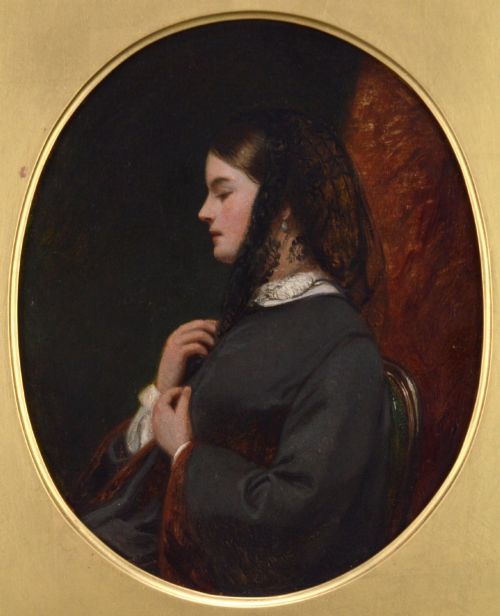
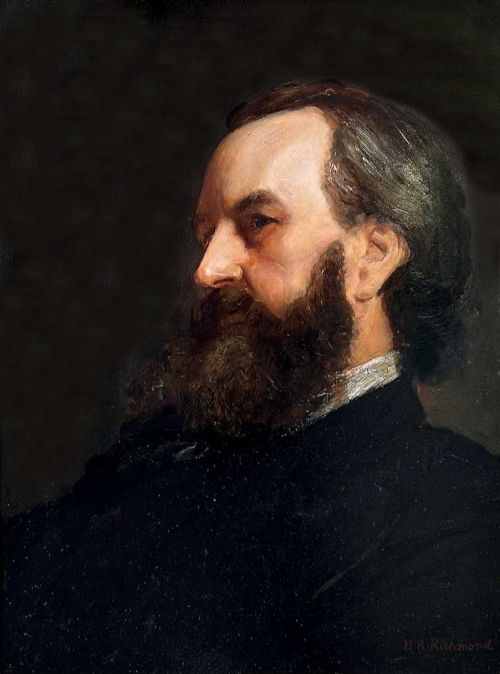
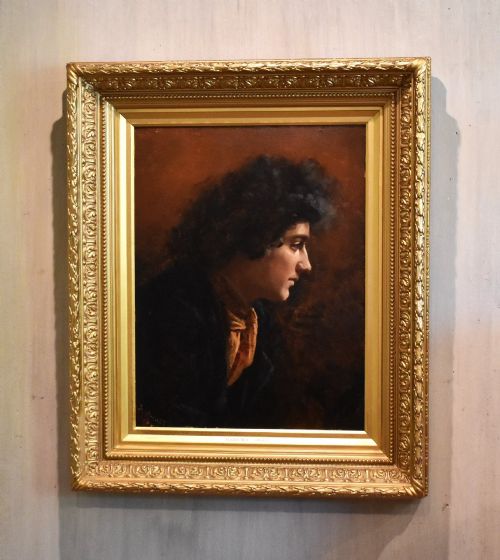
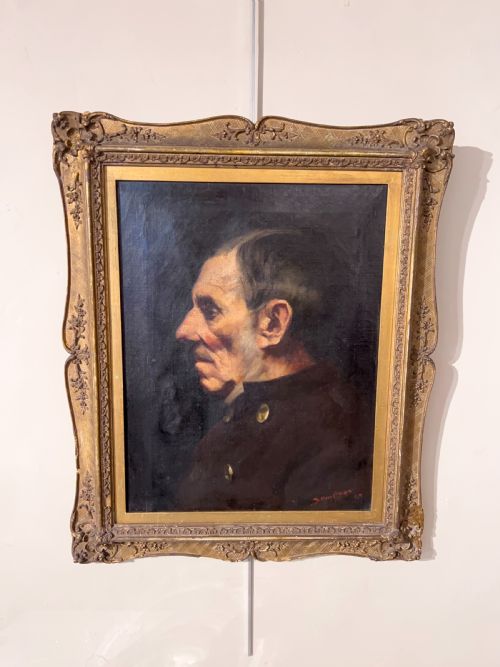
A profile portrait canvas focuses upon the side view of a sitter, bringing a classical silhouette and direct psychological weight to the wall. You will frequently meet Victorian examples alongside works from the Edwardian period, 1920, and mid century decades.
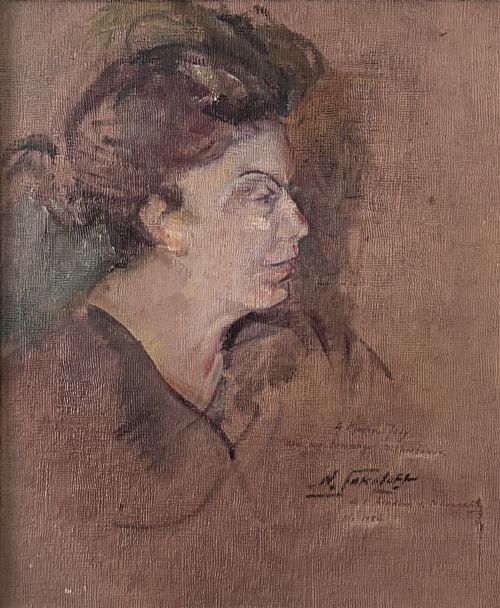
The formats range from academic oils of the nineteenth century through to Bloomsbury Group and Impressionist treatments. Canvases appear both unmounted and housed in period frames, capturing sitters ranging from gentlemen and ladies to young girls and figures in headscarves.
Earlier pieces from the eighteenth century occasionally present card supports alongside traditional canvas constructions, depicting classical veils and dress. Later mid century canvases maintain the oil medium while shifting the palette and handling towards modern sensibilities.
Materials and methods
Artists built these works using oil paint applied directly to woven canvas supports, sometimes laid onto card or secured within wooden structures. The medium allowed for rich layering and subtle tonal gradation in depicting flesh, hair, and fabric.
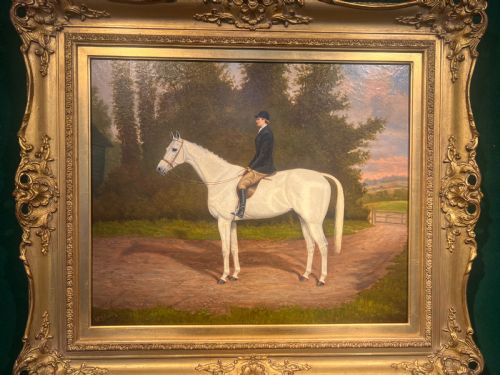
Frames play an integral structural role, particularly the giltwood and gilded wood surrounds that protect and elevate the painted surface. Plaster and wood components provide the underlying support for ornate frames from the Victorian and later eras.
Profile Portrait Canvas Retail Price Guide 2026
Typical asking prices for profile portrait canvas among the pieces listed under this phrase on Sellingantiques today, from the lower quarter to the upper quarter. They describe what is for sale here now, not the wider market.
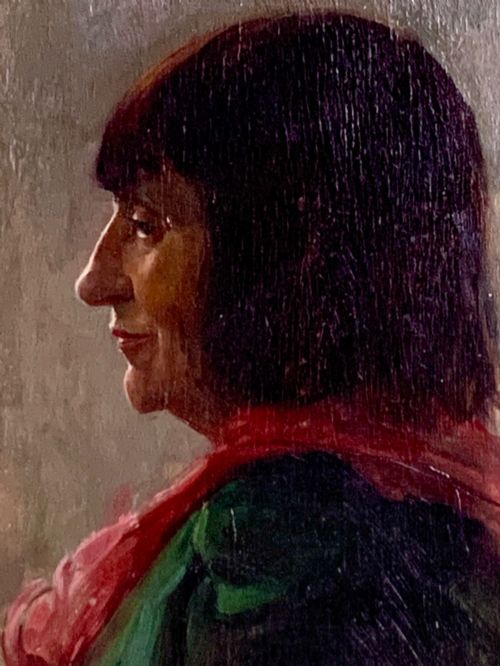
One discerning gentleman in a red scarf refuses to look straight ahead, preferring to keep his secrets firmly in profile.
Assessing quality
Quality rests upon the handling of light across the sitter's cheek and jaw, distinguishing masterly academic observation from routine studio output. The assured brushwork seen in Royal Academy exhibits contrasts with simpler provincial efforts.
The harmony between the canvas and its original giltwood frame elevates the integrity of the piece. Superior works display confident draughtsmanship in the silhouette, capturing character efficiently within the strict limits of the profile format.
William Blake Richmond·William Albert Clarke·Florence Small·Bertram Priestman
The Profile Portrait Canvas Glossary
- Oil on Canvas
- A painting medium where pigments bound in drying oil are applied to a woven fabric stretched across a wooden frame. This surface provides texture and flexibility for the artist's brush.
- Giltwood
- Wood that has been coated with a thin layer of gold leaf or gilt powder. It is frequently utilised for ornate nineteenth century picture frames.
- Bloomsbury Group
- An association of English writers, intellectuals, and artists active in the early twentieth century. Their approach brought distinct modernist perspectives to portraiture.
- Academic
- Art created in accordance with the formal standards of European academies, particularly during the nineteenth century. These works emphasise precise draughtsmanship and traditional composition.
Profile Portrait Canvas: Frequently Asked Questions
What periods do these portraits cover?
The selection spans from the eighteenth century through the Victorian era and into the mid twentieth century. Pieces reflect prevailing aesthetic shifts from academic realism to modernist interpretations.
Dates range across the nineteenth and twentieth centuries, encompassing Edwardian sporting art and Bloomsbury group expressions.
How should I care for an oil portrait?
Keep the canvas away from direct sunlight and steady humidity levels to protect both the oil paint and the underlying fabric. Gentle dusting with a soft, dry brush is generally sufficient for maintenance.
Avoid using liquid cleaners on the painted surface or the surrounding giltwood frame.
What is a side profile portrait?
A side profile portrait depicts the subject from the lateral perspective rather than facing forward. This format draws attention to the distinct contours of the nose, brow, and chin.
Classical traditions often utilised this silhouette to evoke ancient coinage and sculptural reliefs.
Are these works in original frames?
Many retain period frames made of giltwood or wood that complement the era of the painting. Framing styles vary from heavily ornamented Victorian designs to simpler mouldings on twentieth century canvases.
Examining the frame construction helps confirm the historical context of the piece.