
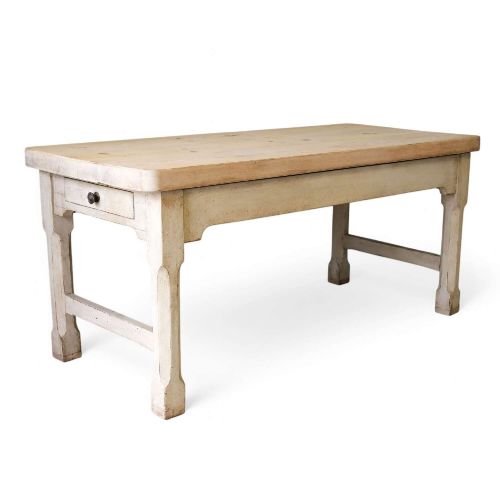
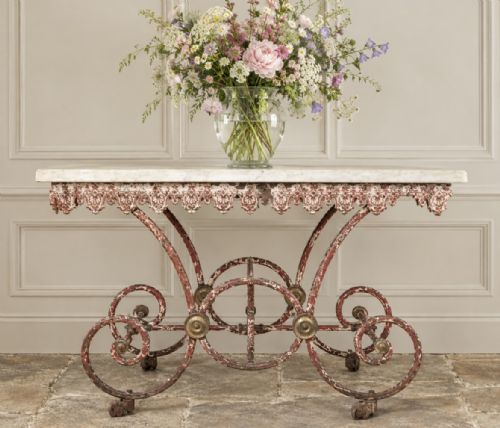
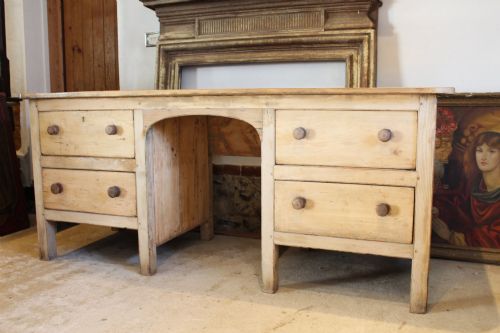
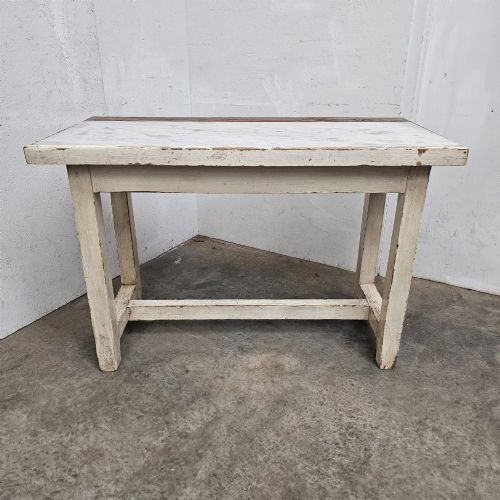

Prep Table Island
These prep table island designs bring practical workspace and utility to a room, offering sturdy timber surfaces built for heavy daily use.
Prep Table Island
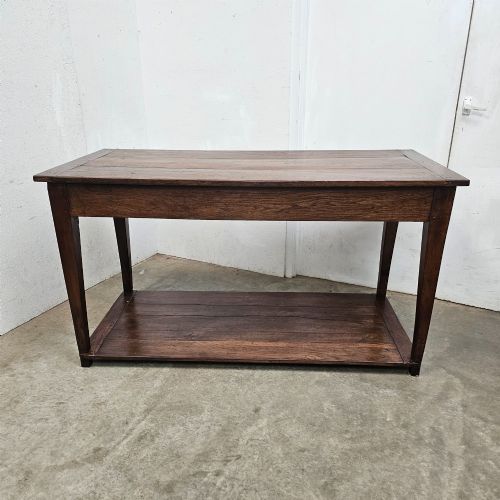
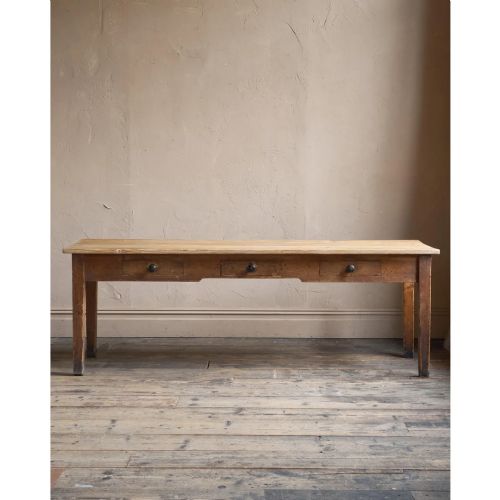
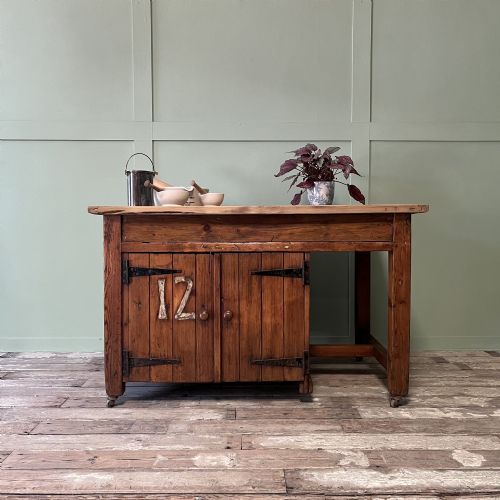
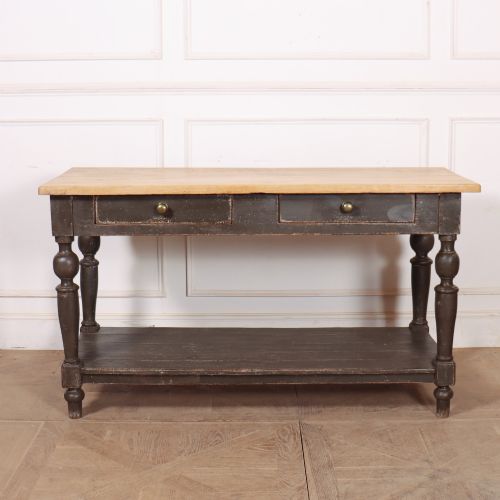
A prep table island provides a functional surface for culinary work, food preparation, and general utility in domestic spaces. The selections here encompass sturdy forms designed for practical tasks rather than formal dining, reflecting the utilitarian needs of past households.
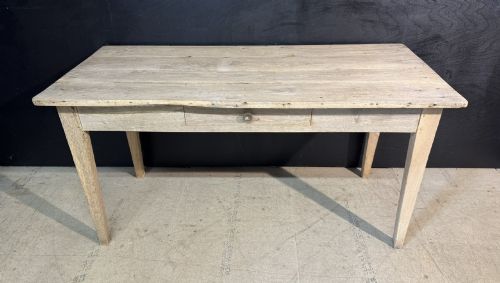
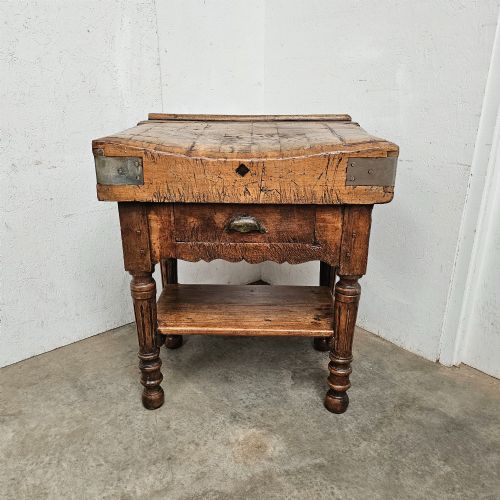
You will most frequently encounter sturdy pine and oak examples dating from the nineteenth century onward. These pieces often feature utilitarian additions such as drawers, lower pot shelves, or heavy chopping blocks adapted for kitchen and scullery environments.
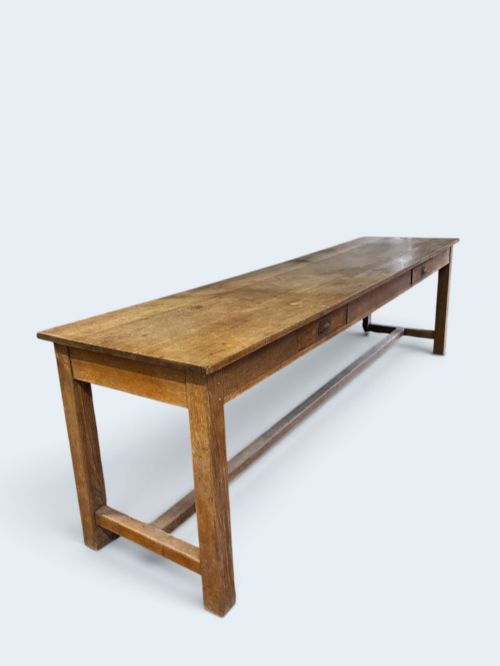
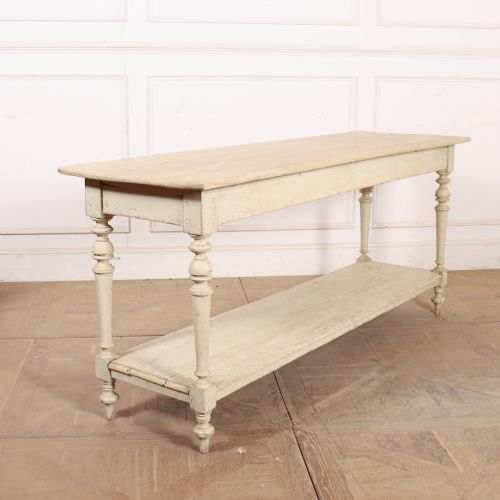
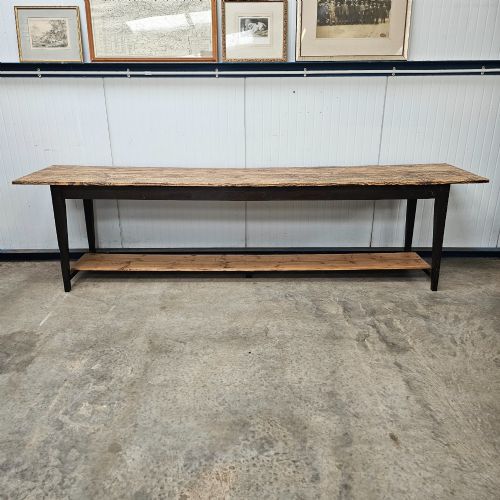
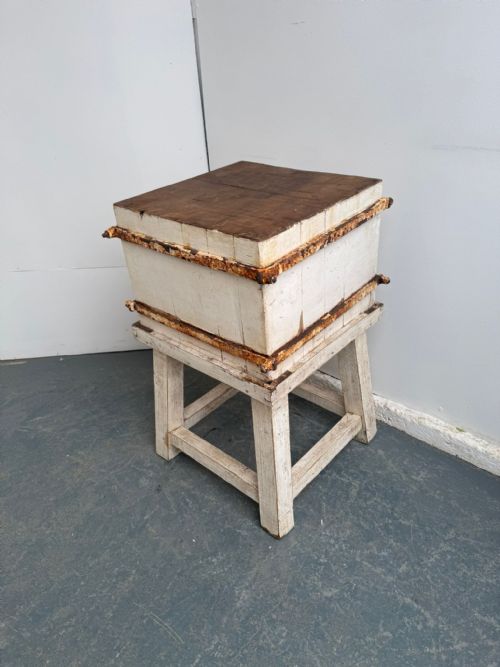
Regional variations span English farmhouse formats, French drapers and harvest tables, and Scandinavian painted designs. Each style brings distinct proportion and timber choice, from long two-tier harvest boards to compact bakers and butchers blocks.
How they were made
Construction relies heavily on durable timbers like pine, oak, beech, elm, and sycamore selected for strength and resilience. Boards are joined to withstand heavy downward pressure, often showing pegged joints or robust framing underneath.
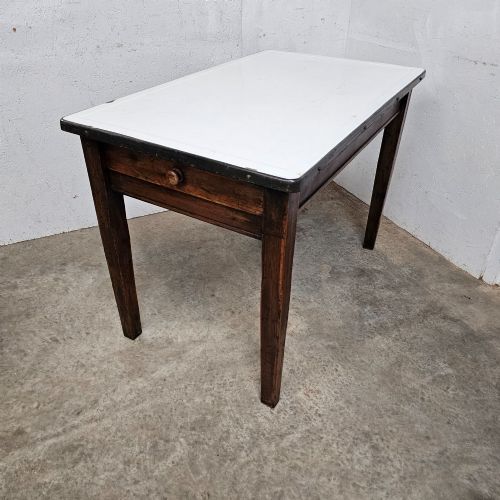
Surfaces frequently show the marks of intensive utility, incorporating heavy marble slabs, thick wooden chopping blocks, or enamel inserts. Painted finishes, scrubbed timber tops, and metal or brass hardware appear across French, English, and Scandinavian workshops.
Materials span solid oak, pine, beech, elm, sycamore, marble, and painted wood across diverse European country styles.
What varies in quality
Quality rests in the integrity of the timber framing and the thickness of the working surface. Pieces with original scrubbed tops, intact pot shelves, and uncompromised structural joins demonstrate superior utilitarian pedigree.
The degree of original surface wear and surface finish distinguishes standard utility items from finer workshop pieces. Patination accumulated through decades of actual preparation work provides authenticity that mechanical sanding cannot replicate.
Trussant & Cie
The Prep Table Island Glossary
- Drapers table
- A long, narrow table traditionally used for folding cloth, characterised by multiple tiers or drawers and generous proportions.
- Butchers block
- A thick, heavy wooden block designed for heavy chopping and meat preparation, often mounted on a dedicated stand or base.
- Harvest table
- An elongated utility table originally designed to seat farm workers or hold gathered crops, featuring sturdy timber construction.
- Scullery table
- A heavy-duty utilitarian table utilised in domestic back-kitchens for washing, cleaning, and heavy food preparation.
- Patina
- The surface sheen and colour acquired by wood and metal through decades of handling, cleaning, and exposure to light.
Prep Table Island: Frequently Asked Questions
What is a prep table island?
A prep table island is a utilitarian workspace designed for food preparation, baking, or general domestic tasks. These tables typically feature robust timber tops and sturdy frames suited for heavy daily use.
Historically deployed in kitchens, sculleries, and shops, these pieces prioritise function with thick wooden boards, drawers, or lower pot shelves for storage.
How were these tables used?
These tables served as central work surfaces for rolling pastry, chopping meat, folding textiles, and organising kitchen provisions. Their durable construction handled rigorous manual labour in busy households and commercial settings.
Many incorporate lower shelves or drawers to keep utensils and provisions close at hand while maintaining an open workspace on top.
How do I live with one?
Living with a prep table island involves embracing its functional history and durable surfaces. They anchor modern kitchens and open-plan spaces by providing generous workspace and natural timber warmth.
Maintenance generally requires treating wooden surfaces with suitable oils to protect the grain while preserving the accumulated character and patina of daily use.
How do I identify different styles?
Identifying regional styles depends on timber selection, proportions, and painted finishes. French provincial and drapers examples often display elongated proportions and multiple tiers, while English and Scandinavian pieces favour heavy pine or oak framing.
Details such as marble inserts, enamel tops, or turned legs help distinguish between bakers tables, butchers blocks, and traditional farmhouse furniture.