




Pottery Spaniel Figurines
Pottery spaniel figurines are ceramic chimney ornaments modelled as attentive dogs, offering a traditional mantelpiece presence.
Pottery Spaniel Figurines
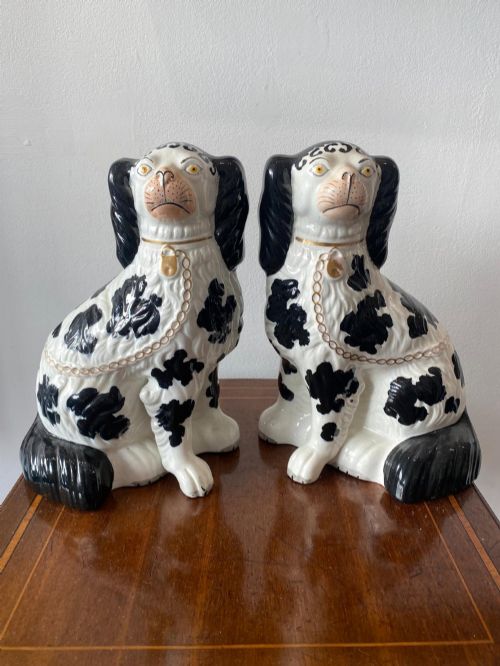
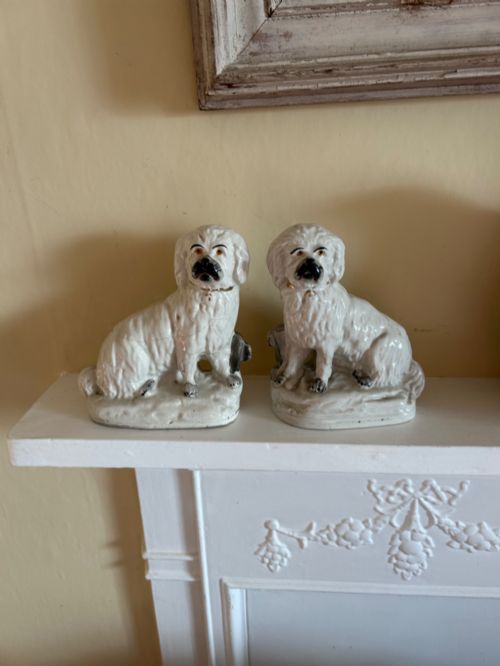
Pottery spaniel figurines comprise seated canine figures modelled as decorative objects and chimney ornaments, most frequently encountered in pairs matching the domestic style of the nineteenth century.
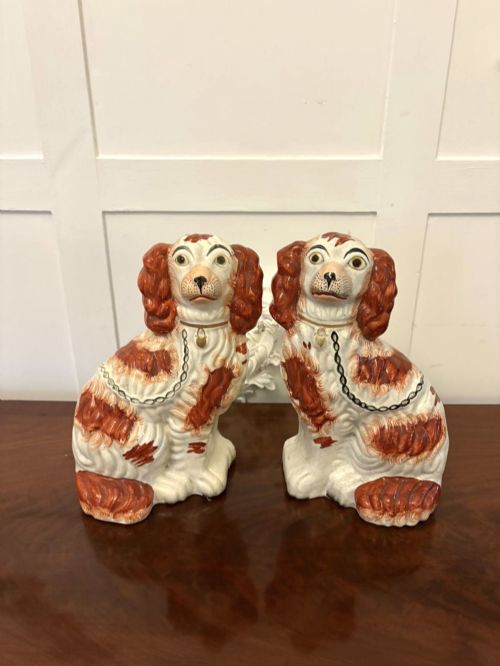
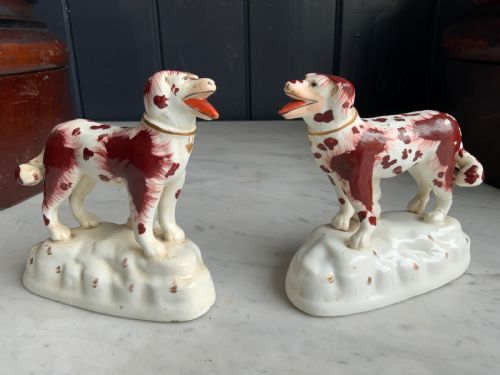
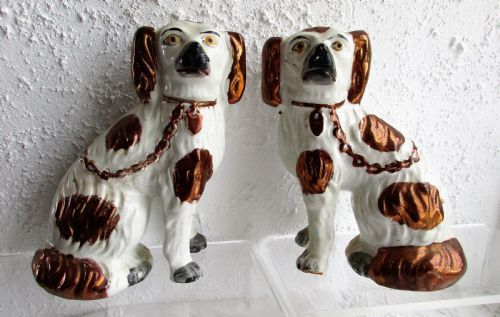
The selection ranges from standard white and gilt varieties to black and white, red and white, and copper lustre finishes, alongside related forms depicting poodles, Maltese terriers, and King Charles spaniels.
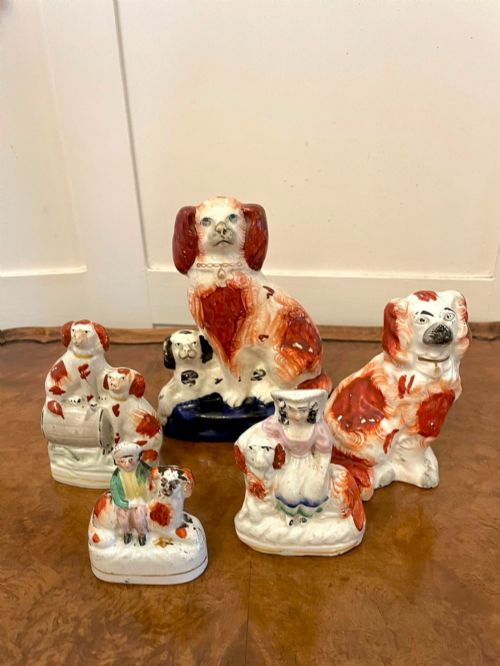
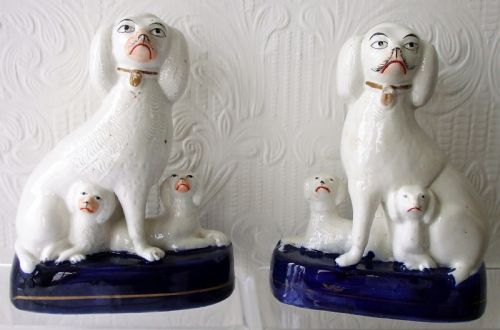
Most examples date from the Victorian era, spanning the mid to late nineteenth century, and occasionally incorporate clock groups or figures with pups.
Materials and production methods
Pottery spaniel figurines are constructed from earthenware or ceramic, shaped through moulding techniques before undergoing kiln firing.
Surface decoration relies on enamel paint and glaze applications, frequently enhanced with gilt or gold leaf highlights, and occasionally glass eyes.
Certain models incorporate additional textural elements such as encrusting on blue cushions.
Pottery Spaniel Figurines Retail Price Guide 2026
Typical asking prices for pottery spaniel figurines among the pieces listed under this phrase on Sellingantiques today, from the lower quarter to the upper quarter. They describe what is for sale here now, not the wider market.
Listings span from the Regency period through to nineteen-hundred, utilising earthenware, glaze, enamel, and gold leaf.
Determinants of quality
The preservation of the original glaze, enamel, and gilt or gold leaf finishes distinguishes superior specimens, as does the presence of intact details such as glass eyes or modelled puppies.
Beswick
The Pottery Spaniel Figurines Glossary
- Earthenware
- A porous type of pottery fired at lower temperatures, commonly used for nineteenth-century figures. It forms the ceramic body beneath the glaze.
- Comforter spaniel
- A term describing seated mantelpiece spaniels associated with Victorian hearths. These figures were traditionally placed facing inward on either side of a fireplace.
- Copper lustre
- A metallic glaze finish producing a reflective, copper-coloured sheen on the ceramic surface. It was achieved by applying metallic oxides before firing.
- Enamel paint
- Coloured glass or pigment fused to the pottery surface during a secondary low-temperature firing. It provides the distinct markings on the dogs.
- Gilt
- A thin layer of gold leaf or gold paint applied to decorate details such as collars, chains, and lockets. It adds brightness to the finished figure.
Pottery Spaniel Figurines: Frequently Asked Questions
How were pottery spaniel figurines displayed?
Pottery spaniel figurines were typically arranged as symmetrical pairs on the mantelpiece of a Victorian parlour. They faced inward toward one another, guarding the hearth.
Beyond the fireplace, collectors placed them on side tables and chests of drawers throughout the home as standard decorative ornaments.
What periods do these figurines date from?
The pieces available predominantly date from the nineteenth century, with a strong representation from the Victorian period around eighteen-sixty.
Earlier examples extend into the Regency era, while later pieces stretch toward nineteen-hundred, maintaining the traditional Staffordshire aesthetic.
Are these figurines always sold in pairs?
Many pottery spaniel figurines are encountered as matched pairs designed to sit at opposite ends of a mantelpiece. However, collections and individual figures also appear.
Groupings can include matched pairs, smaller collections of multiple dogs, or single figures accompanied by puppies.
What colour varieties are available?
The most common colour variations include traditional white and gilt, red and white, and black and white markings. Some pieces feature copper lustre finishes.
Additional details such as blue cushions, gold collars, and glass eyes provide further variety across the different examples.