


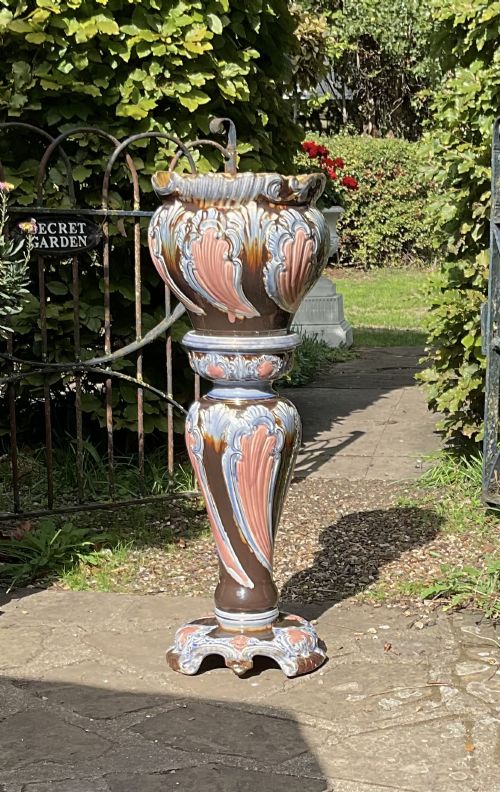


Pottery Plant Pedestal
These pottery plant pedestal pieces elevate greenery in domestic interiors, bringing sculptural presence and coloured glaze to Victorian and Art Nouveau rooms.
Pottery Plant Pedestal
A pottery plant pedestal combines a supportive column with a matching jardiniere or planter, designed specifically to display large indoor foliage. These substantial furnishings emerge from the late nineteenth century through to the early decades of the twentieth century, reflecting domestic enthusiasm for exotic plants.
The selections encountered here span Victorian, Art Nouveau, Arts & Crafts, and Art Deco styles, often appearing as matched pairs or integrated stands. Forms range from rustic naturalistic tree trunks to flowing vegetal columns supporting generous glazed bowls.
Originating across British and continental potteries, these pieces utilise robust ceramic bodies to bear heavy soil and plants safely. Buyers meet everything from Majolica wares to lustre glaze earthenware and gres ceramics.
Materials and construction
Potters shaped these tall columns and wide jardinieres using earthenware, stoneware, and faience, building thick walls capable of supporting heavy loads. Techniques included throwing, moulding, and applying detailed naturalistic relief work such as leaves, branches, and mythical creatures.
Surfaces received rich applications of coloured glaze, enamel, and specialised lustre treatments. Firing these large vertical forms required skilled kiln management to prevent warping in the dense ceramic body.
Pottery Plant Pedestal Retail Price Guide 2026
Typical asking prices for pottery plant pedestal among the pieces listed under this phrase on Sellingantiques today, from the lower quarter to the upper quarter. They describe what is for sale here now, not the wider market.
Object forms span matching jardiniere and pedestal sets, standalone plant stands, and occasional side table adaptations.
Distinctions in quality
Quality rests in the ambition of the model and the depth of the glaze, separating standard production wares from ambitious studio output. Complex modelled forms, such as those featuring griffins or intricate naturalistic plant motifs, demand higher sculptural skill than plain fluted columns.
The richness and evenness of the coloured glaze deployment define the visual impact of each piece. Successful firing of lustres and complex majolica enamels creates a depth of surface that simpler commercial potteries rarely achieve.
Royal Doulton·Burmantofts Art Pottery·Clement Massier·Julius Dressler·Woodlesford Art Pottery
The Pottery Plant Pedestal Glossary
- Majolica
- A type of earthenware decorated with opaque coloured lead glazes, known for vibrant hues and high gloss. This technique creates richly textured surfaces popular in nineteenth-century domestic displays.
- Jardiniere
- A large ornamental pot or container designed to hold growing plants or floral arrangements. They frequently sit atop matching pedestals to elevate greenery within a room.
- Faience
- Earthenware decorated with colourful opaque glazes, often associated with continental and British art pottery production. The term describes ceramics fired with a tin-glazed composition.
- Lustre glaze
- A metallic film applied to pottery and fired in a reduced oxygen atmosphere to produce an iridescent, shimmering surface. Clement Massier pieces utilise this technique for shifting rainbow effects.
- Slaterware
- A ceramic technique involving textured clay bodies resembling tooled leather or woven baskets, often highlighted with gold or coloured enamel. Royal Doulton produced notable examples of this finish.
Pottery Plant Pedestal: Frequently Asked Questions
What is a pottery plant pedestal?
A pottery plant pedestal is a tall ceramic stand paired with a matching jardiniere bowl designed to elevate large houseplants. These pieces function as architectural focal points in interior decoration.
They combine structural support with decorative coloured glazes, originating primarily during the Victorian and Edwardian periods for indoor plant displays.
How do I care for my ceramic plant stand?
Protect the glazed ceramic surface by placing a waterproof liner inside the jardiniere to prevent moisture absorption through unglazed interior bases. Avoid placing heavy impacts near the protruding relief details.
Clean the exterior gently with a soft, damp cloth without harsh chemical detergents that might dull historic lustre or enamel finishes.
How do I tell Art Nouveau pedestals apart from Victorian pieces?
Victorian pedestals often lean towards heavy historicism, naturalistic tree bark textures, and bright majolica greens and browns. They emphasise robust, classical or rustic forms.
Art Nouveau examples introduce whiplash lines, stylised floral motifs, and flowing botanical silhouettes. Their glazes frequently utilise softer peacock blues, greens, and iridescent lustre effects.
Were these stands made for indoor or outdoor use?
These decorative ceramic jardinieres and pedestals were produced for interior domestic use in conservatories, drawing rooms, and hallways. Their refined glazes and earthenware bodies were not engineered to withstand freezing winter conditions outdoors.
Placing them inside protects the delicate coloured enamels and intricate clay modelling from weather damage.