



Pottery Greyhound Figurine
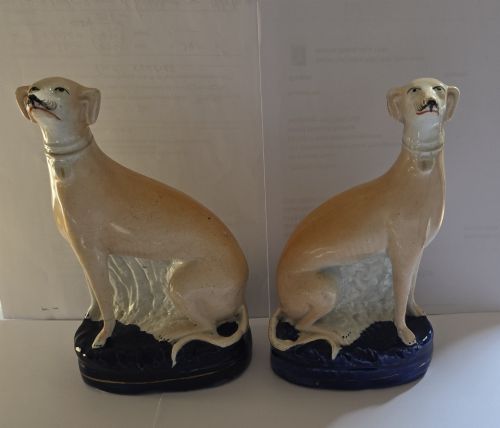
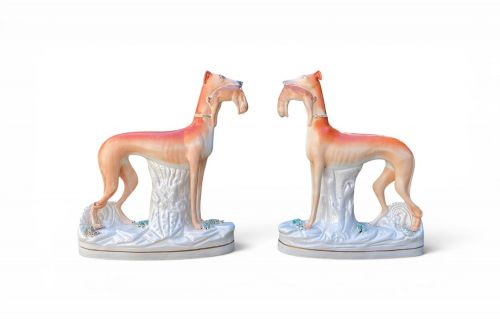
These pottery greyhound figurine examples capture the canine form in Victorian earthenware, offering collectors classic Staffordshire character for the mantelpiece.
Pottery Greyhound Figurine
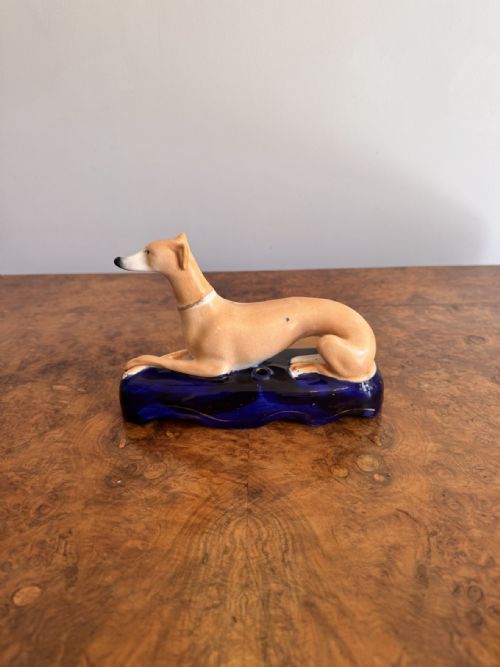
Many examples serve as decorative ornaments, while specialised variations include quill holders and desk accessories. Most items originate from English kilns, capturing the domestic and sporting interests of the Victorian era through modelled clay.
How they were made
The resulting pottery surface receives its characteristic sheen from the glazing process, which protects the painted enamel details underneath. Kiln firing fixed both the body and the surface decoration, ensuring the survival of these figures across the centuries.
Pottery Greyhound Figurine Retail Price Guide 2026
Typical asking prices for pottery greyhound figurine among the pieces listed under this phrase on Sellingantiques today, from the lower quarter to the upper quarter. They describe what is for sale here now, not the wider market.
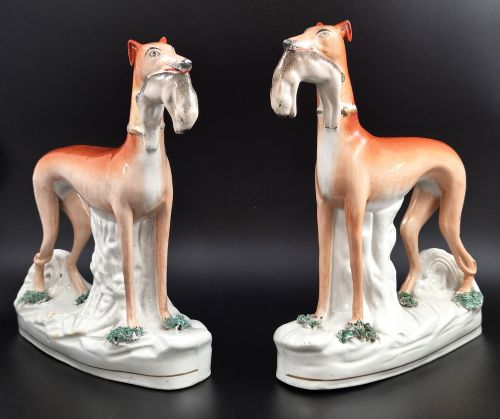
Several greyhound figures proudly clutch painted hares in their mouths, bringing a miniature sporting chase directly to the hearth.
What varies in quality
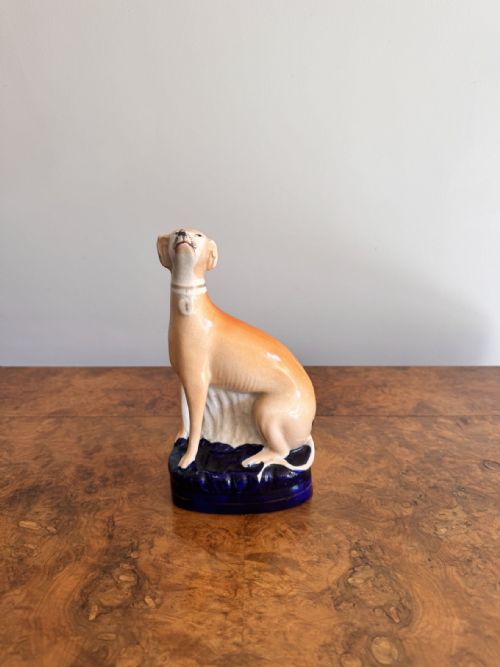
The distinction between standard figures and superior examples lies in the crispness of the modelling and the hand-painted details on the face and coat. Finer pieces retain vibrant enamel paint and clean gold leaf application without excessive fading.
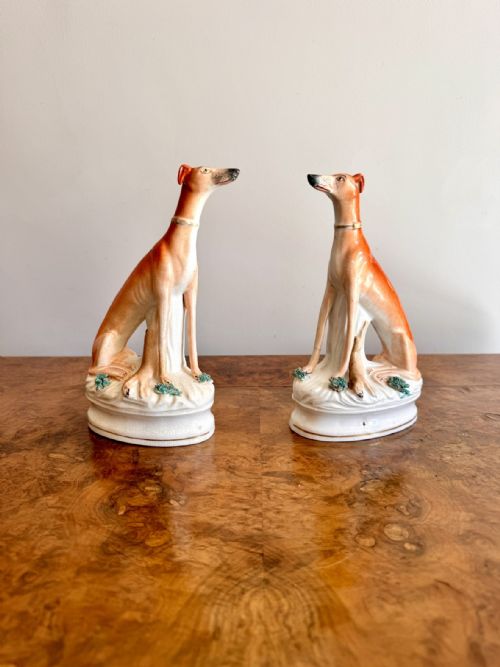
Scale also influences the character of the object, with larger matched pairs demonstrating greater ambition from the potter. The clarity of the underlying earthenware form separates basic Staffordshire output from more expressive sculptural works.
Thomas Parr
The Pottery Greyhound Figurine Glossary
- Earthenware
- Porous pottery fired at lower temperatures, commonly used for nineteenth-century figures before being glazed. It forms the standard body for most Staffordshire canine sculptures.
- Enamel Paint
- Vitreous composition fused to the glazed surface during a secondary firing, used to colour the eyes, collars, and fur. It provides the bright decorative hues on Victorian models.
- Lead Glaze
- A shiny liquid coating applied to pottery before firing to waterproof the clay and enhance the colours beneath. It gives these nineteenth-century pieces their characteristic glossy finish.
- Quill Holder
- A functional desk accessory featuring an integrated channel or recess to rest writing feathers. In pottery greyhound figures, this feature combines utility with mantelpiece display.
- Staffordshire
- A major English ceramic production region encompassing numerous potteries that manufactured utilitarian and decorative figures. The name denotes a specific regional tradition of earthenware modelling.
Pottery Greyhound Figurine: Frequently Asked Questions
What are pottery greyhound figurines?
These pieces are ceramic sculptures modelled after greyhounds and whippets, typically produced in nineteenth-century England.
Most examples take the form of decorative ornaments or paired mantelpiece figures.
How were these figures used?
Victorian households displayed these ceramic dogs primarily as decorative ornaments on mantelpieces and tables.
Some specialised variants also functioned as practical desk accessories, such as inkwells or quill holders.
How do I date a greyhound figurine?
Dating relies on examining the characteristics of the earthenware body, the style of the glaze, and the enamel colours.
Nineteenth-century Victorian pieces often feature hand-painted details and characteristic crazing within the glaze layer.
Are these figures found in pairs?
Many examples survive as matched pairs, frequently depicting seated whippets alongside hunted hares.
Single figures also appear, though matched sets remain a traditional format for mantelpiece decoration.