







Pot Board Server
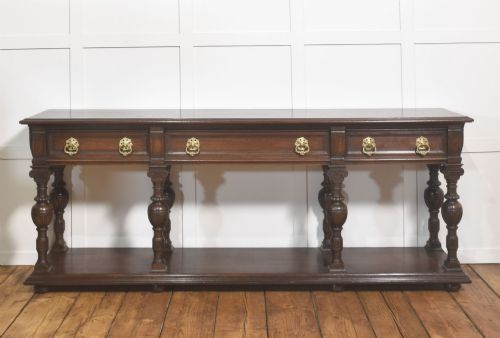
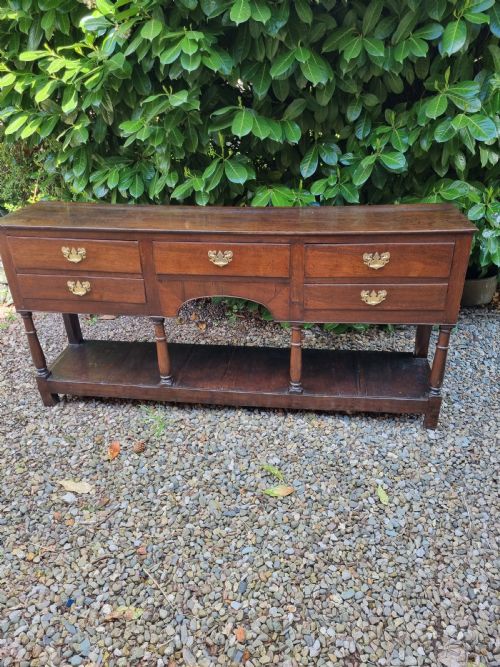
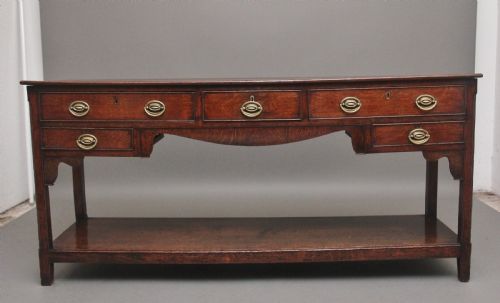
A pot board server offers a solid surface for preparation and an open low shelf below for storage, grounding any dining space with vernacular utility.
Pot Board Server
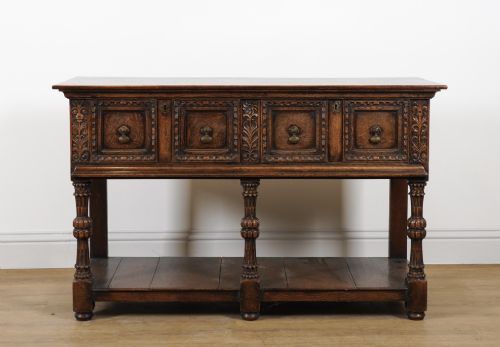
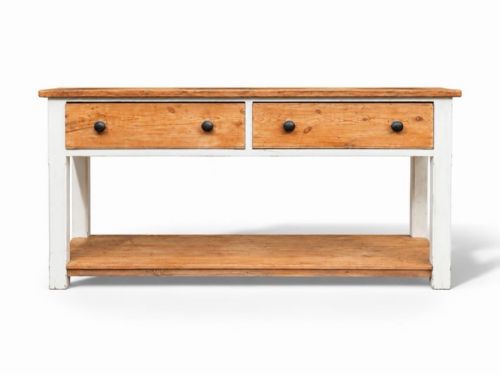
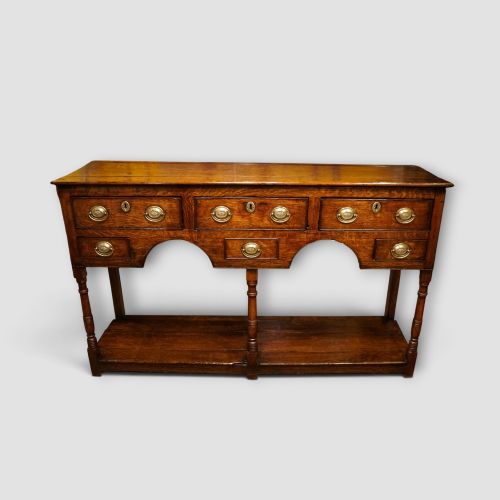
A pot board server typically takes the form of a dresser base, serving table, or low sideboard, designed primarily for domestic use in kitchens and dining rooms. These pieces combine a timber top with a boarded lower shelf, known as a pot board, positioned close to the floor to hold heavy kitchen vessels and serving dishes.
The versions met on this page span several centuries, with prominent examples originating from Georgian, Victorian, and Edwardian periods alongside regional pieces like Welsh vernacular and French country designs. Oak predominates as the primary timber, complemented by pine, fruitwood marquetry inlay, and painted softwood finishes.
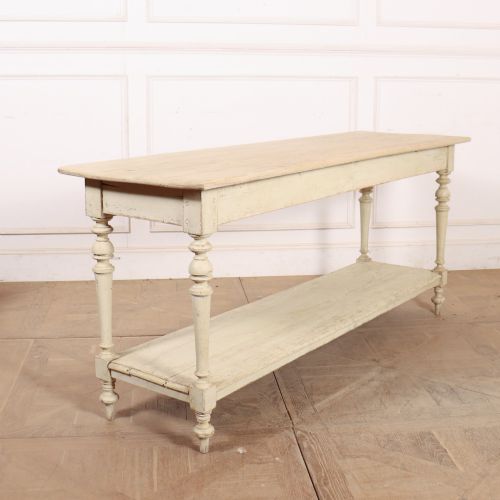
Forms range from simple multi-drawer setups to carved Jacobean revival styles and Lancashire buffets, showing how domestic servers evolved from purely functional workspace furniture into decorative dining room fixtures. Buyers encounter variations including open pot board dressers, hall cupboards, and drapers tables.
Materials and construction methods
Makers relied heavily on solid oak, pine, and fruitwood, utilising traditional joinery such as mortise and tenon frames to ensure the heavy loads placed on both the top surface and the low pot shelf could be supported. Surfaces frequently show hand-planed finishes, timber pegged joints, and occasional painted softwood treatments.
Decoration on these servers was achieved through carved panels, fruitwood marquetry inlay, and brass hardware such as drawer pulls. Painted finishes appear on French country and rustic farmhouse pieces, offering an alternative to the waxed or polished grain of native British hardwoods.
Pot Board Server Retail Price Guide 2026
Typical asking prices for pot board server among the pieces listed under this phrase on Sellingantiques today, from the lower quarter to the upper quarter. They describe what is for sale here now, not the wider market.
Listings feature oak, pine, and painted softwood servers spanning from the 17th century through the Edwardian period and Jacobean revival styles.
Quality variations in pot board servers
Quality in a pot board server rests upon the integrity of its timber selection and the retention of its original structural elements, particularly the low pot board shelf and feet. Pieces with uncompromised proportions and native oak construction command attention for their durability and honesty of form.
The refinement of surface detail also marks the distinction between standard utilitarian furniture and finer regional pieces. Hand-carved mouldings, well-executed marquetry inlay, and period brass drawer furniture elevate the presence of a server beyond basic utility.
Liberty of London
The Pot Board Server Glossary
- Pot board
- The low open shelf positioned near the floor of a dresser base or server, traditionally used for storing pots and pans. This lower tier provides structural stability to the legs.
- Dresser base
- A low freestanding cabinet featuring drawers across the top and often cupboards or shelves below, serving as a sideboard. It forms the foundation of many dining room servers.
- Marquetry
- Decorative inlay work using various coloured woods to create pictorial or geometric patterns on the surface. Fruitwood is frequently employed for this technique on specific panels.
- Vernacular furniture
- Domestic pieces made by local craftspeople using regional timbers and traditional styles rather than high-fashion metropolitan designs. Welsh and French examples often display these distinct local traits.
- Jacobean Revival
- A nineteenth and early twentieth century historicist style mimicking the heavy carved oak furniture of the seventeenth century. Pieces often feature geometric mouldings and deep relief carving.
Pot Board Server: Frequently Asked Questions
What is a pot board server used for?
These pieces functioned historically as sturdy work surfaces for food preparation in large kitchens or as serving tables in dining spaces. The low shelf underneath accommodated heavy pots, pans, and ceramic platters to clear workspace above.
Today, buyers utilise them as sideboards in dining rooms or as console tables in hallways and kitchens, displaying decorative items on top while keeping larger objects stored below.
How do I identify a Georgian pot board server?
Georgian examples typically feature heavy solid oak construction, hand-cut dovetails on the drawer construction, and simple panelled or boarded backs. Their proportions remain functional and unpretentious, relying on the natural grain of the timber for visual depth.
Unlike later revival pieces, genuine eighteenth-century servers show authentic wear patterns around the drawers and pot board from generations of domestic use.
What wood were pot board servers made from?
Oak is the predominant timber found in British pot board servers, prized for its strength and ability to bear heavy loads on the lower pot board shelf. Pine and fruitwood also appear in regional and painted variations.
Some continental or later examples utilise softwood with painted finishes, while decorative pieces incorporate fruitwood marquetry inlay across the drawer fronts or cabinet doors.
Where should I place a pot board server in my home?
A pot board server suits dining rooms as a practical sideboard for serving food and storing tableware. The open lower shelf provides an ideal area to stack large ceramic bowls or books.
They also sit well in large hallways or kitchens, where the narrow footprint of a dresser base or drapers table provides surface space without overwhelming the room.