
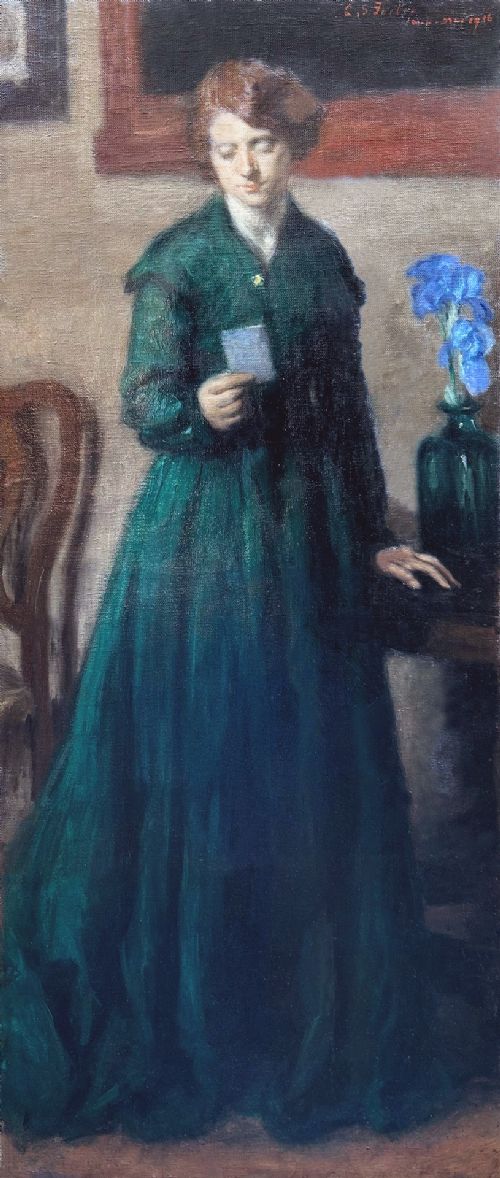
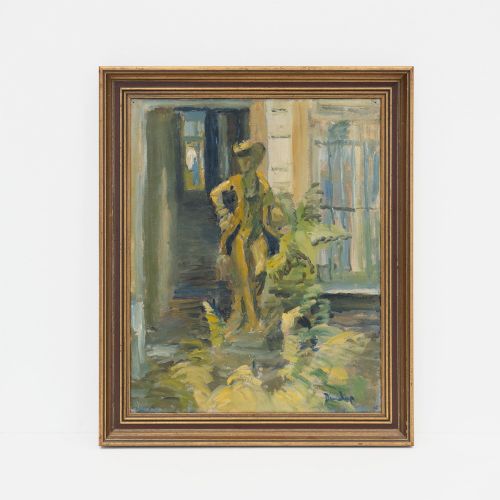
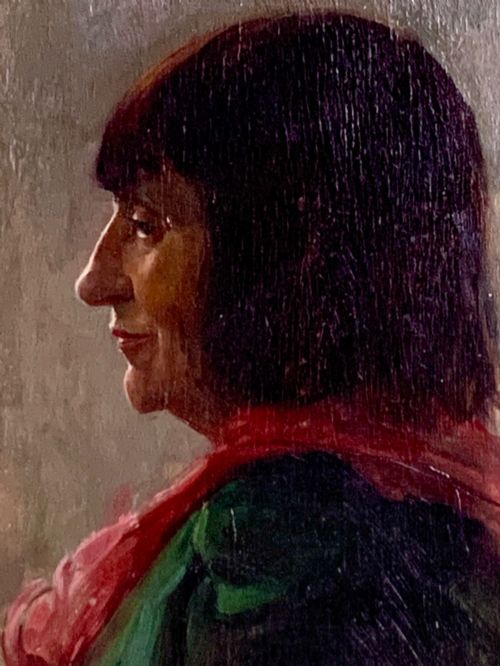


Post Impressionist Portrait Painting
A post impressionist portrait painting brings expressive brushwork and vivid character into a room through works spanning from the nineteen-tens to the nineteen-sixties.
Post Impressionist Portrait Painting
A post impressionist portrait painting captures human subjects through bold colour and expressive brushwork, reflecting styles such as Modern British, Bloomsbury Group, Cubism, and Fauvism. These works emerge from decades spanning the early to mid-twentieth century, offering a window into the artistic developments of that era.
Buyers will encounter oil on canvas, oil on panel, and oil on paper works, alongside pastel portraits. Subjects range from self-portraits and female nudes to notable figures, each rendered with distinct stylistic personality.
Materials and methods
Artists painted primarily with oil paint on canvas, wood panel, or paper, occasionally utilising pastel mediums. Canvases and panels provided stable surfaces for thick application of pigment and expressive mark-making.
Many works retain their period framing, incorporating wood and gilt elements that complement the painterly aesthetic of the canvas.
Artworks reflect various European and British movements, including Modern British, Cubism, Fauvism, and the Bloomsbury Group.
What distinguishes finer examples
Quality rests in the confidence of the brushwork and the strength of the composition, distinguishing hesitant student attempts from assured artistic vision. The coherence of colour harmony and the psychological depth of the subject matter elevate a piece significantly.
Provenance and documented attribution to known artists or distinct groups add historical weight to an artwork, while the preservation of the original paint surface and framing completes the standard of superior works.
Charles Stuart Forbes·Ronald Ossory Dunlop·Edouard Julien·Henri Vincent-Anglade·Jean Hippolyte Marchand·Yetta Kane·Christian Caillard·Bernard Meninsky·Allan Gwynne-Jones
The Post Impressionist Portrait Painting Glossary
- Post-Impressionism
- An artistic movement developing roughly from the late nineteenth century that extended impressionism while rejecting its limitations, favouring geometric forms and expressive use of colour.
- Bloomsbury Group
- An association of English writers, intellectuals, philosophers and artists active in the early twentieth century, whose visual style often rejected Victorian artistic conventions.
- Oil on panel
- A painting executed on a flat piece of wood rather than stretched canvas, providing a rigid and stable support favored by many European painters.
- Fauvism
- A style of painting characterised by strong colours and fierce brushwork, developed by artists associated with Henri Matisse.
- Gilt
- A thin layer of gold applied to wood framing, adding decorative sheen and period authenticity to the presentation of a painting.
Post Impressionist Portrait Painting: Frequently Asked Questions
How do I hang a heavy oil painting?
Secure your painting directly into wall studs using appropriate picture hooks rated for the weight of the frame. Ensure the hanging wire or brackets are firmly attached to the wooden stretcher or frame.
Keep the artwork away from direct sunlight and radiators to protect the canvas and oil pigments from environmental damage over time.
What periods do these portraits cover?
The available selection spans from the nineteen-tens through to the nineteen-sixties, capturing decades of modernist and post-impressionist development.
Each decade brings distinct stylistic influences, ranging from French Fauvism to Modern British and Bloomsbury traditions.
How should I clean a vintage canvas?
Dust the surface very gently with a soft, dry brush to remove loose particles. Avoid using water, household cleaners, or damp cloths on the paint.
Professional conservation is recommended for any deeper cleaning or removal of aged varnish to prevent damaging the oil pigments.
Are these works signed by the artist?
Many pieces feature visible signatures or inscriptions left by the painter, while others are attributed through historical style and documentation. Signatures often appear in the corners of the canvas or on the reverse panel.
Checking listing details will confirm whether a signature or attribution is present on a specific piece.
What is the Bloomsbury style?
The Bloomsbury style originates from an influential group of English artists and intellectuals who rejected rigid academic traditions in favour of vibrant colours and simplified forms. Their portraits often emphasise expressive character and domestic settings.
Works associated with this group reflect a shared aesthetic philosophy that valued decorative arts alongside fine painting.